With increased demand for cotton in southern hemisphere markets local growers are set to capitalise on increased prices

There are some positive signs for the 2024 Australian cotton crop with global demand increasing while major competitors are facing crop shortfalls due to seasonal conditions, creating a market gap local growers are ready to fill.
On World Cotton Day, 7 October 2023, cotton merchants and shippers are reporting a higher level of engagement with buyers from multiple countries while emerging markets are stepping up their orders as well.
Raw Australian cotton was exported to 16 different markets in 2023 with Vietnam, a country targeted by Australian cotton merchants under the federal government’s Agricultural Trade and Market Access Cooperation (ATMAC) program, now taking close to 37% of our cotton.
The ATMAC program has also allowed stronger engagement with Indonesia and Malaysia with the countries now taking more than 20% of our total cotton exports combined. Other highlights include Turkey, Bangladesh and Thailand, importing close to 15% of our total export offering.
Cotton Australia CEO Adam Kay said the trade figures were positive signs, “Our farmers have virtually sold-out of the 2023 crop to merchants and indications are we have forward sold about a third of our 2024 crop with prices of $700 per bale remaining steady.”
Adam Kay also advised how the industry was also in talks with India to double the Free Trade Agreement’s 50,000 tonnes of tariff free cotton.

Meanwhile, head of Cotton for ADM Trading Arthur Spellson said there is still some caution about demand from China with no formal change in the trade relationship.
“We know Australian cotton is being shipped into the country, but we don’t know how much is being cleared by customs for Chinese mills. We continue to work with buyers from all over the world and our merchants have done an excellent job marketing our cotton to new and emerging markets,” Arthur Spellson concluded.
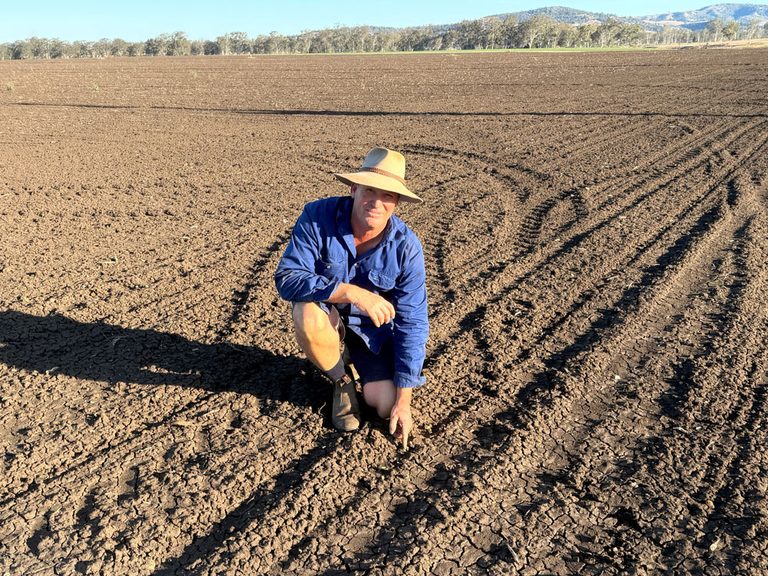
Adam Kay added, “With Australia again entering a dry El Nino weather pattern, there are mixed expectations for the 2024 crop. Growers with irrigated cotton are already planning their water budgets to ensure good soil profiles for their crops while dryland growers are weighing up their options and hopeful of rain to provide extra incentive to plant.”

Cotton industry forecasts for the 2023-2024 crop range from 4 to 4.5 million bales with the outlook for natural fibres forecasting the gross value of cotton production to fall to $3.2 billion, down 8% from the estimated $3.5 billion in 2022-2023.
Global cotton prices are expected to increase by 2% in 2023-2024, driven by expected higher consumption and lower global production.
Adam Kay outlined, “Despite macroeconomic factors dampening demand for cotton overall, farmers have some cause for optimism. Our sustainability efforts are making a major impact and overseas buyers want our cotton because of its reputation for quality, colour and strength.
“The efforts of our Cotton to Market team are also being recognised with more brands demanding our cotton for their consumer items because of our environmental outcomes and our strategic roadmap which is focussed on meeting global sustainability target areas,” Adam Kay concluded.
A scan of the global cotton markets suggests Brazil, one of our key competitors, has had a good season and has been exporting a substantial amount to China, while the US crop is down by around 4% with lower production also reported from India and China.

Cotton industry outlook
Of the 1,500 local farms set up to grow Cotton, some are dryland producers and can only grow the crop in wetter seasons, a situation that hinders more corporate investments while water restrictions reduce possible area that could be planted.
The main production areas are central and southern Queensland, northern, central and southern NSW, northern Victoria and small areas of northern Queensland, northern Western Australia and the Northern Territory. Growers in NSW grow approximately 66% of our local cotton, while Queensland growers almost make up the balance at 33%.
It is estimated the average Australian cotton farm directly creates jobs for nine people, and plants 576 hectares of cotton each year, which comprises only 10% of the total farm area.
Cotton growers supplement cotton with other crops including wheat, chickpea and sorghum with the majority also grazing sheep and cattle.
The average irrigation requirement for Cotton is 6 to 7 megalitres per hectare (ML/ha).
latest industry research indicates local growers have continued to significantly increase yields and decreased irrigation inputs. It is now estimated that 10% less water is being used to grow a 227kg bale of lint, as compared to five years ago.
The local cotton industry provides employment for more than 12,000 people industry-wide and generates $2 billion annually in export earnings.
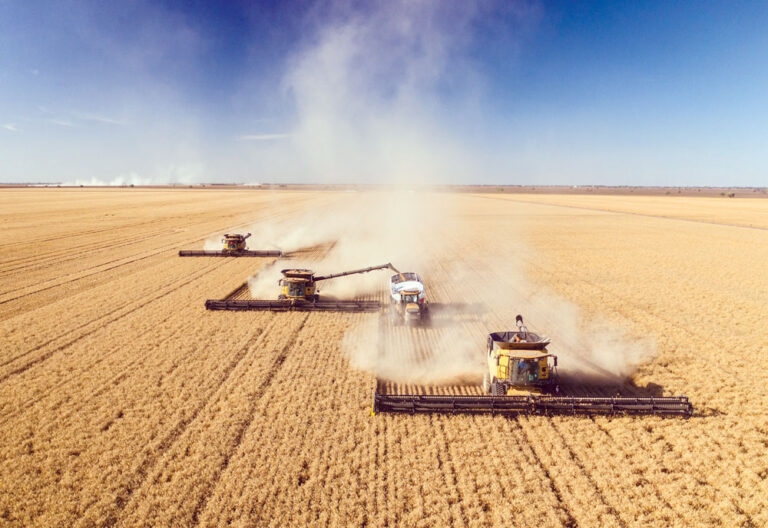
Local cotton growers produced their biggest record crop in 2011-2012 when more than 583,000 hectares were planted. This area planted produced more than 5 million bales, with a total forecast value of close to $3 billion.
And even though season 2023-2024 may falter a little on production with no more than 4.5 million bales expected to be counted, the overall income will be higher than the record season 2011-2012 with an estimated $3.2 billion of farmgate value.