All are in agreement that crop plantings are in record territory for winter season 2023-24 but there is a vast discrepancy on what the final harvest will tally

Soothsayers, experts and also-rans are getting in early with their predictions for the farmgate value for season 2023-24, and it couldn’t differ more than any recent season on record.
It’s the elephant in the corner of the room, El Nino, that has made several analysts blink.
However, as far as growers are concerned, it’s one of the best starts for planting across the country on record. And are spitting in the eye of an El Nino climate change coming in time to decimate their 2023-34 winter season harvest.
It is probably the biggest divide in sentiment toward a likely outcome that we have seen for over 20 years. Just who will come out of this with intact credibility will only be known at the final harvest tally.
At Rabobank, their Winter Crop Outlook report co-author, associate analyst Edward McGeoch is quick to confirm growers are on track to plant an impressive 23.48 million hectares for the 2023-24 winter crop – up slightly on last year’s crop.
And this is where the discrepancy in final outcomes starts to show a gap.

Other sources are predicting the widespread rain that restricted NSW and Qld growers last season is no longer in play and as a result, we will most likely see a record planting for winter 2023-24 above the 23.50 million hectares level for the first time. The planting record was set in winter season 2021-22 at 23.450 million hectares.
The Rabobank report, while not as optimistic on planted area predictions does project the area under crop to be high – but only 0.3% above last year and only 5% above the five-year average.
And moreover, the Rabobank overall harvest totals are forecast to be lower than last season, with expectations of drier growing conditions due to the likely transition to an El Nino climate cycle, the report highlights.
“Australia’s harvest potential for the upcoming season is expected to be below the recent consecutive bumper harvests,” the report says. However, it could still be “a decent total”, keeping Australia “well positioned to support global wheat needs in 2023-24,” Rabobank associate analyst Edward McGeoch explains.
“Following three years of high rainfall and positive growing conditions in many cropping regions across Australia –resulting in a streak of strong or record-breaking grains and oilseed production – it was possible there would be lower harvest volumes in the year ahead with the change to drier seasonal conditions.
“On a national level, the season did not begin as well as in recent years, however, April saw improved rainfall totals in several growing regions across New South Wales, Victoria and South Australia,” he said.

Plantings and production
Rabobank analysts forecast the planted area for wheat, barley and pulses to all be up for the season, but with canola planting down.
The area planted for wheat is projected to increase 2.9% on the previous year to 13.44 million hectares, 11.5% above the five-year average, with barley up 1.3% to 4.27 million hectares, down 10.4% on the five-year average.
The area planted to pulses is also expected to increase on the previous year to 1.77 million hectares, down 8.4% on the five-year average.
Canola planting is forecast to be down 8.4% on last season to 3.32 million hectares. However, this would still be 21.2% above the five-year average, Rabobank associate analyst Edward McGeoch outlined.
“Canola plantings have suffered as all other crops have benefited,” Edward McGeoch said. “The trend in most states – including Western Australia, New South Wales and Victoria – is that canola planting is down on last year due to the pullback in prices and the drier start to the season which has seen farmers returning to cereal crops within their rotations.”
Assuming normal seasonal rainfall, Rabobank analysts expect wheat production for 2023-24 to reach 29.9 million tonnes, down 24% from the previous year.
Barley production to reach 10.8 million tonnes, down 24% and canola at 5.4 million tonnes would represent a decline of 35% over last year.
However, Edward McGeoch added, “With climate models indicating a transition to weak El Nino conditions, we could see production drop lower, potentially to the lowest total crop in four years, at around 41.2 million tonnes.”

States predictions
By state, Rabobank analysts expect crop plantings for winter season 2023-24 to be up in Queensland, New South Wales and South Australia by 3.5, 3.4 and 0.3% respectively.
While they predict the Western Australian planting will be down 2.1% and for Victoria marginally down by 0.2%.
“For several areas across Queensland, early-season rainfall started relatively well, notably in the Fitzroy region, with above-average rainfall totals from January to April 2023 contributing to an expected jump in wheat planting, Edward McGeoch confirmed, while in New South Wales, growers are on track to plant a very large crop for the fourth consecutive year.
“Year-to-date rainfall in New South Wales has provided a full soil-moisture profile across the southern parts of the state.
For South Australia, total plantings across the state are expected to remain relatively stable compared with last year, Rabobank analysts say, up just slightly to 3.8 million hectares.
Planted cropping ground in Western Australia, while down, remain slightly above the five-year average. Wheat plantings have also bucked the trend in WA, rising marginally.
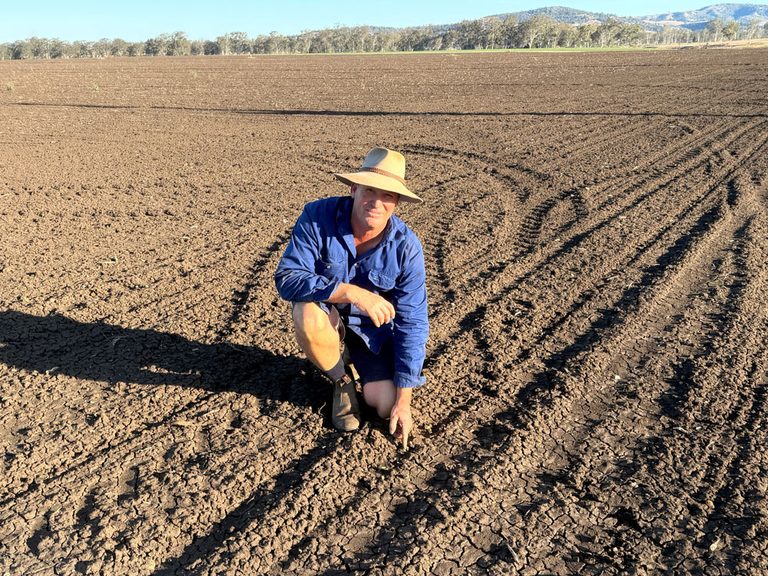
“Lower soil-moisture profiles, due to lack of opening rainfall this year, have led to reduced plantings across the state, with little assistance provided for strong early crop establishment, Edward McGeoch explained, the risk of a dry outlook is also a consideration given the autumn break was not as widespread as in recent strong seasons.”
For Victoria, overall crop plantings are expected to fall slightly from last year to 3.5 million hectares, Rabobank analysts say, even though various regions in the state are showing increased area under crop.
Exports
Export opportunities for the upcoming winter crop remain positive for Australia’s key market in South-East Asia, Rabobank analysts say, with freight charges declining back to 2020 levels and with Australia’s position as a favourable origin market.
Assuming the development of “weak El Nino” in 2023, Rabobank’s base case forecast would have 15.7 million tonnes of wheat from the 2023-24 crop (not including carryover stock from the 2022/23 season) heading to export markets.
And with continued strong global demand for wheat. Australia’s exportable barley and canola surpluses from 2023-24 production would be expected to reach 3.3 million tonnes and 3.4 million tonnes respectively.
Market prices
In terms of global grain markets, Rabobank analysts say recent price declines may reflect an only “temporary oversupply of crops in a complacent global market that is assuming nothing goes wrong later in the year”.
“Current global prices may be too complacent, given the political and seasonal risks around the world, Edward McGeoch adds, In the short term, there is enough grain available on global markets. However, if we look even a little bit further, a myriad of potential issues is bubbling away.
“The obvious is the Black Sea grain corridor collapsing during Ukraine’s export season, but also Canada is becoming hot and dry, Argentina and the US remain dry, and we now see Australia also becoming drier.”
Global wheat prices have collapsed 58% from record levels seen in March 2022, Rabobank analysts explain. However, Australian wheat prices have held up comparatively well, dropping just 20% in the period, albeit from lower levels.
“Whether the local wheat prices continue to hold up well despite the global price decline depends on the outcome of local production, Edward McGeoch adds, If Australian wheat production is more favourable than expected, basis could decline to negative levels.”
Globally, the bank forecasts Chicago Board of Trade (CBOT) wheat to trade on average between USc 624 and USc 683 a bushel over the next 12 months, but an upside above this range could be possible.
Locally, Australian Premium White (APW1) wheat track prices are expected to trade, on average nationally, between AUD 340 and AUD 380 over the same period. How strong local prices remain will also be determined by whether drier conditions persist or not, Edward McGeoch adds.
The fate of barley prices will partly hinge on the outcome of negotiations to lift Chinese tariffs, Rabobank analysts say. Pending this, for now, the bank forecasts Australian feed barley to continue trading at a heavier-than-average discount to wheat over the next 12 months, on average nationally between AU$230 and AU$270 track prices.
While the high premiums seen last year for malt barley should not be expected in the current season, Rabobank analysts say.
Rabobank forecasts Australian national non-GM (genetically-modified) canola prices to trade, on average, between AU$560 and AU$670 over the coming year, with GM canola trading at an AU$20 to AU$50 per tonne discount.
Crop inputs
On average, Edward McGeoch says, Australian farmers will increase fertiliser application this season, according to the bank’s research. This is the result of a decline in farm input prices after recent spikes, making fertiliser more affordable, as well as expectations of good returns from farming.
“Urea prices are expected to track around current levels, or with a minor increase, in the coming months,” Edward McGeoch added.
Application of urea is projected to be up four per cent on last year, potash up three per cent and phosphate two per cent.
However, this would still be below the long-term average use of these fertilisers by Australian growers, Edward McGeoch concluded.