With a transition from a wet weather La Niña into an El Niño dryer period just what impact it may have on the grain market Is spelt out by Market Check

The well telegraphed transition away from La Niña into El Niño has historically had huge implications on Australian grain production, which in turn has had big implications on our grain markets.
Growers and traders alike are glued to their weather models as we approach the critical spring period.
The BoM has primed us to not get our hopes up, forecasting a tough spring period as we transition into an El Niño.
Production forecasts in the early stages of the season are little more than a guess, as there are too many unknown variables.
However, a tough spring or not, there’s little debate that Australian grain production is going to be materially smaller this season.
Using wheat as an example, most analysts are estimating national production to fall from around 40MMT last year, to between 25-30MMT for the 2023-24 season.
In their latest update, ABARES forecast winter crop production down 34% this season versus the last. This could be optimistic if the spring period is harsh, and vice versa.
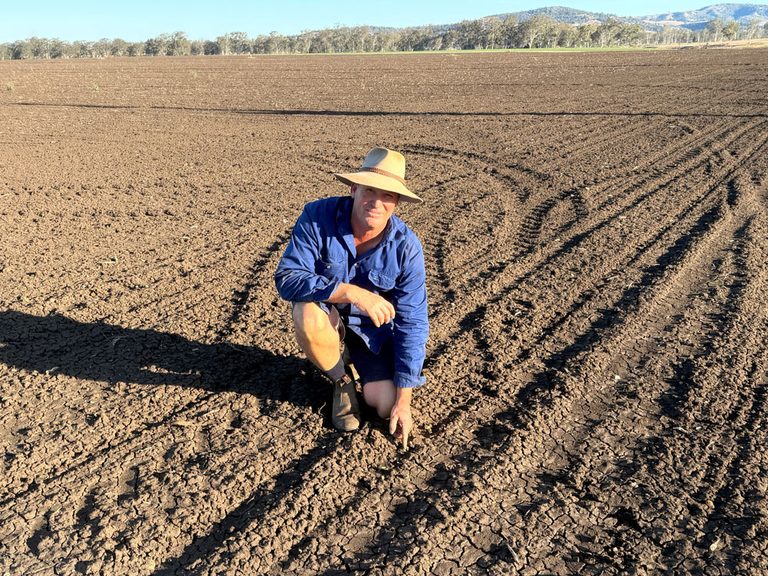
Unfortunately, the northern New South Wales and Queensland winter crops are really struggling, with planted acres down sharply after the tap turned off earlier this year and hasn’t turned back on since.
This has completely reset the market dynamics here in Australia.

In 2022, Australia had some of the weakest prices globally, as our supply chain suffered indigestion as we tried to export a record crop.
The lack of available supply chain and high global prices due to the Russian/Ukraine conflict pushed our relative value versus other exporters (and major US/EU futures exchanges) to record lows.
As it became obvious that a fourth straight thumping crop was not on the cards for 2023, our relative value began normalising, as exporters/consumers started buying up ahead of future commitments, and growers pulled back on sales considering the drier conditions.
Fast forward to today, and Australian prices have re-established themselves at the higher end of global values, with Queensland barley (and nearly wheat) pricing inter-state shipments from SA and WA.
If we look at 2023/24 APW1 multi-grades, convert the prices on offer to a Free-On-Board basis and then compare against our export competitors, Australia looks rather expensive.
NSW and QLD the most, but even SA, VIC and WA have moved prices high enough that a chunk of demand will go somewhere else, which is necessary given our smaller export task this season.

The market’s job now is to work out what sort of exportable surplus we’re going to have, and price accordingly – a question that’s impossible to answer until we know how our spring unfolds.
Our political stability and guaranteed execution have been of little value in years gone past, however, given the constant issues emerging from the Black Sea we should see global importers put more of a value on Australia’s stability in execution.
With so much uncertainty around production and markets, it’s becoming more difficult to navigate what to do when it comes to grain marketing.
Prices are attractive, but for good reason given the production risks still ahead.

The lack of grower engagement to date is telling of growers’ confidence going into spring.
If we do manage to get under some rain in Spring, we’ll see growers come to the market to catch up on sales and our relative value should weaken as a result.
However, if we see hot and dry conditions, we’ll likely continue to price at a level that forces global import demand to search elsewhere in the world for their wheat.
This timely grain market update was prepared exclusively for AFDJ by Nick Crundall CEO of Market Check.
Market Check specialises in offering innovative year-round grain marketing strategies. Call a Market Check advisor today in Eastern Australia on tel: 02 9499 4199, South Australia on tel: 08 8661 7130, or email: agdesk@agrisk.com.au or go to this link.