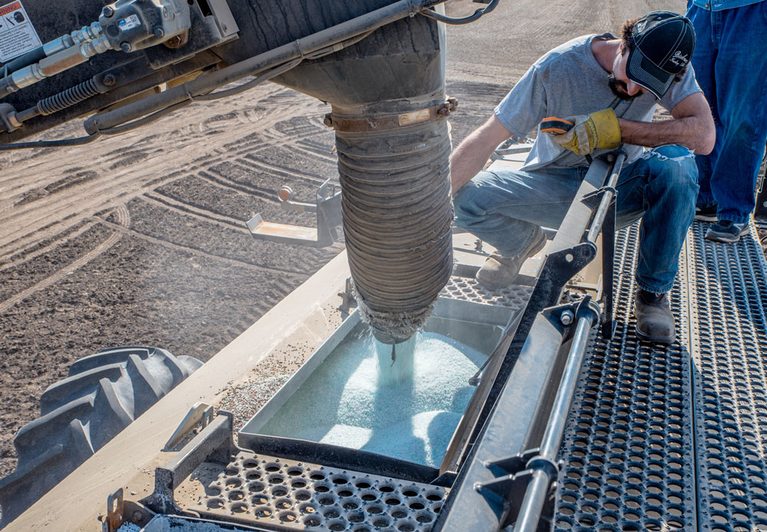
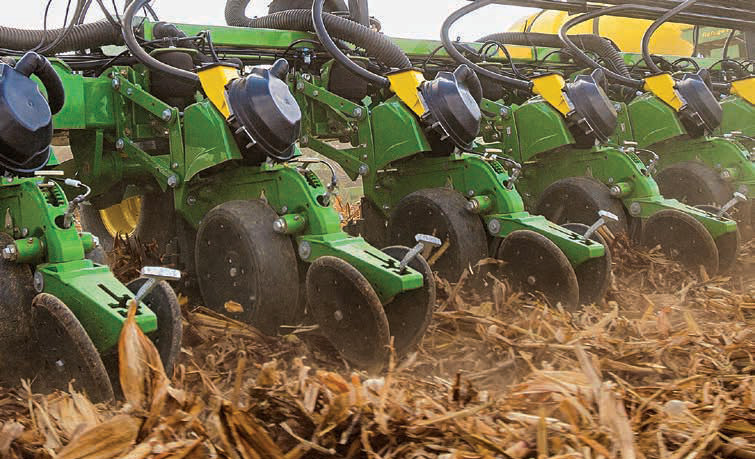
ExactShot uses sensors and robotics to place starter fertiliser precisely onto the seed at planting to avoid continuous flow wastage

Some days it seems like just about everybody is working against the multinational chemical giants, especially since fertiliser increases of up to 150% were felt by growers during the past Winter planting season.
As a result, growers will be quick to latch onto latest technology that allows planters to determine a single dose of a mere two-tenths of a millilitre (0.2ml) of fertiliser directly onto seed and stop wastage of at least 60% of current fertiliser usage.
This technology is provided by sensors and robotics to place starter fertiliser precisely onto seeds as they are planted, rather than wasting product and money by applying a continuous flow of fertiliser to the entire row, where it is not needed.
It is expected John Deere will be first out of the starting blocks as they claim their direct fertiliser application version called ExactShot will be available for the US Spring planting season and that means a March 2023 start for many of the open-plains growers.
Apart from adding ExactShot to their planting system very little else changes for growers as far as their planting operation is concerned, except at the end of each run they will have saved over 60% of their usual fertiliser bill.
ExactShot will be able to determine exact timed bursts of fertiliser to coat individual seeds only, then leave the soil between the seeds dry and fertiliser free.
The timing of the bursts is where the precision ag tech has taken some time to develop, by using sensors to follow exactly when each individual seed is going into the soil.
As the seed is dropped, a sensor alerts a robot to spray only the amount of fertiliser needed, about 0.2ml, directly onto the seed at the exact moment it hits the ground.
And while growers accept this will be a money-saving delivery system, John Deere also points out the efficiency of having no fertiliser present between the seed.
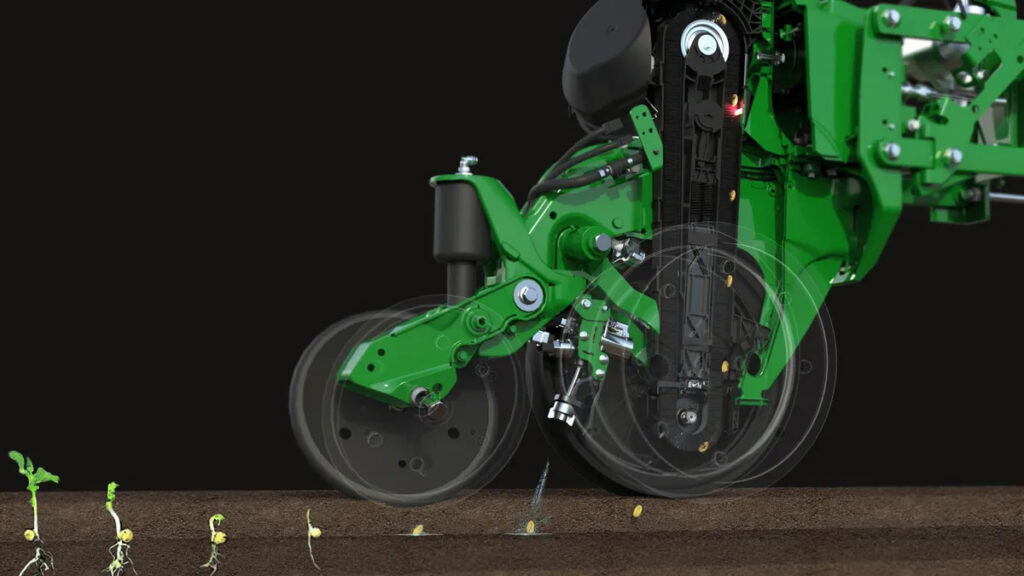
With fertiliser only on the target seed, it means there is no overflow that could cause weeds to grow and flourish that in turn would pull nutrients away from the crop as it does in normal continuous flow fertilising.
And in addition, there are benefits from distributing less fertiliser waste, that can sometimes sit dormant for a season or more in the paddock with the potential to run off the paddock into waterways or even through the air with wind gusts.
Deanna Kovar, John Deere VP of Production and Precision Agriculture Systems for the company said, “Precision is key in agriculture because we’re operating in huge quantities of ground and plantings.
“Eventually, we will literally treat every plant on each hectare of a paddock differently based on what we’re learning through our computer vision and machine-learning tech.”
“Conventionally, farmers apply starter fertiliser in a way it is sprayed continuously down each row of plants, even though only the seed needs the jolt.
“As of today, this is going to change,” said Kovar. Now, the ExactShot system allows farmers to apply starter fertiliser precisely at scale, with speeds up to 16kph, and only where the seeds are planted.
A planter with 24 ExactShot robots can plant 720 seeds of corn per second. The system moves through the paddock at twice the speed of legacy planters,” she explained that given the challenges of weather and labour, this is huge.
According to Kovar, this single machine will plant 34 million corn seeds on a good day with precise placement and depth. While farmers are planting seeds, a sensor will register when each individual seed is going into the ground.

And the robotic will spray only the amount of fertiliser needed. About two-tenths of a millilitre (0.2ml) is directly sprayed on the seed at the exact moment that it goes into the soil.
The speed synchronisation precision in which this is happening in the paddock was previously unthinkable.
The combination of sensors and robotics can deliver massive cost savings to farm operations and a significant environmental benefit. Because in the process of growing crops, fertiliser counts for a large portion of total greenhouse gas emissions.
That means ExactShot can have an immediate, measurable impact on the way crops are planted.
A John Deere spokesperson also added that for the US corn crop alone, the ExactShot technology could save over 350 million litres of starter fertiliser annually, valued at US$650 million of input costs.
This is not just a concept of something planned, John Deere spokes people are very clear that ExactShot will be available in time for the 2023 US planting season.
ExactShot takeaways at a glance
- ExactShot will help farmers be economically and environmentally sustainable as they work tirelessly to grow the food, fuel and fibre population has come to rely upon. With the global population expected to grow from 8 billion to nearly 10 billion by 2050, farmers need to increase production by 60% to 70% on current farmland.
- ExactShot uses a sensor to register when each individual seed is in the process of going into the soil. As this occurs, a robot will spray only the amount of fertiliser needed, about 0.2ml, directly onto the seed at the exact moment as it goes into the ground.
- Across the next US corn crop, ExactShot could save over 350 million litres of starter fertiliser alone and prevent wasted fertiliser from encouraging weed growth or increasing the risk of running off the paddock into a waterway. While saving growers US$650 million of input costs.