More weight is added to a dismal winter harvest as crop predictions are evaluated down by a leading source

Just about everybody in the big cities has been made aware of rising interest rates and how that will devastate their future lifestyle through added mortgage repayments.
But up until now most growers have been impervious to such rumblings and have gone about planting down what many predict as a record 23.5 plus million hectares for winter season 2023-24.
What’s that got to do with interest rates you ask. Well, it’s just that if you can be scared out of your pants, someone is there to do just that.
Negativity rules the current environment and what appears to some to be an early call for a disastrous winter crop harvest has been laid bare, with the prediction of falls from record highs due to below-average rainfall for the rest of winter and spring.
Executive Director of ABARES Dr Jared Greenville expects the total winter crop production to fall by 34% to 44.9 million tonnes in 2023–24 following three consecutive record production years.
Dr Jared Greenville explains, “Weather at the start of the winter cropping season in 2023–24 has been mixed.
“Early autumn rainfall in some major cropping regions in southern Victoria, southern New South Wales, southern Queensland, South Australia and central cropping regions in Western Australia replenished soil moisture levels and provided favourable planting conditions.

“However, autumn rainfall in northern and southern cropping regions in Western Australia, northern New South Wales, northern Victoria and parts of southern and Central Queensland has been lower than average and soil moisture levels have remained low.
“As a result, winter crop production is expected to decline to 3% below the 10-year average to 2022–23 of 46.4 million tonnes and yield prospects are forecast to be below average due to the expectation of below average rainfall for winter and spring.
“On a more positive note, high crop prices, good seasons and record farm cash incomes over the last three years mean many growers will stay in a strong financial position despite the fall in production.
“These incentivised growers to plant a crop this season while also allowing some growers to fallow a higher proportion of paddocks in dry areas.
“For the major winter crops, area planted to wheat is forecast to fall by 2% to 12.8 million hectares and area planted to barley is forecast to increase by 4% to 4.3 million hectares, largely because of the crop’s ability to withstand drier conditions compared to wheat and canola.
The longer planting window for cereals is also expected to result in some late plantings following rainfall events.
“Looking ahead, a significant downside risk to the 2023–24 winter cropping season is the potential for an El Niño event and positive Indian Ocean Dipole to both eventuate this year.
“The development of an El Niño event is likely to result in below-average rainfall across eastern Australia during the Winter cropping season. We are also expected to see a positive Indian Ocean Dipole which may suppress winter and spring rainfall over much of Australia and potentially exacerbate the drying effect of an El Niño event.
“Despite the decline in production and weather events, national planting to winter crops in 2023–24 is set to remain historically high in 2023–24 at 23.3 million hectares, 6% above the 10-year average to 2022–23,” ABARES Dr Jared Greenville concluded.
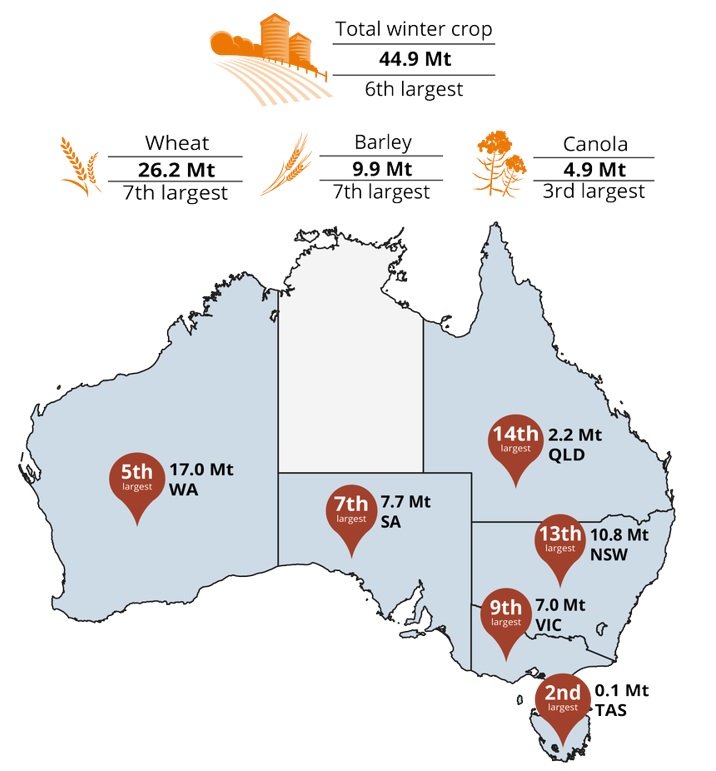
How the states are expected to fare
The gloomy predictions from ABARES are based on what it perceives as a significant downside risk to the 2023–24 winter cropping season, the potential for an El Niño event and a positive Indian Ocean Dipole to both eventuate later this year.
As a result, ABARES suggests the development of an El Niño event is likely to result in below-average rainfall across eastern Australia. A positive Indian Ocean Dipole can suppress winter and spring rainfall over much of Australia and potentially exacerbate the drying effect of an El Niño event.
Rainfall in El Niño and positive Indian Ocean Dipole years is generally below average in both winter and spring in Australia. Therefore, ABARES is assuming rainfall could be insufficient to restore depleting soil moisture required for plant growth.
The start of the winter cropping season in 2023–24 has been mixed. Early autumn rainfall in some major cropping regions in southern Victoria, southern New South Wales, southern Queensland, South Australia and central cropping regions in Western Australia replenished soil moisture levels and provided favourable planting conditions.
However, autumn rainfall in northern and southern cropping regions in Western Australia, northern New South Wales, northern Victoria and parts of southern and Central Queensland has been lower than average and soil moisture levels have remained low.
Dry conditions and low soil moisture levels in these regions mean that much of the crop has been dry-sown and will require adequate and timely follow-up rainfall to allow for crops to germinate and establish.
According to the ABARES report, for areas with below-average levels of stored soil moisture, the dry conditions during May are expected to have discouraged some growers from committing to their full planting intentions.
The latest three-month rainfall outlook (June to August), issued by the Bureau of Meteorology on 25 May 2023, there is a high chance that winter rainfall will be below average across Australian cropping regions.
Most areas with average to above-average levels of soil moisture are likely to receive enough rainfall to sustain crop production until spring.
And The Bureau adds the expected onset of El Niño conditions from July 2023 will likely see Australian winter crop production fall significantly in 2023–24.
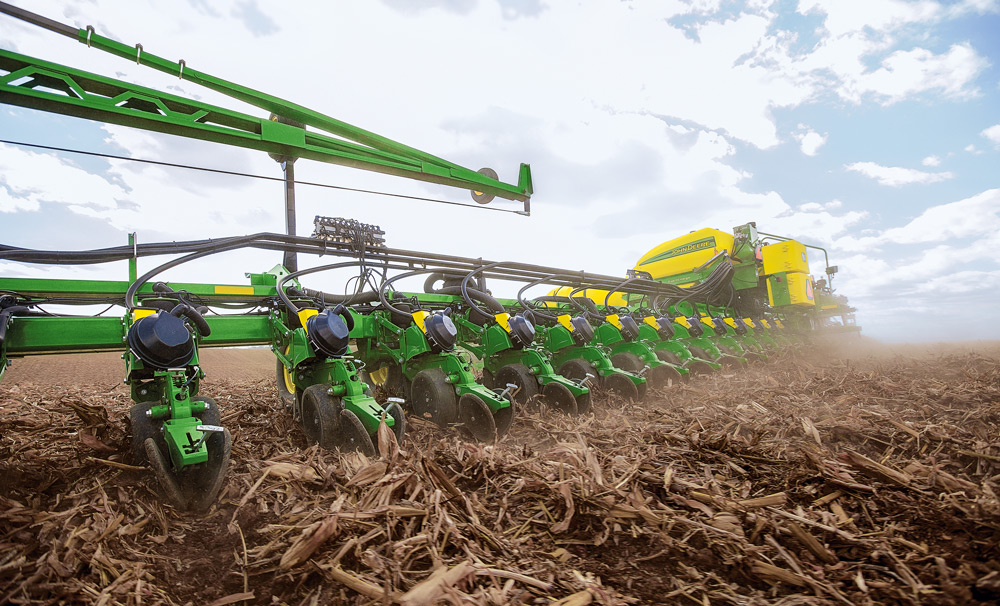
Area planted to Winter crops
Even with their pessimistic outlook, ABARES has forecast plantings will remain historically high in 2023–24 at 23.3 million hectares, 6% above the 10-year average to 2022–23.
This is only marginally below the record planting set in season 2022-23 at 23.4 million hectares, and other sources predict the final planting could be as high as 23.5 million hectares.
Growers have been confident moving through the season with many able to pick a window where conditions were perfect for planting.
This was backed up by a war chest from high crop prices, good seasons and record farm cash incomes over the last three years with many growers in a strong financial position to plant at high levels.
Area planted for select crops
ABARES is forecasting a slight fall of 2% to 12.8 million hectares. While the area planted for barley is forecast to increase by 4% to 4.3 million hectares, largely because of the crop’s ability to withstand drier conditions compared to wheat and canola.
The longer planting window for cereals is also expected to result in some late plantings following rainfall events, and this is why the winter planting record could be at an all-time high.
ABARES predicts the area planted for canola will fall by 11% to 3.5 million hectares, the second-largest area on record. While the reduction in area reflects the less favourable start to the season and drier outlook, and to some extent the lower expected returns following recent falls in world canola prices.
Grower constraints related to crop rotations have also seen some substitution towards other crops.
Winter crop predictions
Following three consecutive record production years, ABARES is predicting that total will fall by a massive 34% to 44.9 million tonnes in 2023–24. This is around 3% below the 10-year average to 2022–23 of 46.4 million tonnes.
Yield prospects are forecast to be below average by ABARES based on the expectation of below-average rainfall for winter and spring.
With the lower expectations from ABARES, they forecast Wheat production to fall by 34% to 26.2 million tonnes, slightly below the 10-year average.
Barley production is forecast to fall by 30% to 9.9 million tonnes, around 11% below the 10-year average.
While Canola production is forecast to fall by 41% to 4.9 million tonnes, around 15% above the 10-year average.
On-farm pest management has so far minimised damage to winter crop plantings and development in affected regions. And while some growers may suffer production losses, national production is not expected to be significantly affected.
Mouse activity appears to be very patchy and seems to be related to paddock history (high-yielding crops, lots of ground cover). Mouse numbers have been lower than in 2021 and are expected to fall as cold winter conditions slow breeding rates.
Similarly, slug and snail populations have also been higher than usual due to consecutive wet years which has also led to growers undertaking increased baiting activity.
If there wasn’t an adverse weather forecast for drier than usual conditions bought on by an El Niño event and positive Indian Ocean Dipole, the winter season of 2023-24 could easily be read as another near-record season, based on plantings to date.