A sensor system developed for drones can switch between edge detection and detailed infrared imaging to tell growers everything they need

Development is well underway to fit a compact, lightweight sensor system with infrared imaging capabilities to a drone for remote crop monitoring and help growers get an overall better view of their crop’s progress.
This flat-optics technology has the potential to replace traditional optical lens applications for environmental sensing in a range of industries.
This drone sensor system will enable growers to pinpoint which crops require irrigation, fertilisation and pest control, instead of taking a one-size-fits-all approach, potentially boosting harvest results.

The sensor system can rapidly switch between edge detection – imaging the outline of an object, such as a fruit – and extracting detailed infrared information, without the need for creating large volumes of data and using bulky external processors.
The capability to switch to a detailed infrared image is the very latest in sensor development and would allow growers to collect more information when the remote sensor identifies areas of potential pest infestations.
This research is being run by engineers at the City University of New York (CUNY), the University of Melbourne, RMIT University and the ARC Centre of Excellence for Transformative Meta-Optical Systems (TMOS).

How the sensor system works
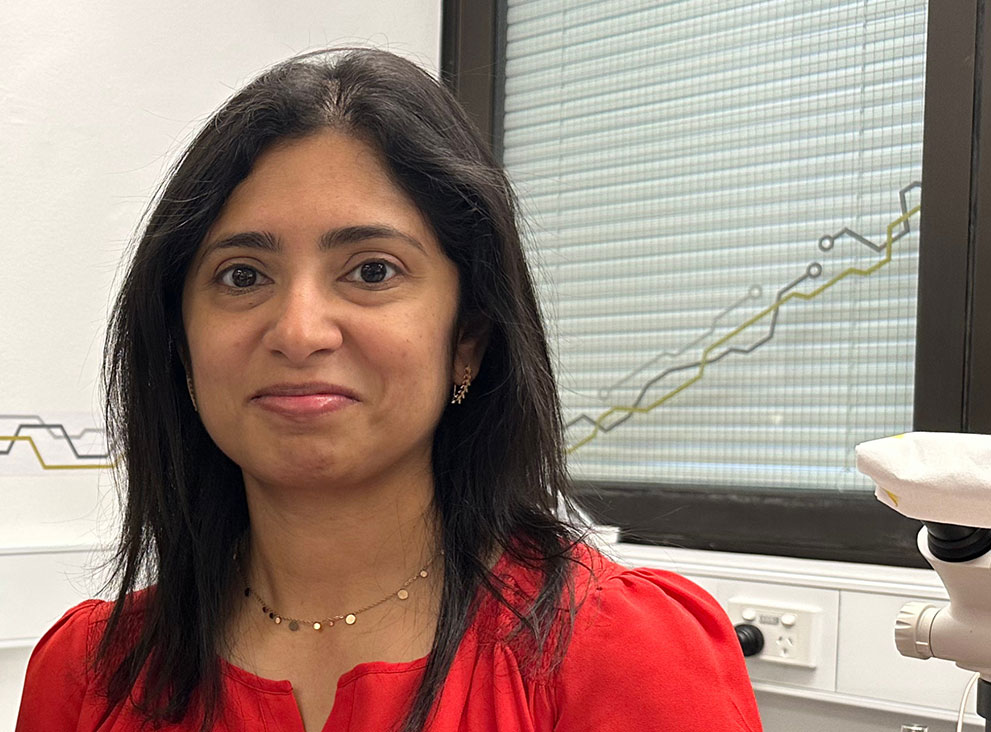
The prototype sensor system comprises a filter made with a thin layer of a material called vanadium dioxide that can switch between edge detection and detailed infrared imaging, was engineered by TMOS Chief Investigator Professor Madhu Bhaskaran and her team at RMIT in Melbourne.
“Materials such as vanadium dioxide add a fantastic tuning capability to render devices ‘smart,” Professor Madhu Bhaskaran explains.
“When the temperature of the filter is changed, the vanadium dioxide transforms from an insulating state to a metallic one, which is how the processed image shifts from a filtered outline to an unfiltered infrared image.
“These materials could go a long way in futuristic flat-optics devices that can replace technologies with traditional lenses for environmental sensing applications – making them ideal for use in drones and satellites, which require low size, weight and power capacity,” Professor Madhu Bhaskaran concluded.
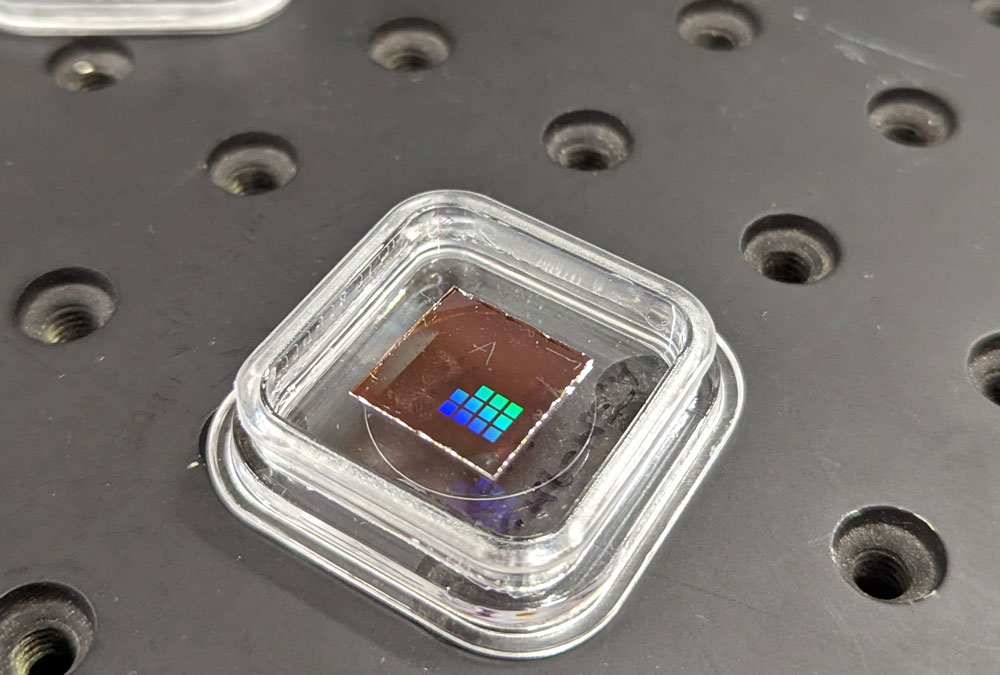
RMIT holds a granted US patent and has a pending Australian patent application for its method of producing vanadium dioxide films, which is expected to be suitable for a broad range of farming applications.
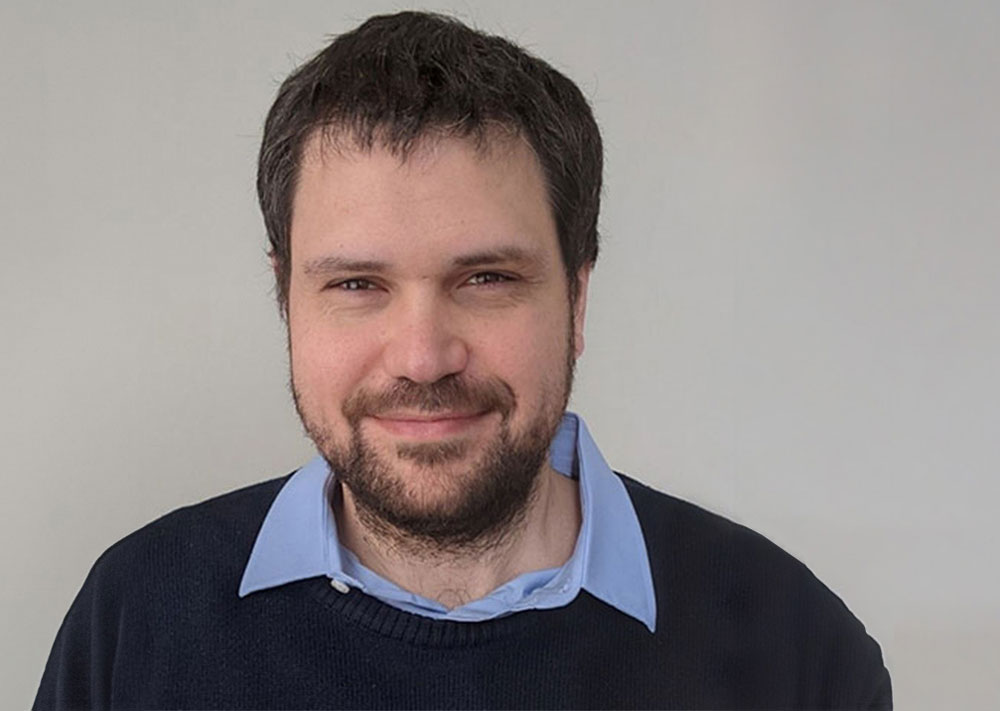
Lead author Dr Michele Cotrufo said the system’s ability to switch between processing operations, from edge detection to capturing detailed infrared images, was significant.
Dr Michele Cotrufo who conducted his research at CUNY explains further,“While a few recent demonstrations have achieved analogue edge detection using metasurfaces, most of the devices demonstrated so far are static. Their functionality is fixed in time and cannot be dynamically altered or controlled.
“Yet, the ability to dynamically reconfigure processing operations is key for metasurfaces to be able to compete with digital image processing systems. This is what we have developed,” Dr Michele Cotrufo added.
Next steps to market
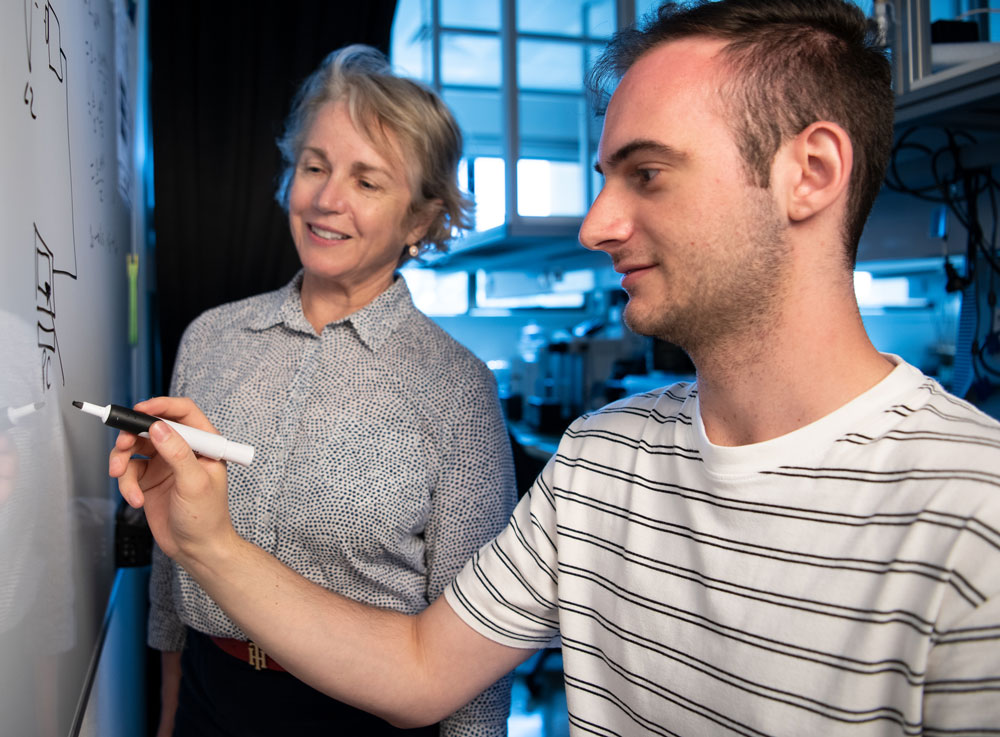
Co-author PhD scholar Shaban Sulejman from the University of Melbourne said the design and materials used make the filter amenable to mass manufacturing.
“It also operates at temperatures compatible with standard manufacturing techniques, making it well-placed to integrate with commercially available systems and therefore move from research to real-world usage rapidly,” Shaban Sulejman added.
TMOS Chief Investigator Ann Roberts, also from the University of Melbourne, said flat optics technologies had the potential to transform countless industries.
“Traditional optical elements have long been the bottleneck preventing the further miniaturisation of devices. The ability to replace or complement traditional optical elements with thin-film optics breaks through that bottleneck.” Ann Roberts concluded.