The value of farmland recorded an 11th year of unbroken growth with the national median price rising to a record level in 2024
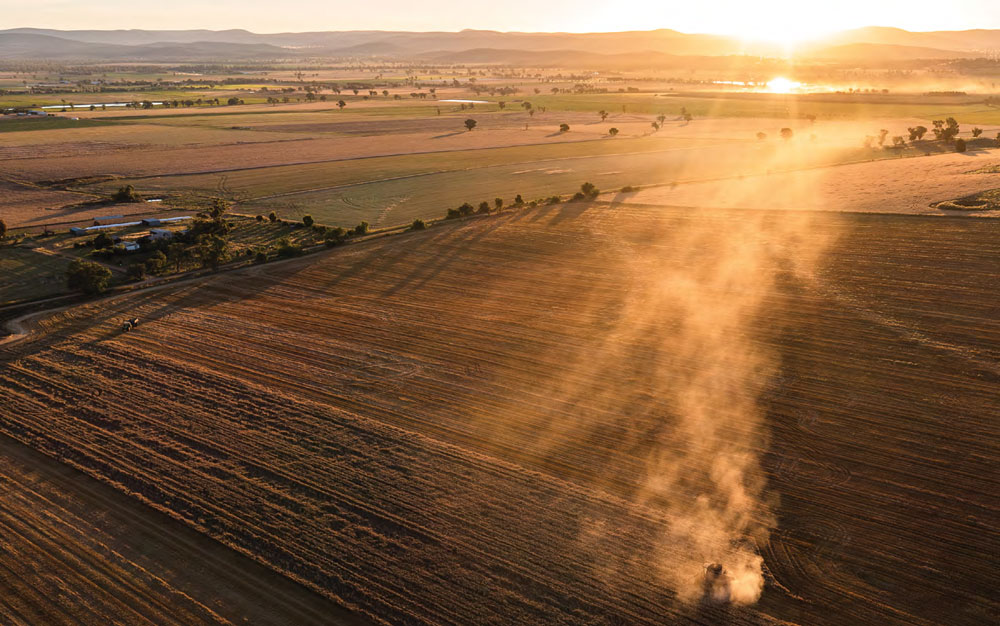
While farmland remains a desirable asset, the pace of growth has become more constrained since the previous survey in 2023 by the team at Bendigo Bank.
From the latest figures for sales in 2024, it has shown a second consecutive year of moderate growth when compared to the unprecedented lift in the farmland value throughout 2019 to 2022.
The underlying drivers of the farmland value were more varied in 2024 compared to 2023.
Elevated interest rates remained a constant and continued to provide a significant headwind to demand, along with seasonal conditions being more mixed with the favourable weather in northern states contrasting with a significant lack of rain in southern regions.
Commodity prices were also a factor as they shifted higher, with the most significant price growth recorded in the livestock sector.
For regions impacted by the dry conditions, a broad slowdown in farmland price growth was observed.

But in regions with plenty of rain, such as Queensland and New South Wales, those states benefited from the strong rebound in livestock prices and more favourable weather that was reflected in higher price growth.
Sales volumes increased marginally at a national level, but sellers maintained their high price expectations, which continues to see properties sit on the market for extended periods.
Interest rate cuts throughout 2025, while supportive, are unlikely to drive a widespread resurgence in demand.
While farmland availability remains tight, the mixed seasonal conditions across the country combined with ongoing uncertainty surrounding global trade and commodity markets are expected to limit the prospect of substantial growth in 2025, with values expected to only see moderate growth across the year.
As dynamics shift in the farmland market, it is crucial to understand the recent performance of the market and the drivers underpinning those trends.
Bendigo Bank Agribusiness’ Australian Farmland Values analysis presented their report that draws on data from every farmland transaction over the past three decades.
That relates to almost 300,000 transactions accounting for 350 million hectares of land traded at a combined value of $230 billion.

Farmland value summary
Growth in farmland values steadied during 2024 following the slowing of growth that was observed throughout 2023.
But even so, the national median price per hectare increased by 6.9% in 2024 to a record $10,231/ha, the 11th consecutive year of growth.
However, to some degree, it represents a notable cooling in the rate of annual increases compared to the period from 2018 to 2022, when the median price growth of farmland more than doubled.
Even more alarming, the national median price has tripled over the past decade, rising by 201% at a compound annual growth rate (CAGR) of 11.6% per cent.
Over a longer time horizon, the national median price has a 20-year CAGR of 8.6%.
We saw growth in median price across five of the six states during 2024. Tasmania recorded the strongest year-on-year growth of 14.2% and was one of only two states where an acceleration in the growth of the median price was observed when compared to 2023.
Queensland also saw a lift in growth with the median price rising 12.1% as a rebound in cattle prices provided a significant boost to buyer sentiment.
A notable slowing of growth was observed in Western Australia, with the state’s median rising by only 9.2%. While New South Wales recorded a lift in median price of just 7.2%, well down on the 15.8% recorded in 2023.
Despite the slowing growth, this was New South Wales’s 11th consecutive year of growth, the longest run of growth in the country.
South Australia continued its trend of slowing growth that has been seen since 2022, with growth of 1.7%, due to a drought impacted year.
Victoria was the only state to record a decline, with the median price per hectare easing by one per cent.
The cooling, but albeit in record territory farmland market was also observed across the nation’s 39 regions, with just 8% of regions recording growth of over 20% in 2024, well down from the 44% increases recorded across 2023.


Interestingly, seven of the top 10 growth regions in 2024 were in Queensland or Western Australia.
The 2024 farmland market saw a surprising rebound in the number of transactions compared to 2023. The number of farmland sales rose 5.8% in 2024 to 7,154 transactions.
This rebound followed an 18.2% decline in 2023, that still represented the third lowest number of national farmland sales in the last three decades.
Across the states, a rebound in transaction volumes was almost exclusively driven by eastern states, with the lift in volumes ranging from 12.1% in New South Wales to 9.6% in Queensland and then 6.5% in Victoria.
Meanwhile, transactions across South Australia and Western Australia continued to tighten, declining by 7.5% and 11.1% respectively. While Tasmania saw a modest fall in the total number of sales, down 6.4%.
Farmland transactions in 2024 equated to a total of 4.7 million hectares of land traded at a combined value of $14.9 billion.
The cooling farmland market trend continued through 2024, with growth moderating further in the second half of the year.
The median price in the first half of the year rose just 1.2% from the second half of 2023, though this still represented growth of 12.2% over the first half of 2023. While the second half of 2024 saw an ongoing slowing of the farmland market, with the median price rising just 0.6 per cent from the first half and 1.8% higher than a year earlier.

Driving farmland values
The national median price per hectare of farmland is historically closely correlated with the net value of farm production (NVFP) per farm.
This measure captures the impacts of commodity price and production trends on farm income while also accounting for costs, including interest expenses. As a result, it is a figure that represents the combined impact of the main drivers of farmland values.
Looking at NVFP on a per-farm basis also gives this value to the level at which farmland selling or purchasing decisions are made. The last financial year saw a significant decline in NVFP, falling to its lowest level since 2019-20.
This decline has seen the NVFP drop 9% below the ten-year average of $140,000 and sit well below the two prior financial years, which both sat above $240,000 in comparison.
This exceptional run of high-earning years fuelled a period of extremely strong appetite for farmland purchases while also creating very little pressure to sell. As such, farmland values were driven higher at a rapid pace.
The operating environment that has resulted in the slowing of the NVFP per farm during 2023-24 has contributed to the plateauing of farmland values seen across most regions during the 2023 and 2024 calendar years.
Looking ahead, the estimated NVFP per farm for 2024-25 is expected to rebound on the back of stronger livestock prices and rising crop production that will more than offset an increase in farm costs, fuelled by higher input prices.
This is expected to see NVFP per farm rebound to $183,000 or 31% above the ten-year average. While the forecast rebound of the NVFP per farm should prove positive from a farmland value perspective, it remains well below the record high observed during 2021-22 during the peak of the farmland boom.
When combined with the more unpredictable global trading environment, growth in local farmland is expected to remain limited over the first half of 2025, with a greater likelihood of stronger growth in the second half of 2025 as falling interest and input expenses drive a further uplift in the NVFP resulting in an expected rebound in industry sentiment.

Farm commodity prices
The sharp rebound in livestock prices across late 2023 and into 2024 drove a substantial improvement in buyer sentiment, particularly across New South Wales and Queensland.
As a result, demand for farmland in grazing regions surged following an underwhelming performance throughout 2023. The livestock price index (comprised of cattle, lamb, mutton and wool prices) rose 11% across the course of 2024, although this remains well below the index peak observed in early 2022.
Over the same 12-month period, the crop price index (comprised of wheat, barley and canola prices) sat almost unchanged.
The result for the index of all agricultural commodity prices was a 0.5 per cent lift across 2024, however, the index does sit 15% per cent above the low that was recorded in October 2023.
The recovery in the livestock sector was a major driver behind the growth in median recorded across the northern regions of the country, however, some weakness in livestock markets across the first quarter of 2025 will be watched closely amidst ongoing uncertainty in global trade.
Seasonal conditions trend
Seasonal conditions were mixed throughout Australia in 2024, with wet weather recorded in January across most agricultural production areas, before seasons diverged between the states.
The southern most states of Victoria, Tasmania and South Australia had generally drier seasons, while Queensland and New South Wales had a more favourable year in comparison. Meanwhile, Western Australia recovered from a dry start to have a strong cropping season thanks to timely rainfall.
This followed a dry year for many regions of the country across 2023, where a steep decline in crop production, together with significant downwards pressure on livestock prices (in turn driven by sharply higher turn-off) eroded farm incomes.
The improved conditions across New South Wales, Queensland and Western Australia helped to ease some of the pressure from landholders. This, paired with the improvement in livestock prices during 2024 assisted in promoting demand for farmland.
This is contrasted with the conditions experienced in South Australia and Victoria. Both states had a tougher season compared to the year prior, with reduced appetite from growers to purchase additional land.
This is expected to have been a limiting factor in farmland transaction volumes in 2024.
Farmland price outlook for 2025
Current settings for key drivers of farmland values suggest continued support for prices in 2025.

Supply is expected to remain tight; despite transaction volumes increasing across most states and territories in 2025, they are expected to remain well below the levels seen in the 2 to 4 years prior.
Interest rates have moved into an easing cycle, also expected to be supportive, although the current forecast is for a shallow easing cycle and rates are not expected to fall to the low levels seen over the past decade.
While commodity prices are likely to continue to be supportive, escalating global trade tensions may drive additional volatility, impacting sentiment.
Cattle and lamb markets are performing well compared to the lows seen in 2023, while grain markets are also expected to see strong support through most of 2025.
The seasonal outlook remains a factor that could continue to limit demand, as the current three-month outlooks are forecasting a less than 50% chance of achieving median rainfall across most of southern Australia.
If this forecast comes to fruition, productivity and profitability will be impacted, which in turn could hamper demand. However, with three of the four major drivers being somewhat supportive, many expect to see moderate growth in farmland values throughout 2025.
For more details on the farmland values report, contact Bendigo Bank Agribusiness on tel: 1300 236 344, or email AgribusinessInsights.Mailbox@bendigoadelaide.com.au