Industry pundits have eased off just a little on their previous dire predictions of a gloomy harvest with the strong winter crop 2023-24 plantings still to be fully realised

With the Spring season has come a more optimistic outlook from industry watchers who previously had the Winter crop for 2023-24 on the skids with no way out.
Their predictions were flying in the face of growers who set about planting a healthy 23 million hectares for the 2023-24 season, not that far off the all-time record of 24.18 million hectares set in season 2020-21. See the previous estimates here.
With an upbeat in expected returns, Executive Director of ABARES Dr Jared Greenville said today he expected the total crop production value to fall 20% in 2023-24 when compared to the all-time record of last year to $46 billion.
Dr Jared Greenville continued, “For agriculture income, after a record $92 billion result in the 2022-23 financial year, an overall forecast 14% decrease will see the value fall to $80 billion in 2023-24 because of drier domestic conditions and an expected fall in global commodity prices.

“Overall, from all farmgate resources, Australian agriculture, fisheries and forestry are set to have the third-highest yearly gross value on record in 2023-24, with production value predicted to reach $86 billion.
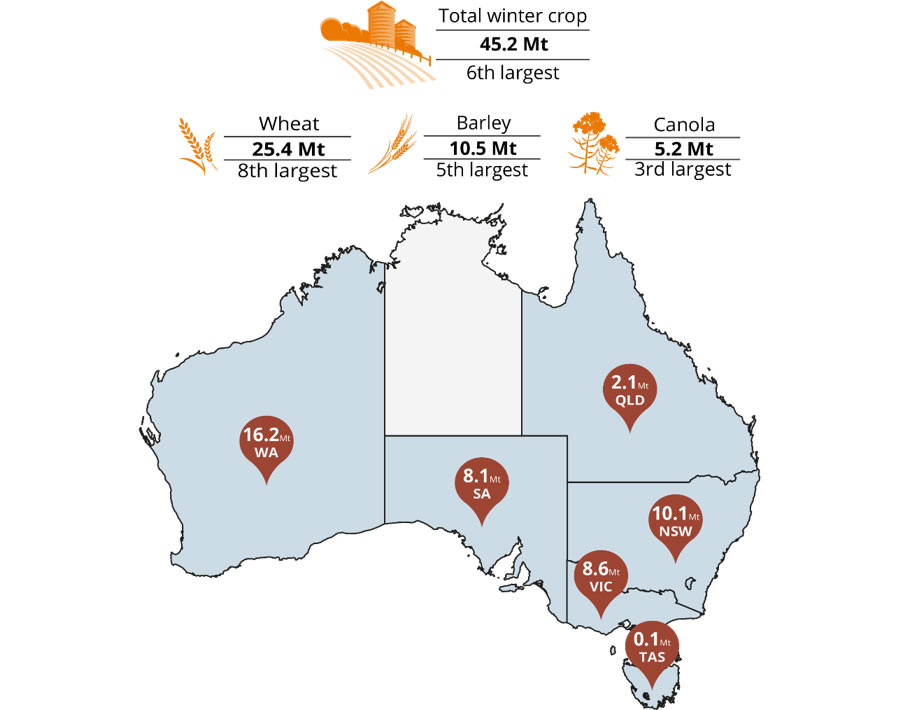
“National winter crop production is expected to be around 45.2 million tonnes, slightly below the 10-year average. Drier conditions are so far having the greatest impact on northern cropping areas, with prospects for the southern cropping regions holding up after better-than-expected winter rainfall.
“Drier conditions will also mean livestock producers will need to send more animals to slaughter. As supply increases, saleyard prices for cattle and sheep are expected to fall; sheep prices are forecast to fall below their long-term average.
“At the same time, global meat prices are falling. These factors will mean despite higher production volumes, the value of livestock production is expected to fall by $1.6 billion to $34 billion in 2023-24.
“Production and price outcomes will also weigh on export performance with the value of agricultural exports expected to decrease by 17% to $65 billion.
“Farmers are also facing elevated input costs across key inputs such as fertiliser, diesel and labour. High interest rates are also increasing the costs of debt repayments.
“Despite all the challenges, it is important to remember that falls are coming off the back of record years which have helped rebuild financial reserves and our agricultural sector remains resilient and competitive,” Dr Greenville concluded.

Winter crop production 2023-24
Following an energetic planting and strong early enthusiasm from growers across all growing regions, seasonal winter cropping conditions have been mixed throughout the 2023–24 winter cropping season.
Conditions have been mostly favourable across southern cropping regions where better-than-expected early winter rainfall boosted soil moisture levels and benefitted crop establishment and growth.
Winter crop prospects are favourable in southern New South Wales, Victoria, South Australia and southern cropping regions of Western Australia.
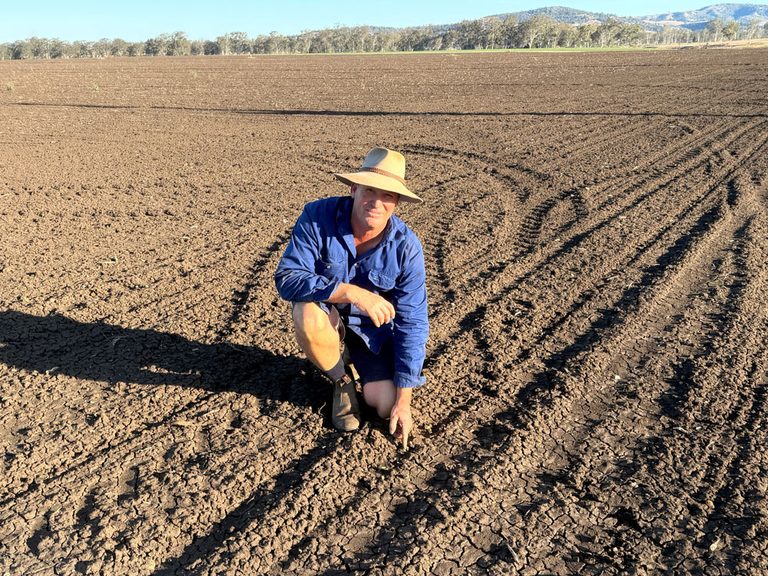
In contrast, planting and establishment conditions were largely unfavourably in Queensland, northern New South Wales and northern and eastern cropping regions of Western Australia.
This has led to some winter crops experiencing moisture stress, with yields forecast to be below average.
According to the latest three-month rainfall outlook (September to November 2023), issued by the Bureau of Meteorology, there is a high chance that spring rainfall will be below average across all cropping regions.
Most areas with average or better levels of soil moisture are likely to receive enough rainfall to sustain crop production.
However, in cropping regions with low soil moisture, such as southern Queensland, northern New South Wales and the northern and eastern cropping zone of Western Australia, the increased chance of dry spring conditions is expected to negatively affect yield potential.
These regions will require sufficient and timely rain to maintain current levels of winter crop production, particularly in the coming weeks with higher temperatures expected and increased water demand for crops.
While El Niño is expected to develop and reduce production prospects, the extent to which it influences rainfall and temperatures presents a key downside risk, and as a result, industry pundits are playing it safe with their early predictions.
Analysis of past El Niño events suggests that climate impacts can be variable. If conditions are even drier and hotter than expected, this is likely to see crop prospects deteriorate further in regions where winter crops have little soil moisture.
When viewing the industry estimates for season 2023-24 it should be noted that we are coming off three consecutive record production years, and the forecast for a fall of 34% to 45.2 million tonnes is not as bad as it looks. Even if that outlook does not improve.
Many growers are optimistic for a much better result, based on there being no official El Niño called at this stage by The Bureau and reasonable spring rain prospects.
This latest industry prediction already represents a small upward revision from the June forecast but if it was to occur, would remain below the 10-year average to 2022–23 of 46.4 million tonnes.
The forecast of below average winter crop yields also forms part of the reduced expectations owing to persistent dry conditions in key northern cropping regions.
However, it could become a season of winners and losers, as the fall in expected yields in northern cropping regions is likely to be partially offset by better yield potential in southern cropping regions.

In this volatile season, some predictions have already begun to move unexpectedly from the position taken in June.
This is the industry view of what growers can expect in the way of returns from winter season 2023-24
Wheat production is in hot water and could take a hammering with a forecast fall of 36% to 25.4 million tonnes when compared to the record last year. If this forecast eventuates it will be 4% below the 10-year average. This is a downward revision from the June forecast.
Barley production has little faith from within the industry forecasters and is predicted to fall by 26% to 10.5 million tonnes, 6% below the 10-year average. This is an upward revision from the June forecast.
Canola production is under the gun, and this darling crop that has supported many growers in the past is forecast to fall by 38% to 5.2 million tonnes.
But even if this prediction eventuates it will still remain well above the 10-year average on account of area planted estimated to be the second highest on record. This is an upward revision from the June forecast.
Area planted to winter crops in 2023-24 is forecast to fall year-on-year but remain historically high at 23 million hectares, 4% above the 10-year average to 2022-23. This fall is mostly driven by a 6% decrease in area planted in New South Wales and Western Australia.
Winter crop production 2023-24 in summary