Surprising results include how some cereal varieties produce higher-quality hay when cut later than previously adopted traditional cutting time
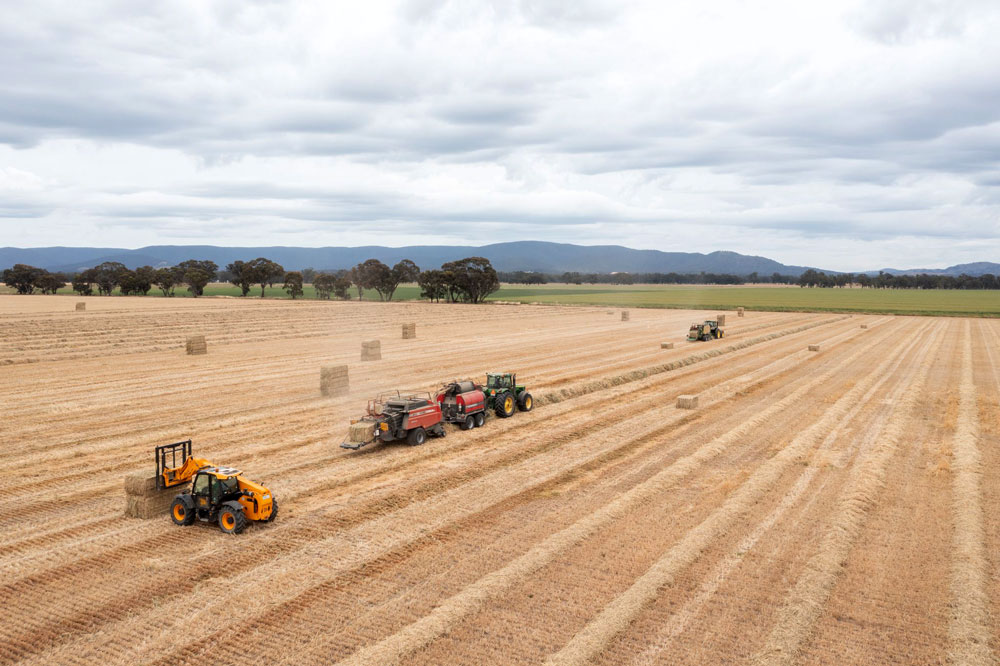
Everything you thought you knew about producing quality cereal hay has been uprooted according to recent research.
Leading agronomic researcher and consultant, Mick Faulkner from Agrilink Agricultural Consultants in South Australia, has presented ground-breaking findings into quality cereal hay production.
The Australian export fodder industry is a significant contributor to our local economy, with from $450 to $600 million worth of hay exported annually, predominately to Asia and the Middle East. Most of this export hay is oaten hay, sourced from Western Australia, South Australia and Victoria.
The export hay industry, currently dependent on oaten hay supply, would benefit from the identification of alternative cereal crop options. Identifying suitable wheat and barley varieties would help de-risk the industry’s reliance on oaten hay and provide an opportunity to export these other hay types in seasons when they become financially competitive.
The project evaluated the most suitable wheat and barley varieties that have potential for hay and grain production. A range of awnless, hooded wheat and barley varieties were assessed to determine whether they could match or exceed dual purpose benchmarks for biomass yield, hay quality and grain yield. Trials were conducted in the Mid-North of South Australia.
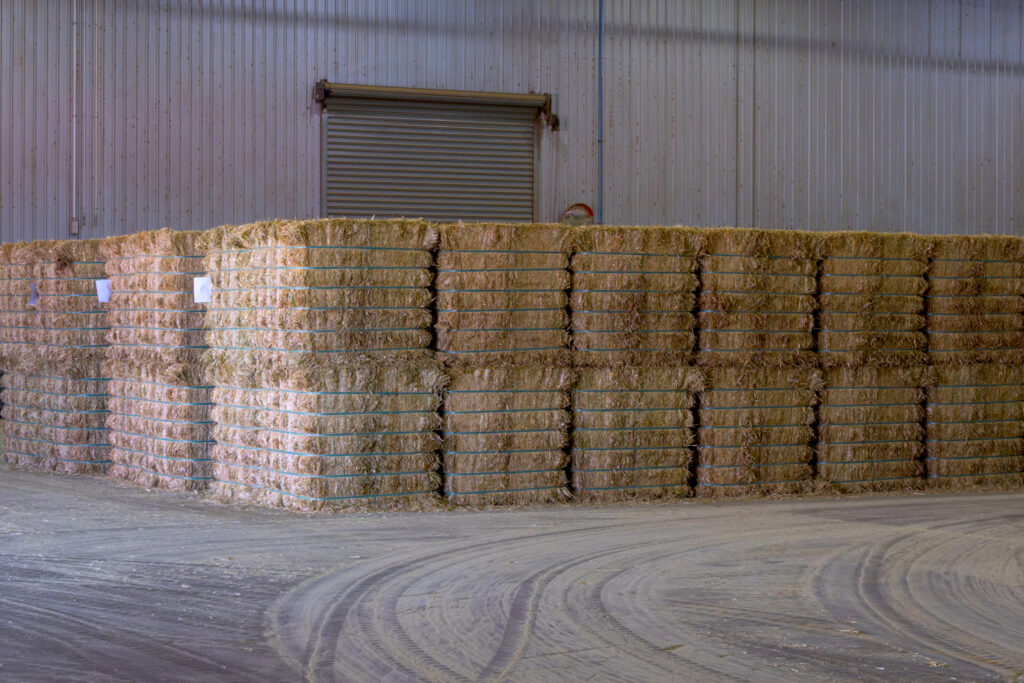
The findings highlighted the potential of wheat and barley for use in the export fodder industry. It also revealed more variety development work is required to produce more genuine dual-purpose options that meet the required hay and grain standards.
The hooded barley variety Kraken produced acceptable hay biomass and quality; however, the grain yield was too low to be considered a dual-purpose variety. The awnless wheat variety Orion produced suitable biomass, hay quality and grain yield but, unfortunately, is rated only Australian Soft Wheat (ASW) for grain quality.
Among the highest performers for dual purpose potential were the experimental wheat variety BB256 and the oat variety Bannister, which is already classed as dual purpose.
This project highlighted the potential of some cereal varieties to be grown as genuine dual-purpose hay or grain options. The adoption of dual-purpose varieties is important because it will provide growers with improved end-use flexibility and less production risk.
It is recommended that breeding activities increase efforts to develop dual-purpose awnless wheat, awnless/hooded barley and oat varieties that provide adequate hay and grain attributes.

Research findings
Mick Faulkner made his findings through research that evaluated dual-purpose cereals for the export hay market, where he concluded his latest research into wheat and barley varieties with dual-purpose potential, those that can be grown for either grain or high-quality hay.
His work also compares these cereals to a range of oat varieties, offering growers additional insights into crop flexibility and market responsiveness.
“Dual-purpose varieties are a game-changer,” Mick explains, “They allow growers to adapt to seasonal conditions and shifting market demands, switching between grain and hay production as needed.”

Mick added, “Although my research is focused on high-quality export hay, many of the insights are highly relevant to the domestic hay sector.”
“I am looking forward to expanding on my findings, with industry stakeholders, from newcomers to the more experienced, exchanging and learning new ideas and ways to grow hay,” Mick concluded.
With the current hay shortage on the East Coast and soaring prices, the industry is hungry for solutions and innovation.”
The research, supported by AgriFutures Australia, has already revealed surprising results. Samantha Beresford, General Manager – Levied and Emerging Industries, said “Mick’s work has uncovered exciting new knowledge about cereal hay production.”
“One of the most striking findings is that some cereal varieties actually produce higher-quality hay when cut later than the traditional recommended cutting time, a complete reversal of current industry norms.”
“This challenges long-held industry practices and opens the door to more flexible, potentially more profitable harvesting strategies”, Samantha Beresford added.
While further trials are needed across different seasons and production zones, Samantha Beresford emphasised the significance of this research. “This is the kind of breakthrough work AgriFutures supports, not just for export fodder, but across a range of rural sectors,” Samantha Beresford concluded.