Unless average rainfall comes soon it will be an uneven result for farmers in the 2025-26 season with a grim outlook for the marginals

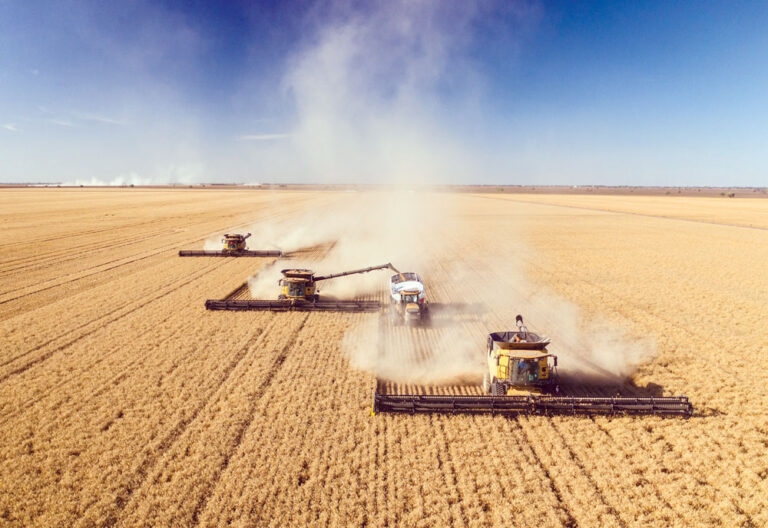
The breathtaking run to plant down one of the biggest crop on record to achieve a record harvest now rests on a knife-edge.
Growers coming off the second biggest winter harvest last year were primed and confident when they planted down an estimated 24.9 million hectares for the 2025-26 winter season, in what could have resulted in a record harvest.
But since the seed went into the ground, it has been dealt a bitter blow of very little to no average rainfall.
Analysts are already covering their tracks by suggesting the heady talk of harvest records now be curbed, as previous production predictions for the gross value of agricultural production are now down by 2.8% to $90.7 billion in 2025-26.
This revised prediction has been driven by the lower crop and livestock production volumes that could result from lack of rainfall in several cropping regions.
But what stands out here, even with the dry spell, the value of agricultural production in 2025-26 is still tipped to be the third highest on record and worth $97.5 billion when fisheries and forestry are included.

Industry observers still hold some optimism, mainly due to the favourable seasonal conditions across northern NSW, Queensland, and southern Western Australia that has already provided a strong start to the 2025-26 winter cropping season.
However, much will depend on production outcomes across South Australia, western Victoria, southern NSW and northern cropping regions of Western Australia where much of the winter crop has been dry sown.
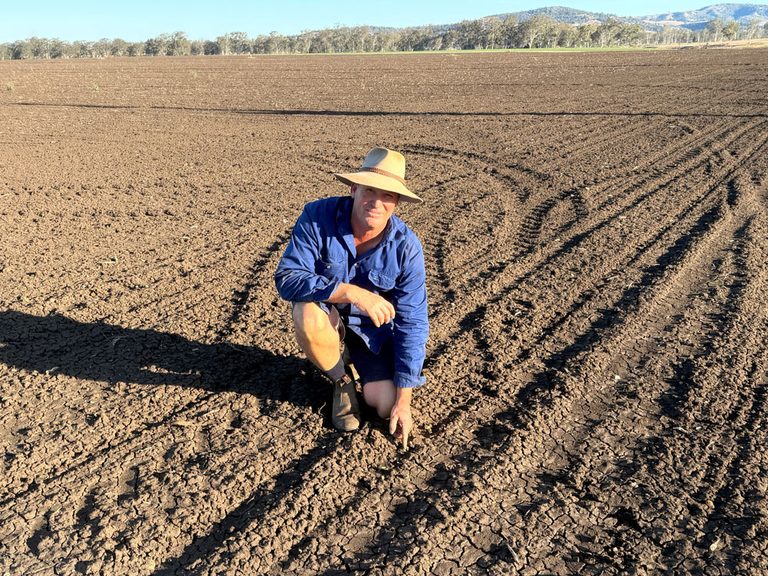
These are the cropping regions where results have moved from a wing and a prayer to rest on a knife-edge, where growers are highly dependent on receiving some positive rainfall within the next few weeks.
“Winter cropping conditions in those areas are at a critical point in the season, especially where there is a total lack of soil moisture,” according to the lead researcher at ABARES Dr Jared Greenville.
“The rainfall outlook for these regions is currently positive, which is embedded in our current forecasts, but if not realised, creates a downside risk to national production figures.
“Despite the risks, the overall seasonal outlook is positive but is expected to lead to lower production than last year, Dr Jared Greenville adds.

If the shortfall on average rain eventuates, it is expected that this scenario will result in a fall in crop production value of $2.1 billion and a further $0.5 billion reduction in livestock product values.
And while livestock and livestock production volumes are expected to fall by 3%, as farmers start restocking, demand for this sector remains strong, as do export prices, predicted at a
total of $71.7 billion for 2025-26, or $76.7 billion when fishery and forestry exports are included, this would still be the third highest exports on record.
Despite significant challenges from an uncertain trade environment, flooding and risks around average rainfall, the overall census is that the farm sector remains strong, with the value of production still expected to be the third highest on record in 2025-26.
See a more detailed analysis of the 2025-26 winter crop on this link.