With fruit and vegetable prices remaining above average growers are expected to boost production for increased returns this season

Strong horticultural production combined with rising export demand for key varieties are expected to hold producers in good stead over the back half of 2023 according to a report from the Rural Bank that counts fruit and vegetable growers in a growth phase.
And while the Bureau of Meteorology’s forecast for below median rainfall across much of the country is a concern, high water storage levels are keeping water prices low which will continue to benefit irrigated crops.
The reduced likelihood of damaging rainfall events is also anticipated to drive improved quality across key export varieties, and this will benefit growers even further.
While prices are broadly expected to trend lower, improved export market access combined with relatively steady domestic consumption and high production costs will keep fresh fruit and vegetable prices above longer-term averages.
Improving fertiliser prices and labour supply in comparison to 2022 will come as some relief to growers over the next six months. Though both labour and input costs are expected to remain above pre-pandemic levels.

Fruit outlook
Fruit production volumes are forecast to remain above average over the next six months.
Deep soil moisture levels are favourable which will help to offset the forecast drier seasonal conditions and support yields from mature trees. However, more recent plantings may struggle in the drier conditions.
Export demand for produce is expected to rise to near-record levels. This is partially driven by an increase in the amount of higher quality produce anticipated over the next six months, which finds particular favour amongst export markets.
This improved quality is a result of the drier seasonal conditions which will drive reduced disease and crop damage in comparison to last year.
Greater access to both the United Kingdom and Indian markets resulting from recent trade agreements will further lift export demand, particularly over the longer term. The agreements are expected to benefit a wide range of fruit including citrus, avocados and stone fruit.
Domestic demand remains mostly stable, though the cost of living pressures will drive a decline in demand for more premium produce such as dried fruit and berries.

Strong avocado production is again anticipated across both the east and west coast growing regions with national production forecast to reach between 100,000 and 115,000 tonnes. This compares to last season’s record production of more than 120,000 tonnes which drove wholesale avocado prices to as low as $1.30/kg.
Avocado production will continue trending higher over the long term as additional plantings reach full maturity. Export demand is expanding amidst greater access to both the Indian and Thailand markets, though these markets remain relatively small (at the moment) in comparison to the increasing production seen in the Australian market.
Japan remains a growing export market for Western Australian growers with annual exports now totalling $1.5 million, a year-on-year increase of more than 130%. Notably, the Japanese market remains closed to east coast growers.
Avocados Australia alongside the Australian government are working through various biosecurity measures in an attempt to meet Japan’s strict requirements. Opening up access to new export markets will be key to keeping a floor under avocado prices as domestic production continues to expand.
Domestic demand remains strong, though has far more limited capacity for growth. The slightly lower production forecast and additional export markets should see prices hold up better in comparison this year with wholesale prices expected to hit a low of around $1.50/kg.


Favourable conditions over the past six months have driven a broad increase in citrus production this season. Mandarin harvest is underway, with picking taking place a few weeks later than normal.
Production on the east coast is well above last season’s mandarin crop with current national production estimates ranging between a 15 to 30% increase on last season.
Notably, orange production volumes are expected to decline slightly with average yields and slightly smaller sizing, though overall quality is looking good which will drive strong export demand for Australian produce.
National orange exports are expected to return closer to an average of 185,000 tonnes following last season’s sharp drop off in exports due to quality issues.
High-quality fruit is typically exported to Asian markets. Demand from these markets is particularly strong this season which will offer further support for prices.
Below average US production and reports that China has approved imports from a number of Australian citrus exporters amidst improving trade relations will also drive additional demand for Australian produce.
This comes as great news for growers with high production costs continuing to impact margins.
Navel prices are expected to sit slightly above average with the additional export demand to take volumes away from the domestic market in comparison to the previous season.

Vegetables kick back
This follows a challenging period during the first half of the year as production recovered from flood and storm events that impacted a number of key vegetable crops including tomatoes, potatoes and onions.
Vegetable production is forecast to be broadly above average across most key production regions over the next six months.
Favourable water storage levels are expected to drive increased planting across most key varieties, while it’s hoped that the forecast drier weather conditions will reduce weather related risks to production.
Onion supply is expected to return closer to average over the back half of 2023. Tasmania, one of the key production states, saw crops impacted by heavy rainfall and flooding which has weighed on output over the first half of 2023.
Domestic and food service demand for onions remains stable while export demand is elevated. Heavy rain across growing regions in Europe will exacerbate onion shortages in the EU over the coming months.
This will keep European demand for Australian onions above normal levels before returning closer to average as we come into spring.
The increased domestic supply should see wholesale prices of brown onions return closer to longer term averages of just under $1/kg, particularly towards the back end of the year.
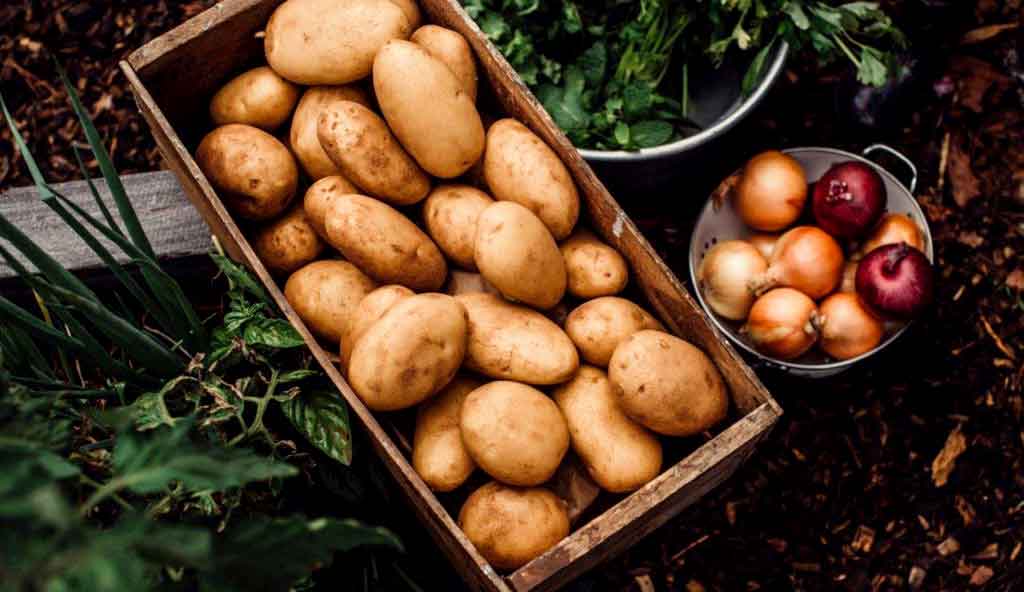
Potato volumes have returned closer to average over the past quarter, though production remains hampered following a challenging six-month period for producers.
Later plantings across parts of Victoria and Tasmania are struggling with a lack of sunlight which becomes more limited later in the year. This is expected to have a negative impact on yields over the back half of the year.
As a result, total supply is expected to remain slightly below average which will keep prices slightly elevated despite relatively steady domestic demand at both a consumer and foodservice level.
Tomato volumes are also anticipated to rebound slowly with production across key growing regions in central Victoria struggling to recover from flooding and hail damage that occurred late last year. Victoria typically produces over 60% of the total national tomato output.
Fresh tomatoes are seeing supplies begin to stabilise following a delayed planting period, however, over half of all production is used for processing.
Canned tomatoes are likely to absorb the reduced production which will keep canned tomato prices well above average according to key producers.

Nuts make a comeback
This year’s almond crop has been impacted by a number of challenges, with initial estimates putting total output for the 2023 crop between 120,000–130,000 tonnes.
This compares to last year’s almond crop of almost 140,000 tonnes. Difficulties with pollination driven by the varroa mite outbreak last year along with a wet finish to 2022 drove a significant decline in yields.
The quality of the almond crop held up relatively well with a drier harvest period helping to reduce mould levels. This will aid prices with export demand for Australian almonds expected to be strong this season amidst a smaller than expected Californian crop as cold and wet weather impacted pollination in the key US growing area.
Chinese demand for Australian almonds remains significant as substantial tariffs on US almond exports remain in place.
Macadamia producers are struggling amidst high global supply and constrained demand. Significant plantings both domestically and globally are driving production volumes consistently higher.

Macadamia plantings from 5 to 10 years ago are now entering full production, with this growing supply trend expected to continue over the coming seasons.
Current industry forecasts for local production have the 2023 macadamia crop sitting at around 53,500 tonnes in shell, an increase on last year’s crop of just under 53,000 tonnes. While global production for 2023 is expected to be near 320,000 tonnes, an increase on last year’s production of just over 300,000 tonnes.
Both domestic and export demand remains subdued as inflationary pressures weigh on consumer demand for premium produce which is weighing further on pricing. As a result, macadamia prices have reached a 10-year low globally but have stabilised over the last few months.
Farmgate prices have now fallen from $6/kg in-shell to below $2/kg. Global supply is forecast to grow to 500,000 tonnes over the next five years keeping the pressure on prices.
The macadamia industry is expected to expand into the food ingredient sector as a result of the lower prices, though this is a longer-term strategy required to improve demand prospects