It’s bad news for harvester operators as a survey from the 2022/23 season has found poorly set-up rigs are losing millions in revenue – well above acceptable thresholds

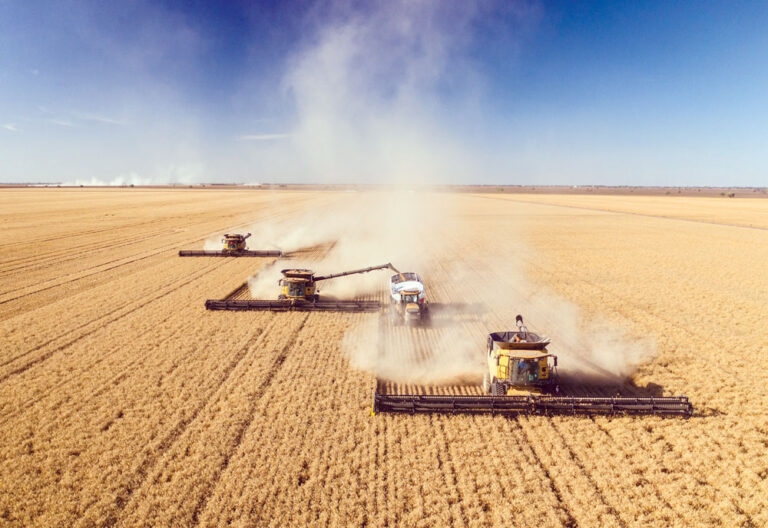
Harvest losses in the 2022/23 season far exceed acceptable thresholds, as shown from research measuring the scale of grain and profit lost in just one region of WA alone where an estimated $320 million of grain was left in paddocks from poor front performance and other machine losses across cereal, canola and grain legume crops.
As a result, the Grains Research and Development Corporation (GRDC) has stepped up its Measuring Harvester Losses project, in conjunction with the Grower Group Alliance (GGA) to work with growers to maximise harvester throughput capacity with acceptable losses.
Findings from the 12-month GRDC Measuring Harvester Losses survey have been compiled from the study conducted across 65 sites for eight crop varieties during harvest 2022/23.
GRDC grower relations manager, Jo Wheeler, said the study showed that harvester losses continue to be higher than acceptable thresholds, highlighting the need for growers to prioritise measuring grain loss during harvest and calibrating their headers for optimum results.
“Be aware of factors that influence grain loss, and continually monitor and calibrate your machinery to keep these losses at an acceptable level for your enterprise,” Jo Wheeler added.
“Changes during your harvesting program such as moving to a new paddock, changing to a new crop type, or if weather conditions such as moisture or humidity change, can all contribute differently to harvest losses, so be prepared to re-check your losses using drop trays, and adjust your machines as you go.”
GGA found the average losses in wheat and barley crops were 2 and 4.6% respectively. In canola, losses were measured at an average of 3.2% but were as high as 10% at some sites.

Comparatively, industry wide loss benchmarks are less than one per cent for cereals and two to three per cent for canola pending the conditions.
Losses measured by GGA exceeded these guideline benchmarks for all winter crop grain types except for wheat in 2022.
Technical lead Ben White said losses and throughputs were recorded for harvesters as delivered and with modified concave and rotor setups. While this work needs further quantification, losses in modified machines were reduced significantly while maintaining or even increasing throughput.
“Front losses were again surprisingly high, exceeding measured machine losses in all crops except barley and oats,” he said.
“Of note, while offering significantly higher throughput in wheat and barley, stripper front losses were several times higher than other front styles.
“Both of these factors should be accounted for by growers considering an investment in a stripper front.
“Vario, Varicut and/or Varifeed fronts demonstrated improvement in throughput in canola crops and also delivered a significant reduction in front losses, making a strong business case for their use pending the area of canola grown.”
Once again, the need for growers to quantify losses was demonstrated with those using drop trays achieving lower losses at harvest than those that do not use trays.
“Using drop trays at harvest helps identify, capture and quantify losses so loss monitors can be calibrated accordingly,” he said.
These results, based on receival figures from Grain Industry Western Australia (GIWA) and harvest grain prices, support data generated from the 2021/22 harvest.
A secondary objective of the project was to facilitate grower adoption of practices necessary to mitigate harvest losses.
This involved delivering drop tray measurement training to grower group staff including LIEBE Group, Corrigin Farm Improvement Group and Stirlings to Coast Farmers, demonstrating the measurement and calibration process of the drop trays.
The team then worked with the grower groups to consistently capture the data under a carefully defined testing protocol and data entry template for analysis.
GGA project manager Daniel Kidd said this educational piece was crucial to encouraging grower adoption.
“The value of GGA’s involvement in this project is through building capacity in our grower group staff by linking them with experienced operators,” Daniel Kidd added.
“Developing these skill sets within the grower group network and providing the drop trays for ongoing use allows them to continue this work with their grower members once the project finishes.
“As the report showed, the proportion of growers using drop trays is still the minority from the growers surveyed with less than four in 10 growers utilising them.
“But the figures also showed that growers who measured losses with drop trays and made the necessary adjustments had lower levels of grain loss for high-value crops,” Daniel Kidd concluded.