Coming off a record result last year the value of livestock is still forecast at high levels for the 2026-27 season
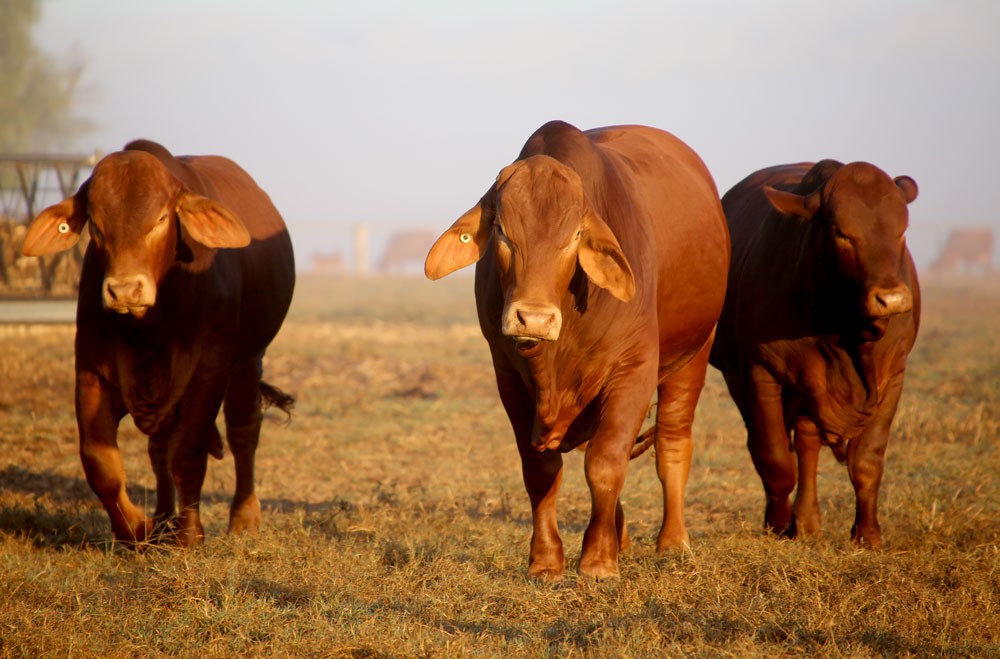
Livestock producers played a major role in the record farmgate value of $101.4 billion from last season and will be a major contributor in the 2026-27 season where agricultural production is expected to reach $98.3 billion.
In the two main livestock categories producers will be managing an estimated beef cattle herd of 24.9 million head, and a total sheep flock estimated at 65.6 million head in season 2026-27.
Early predictions estimate livestock and livestock product value will be $47.4 billion, in season 2026-27, down slightly by 2% from the record high of $48.5 billion set in the 2025-26 season.
The reason forecasters have set a slightly lower income is based around the likely prices the sector will achieve, down a little from last year.
And while a slightly lower value of cattle and sheep slaughter is forecast it is expected to be outweighed an increase in the value of milk, wool, pigs, poultry, and eggs.
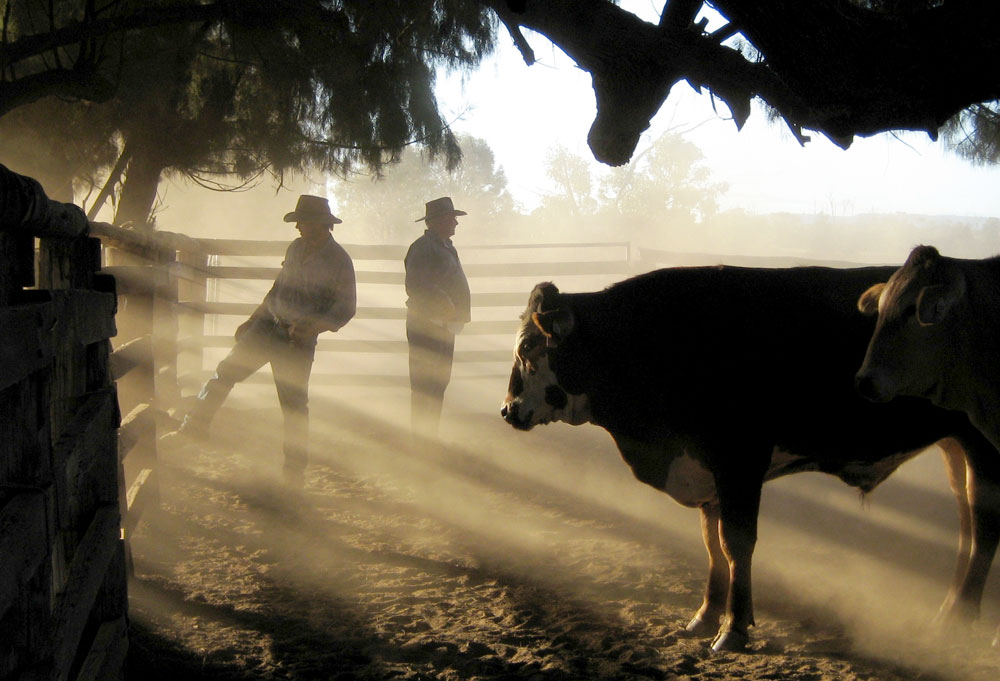
The main reason cattle and sheep saleyard prices are forecast to ease is due to a drier than average climate outlook and weaker demand in export markets compared to 2025-26.
In contrast to a levelling for cattle and sheep, milk and wool prices are forecast to rise in 2026-27 due to increased dairy processor competition to secure milk and Chinese mills to secure wool.
Behind the figures in the forecast fall for Farmgate value in the livestock sector in 2026-27 is cattle and calves down by 7% to $22.3 billion, and sheep and lambs down by 5% to $6.8 billion
In contrast, forecast to rise is milk expected to be up by 1% to $6.1 billion, wool up by 6% to $3.1 billion, and pigs, poultry and eggs up by 8% to $8.4 billion.
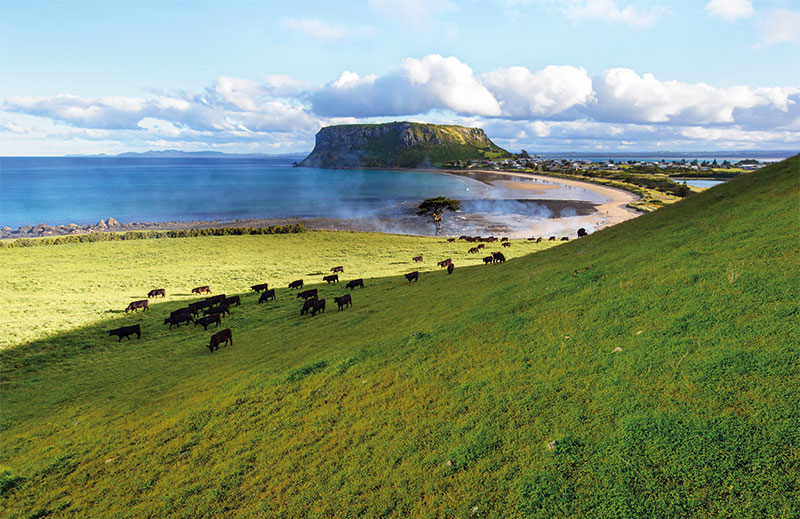
Cattle prices to average slightly lower
Early forecasts have the Indicator Price for finished cattle down by 3% on a financial year basis to average 745 cents/kilo, carcase weight in 2026-27.
But despite the forecast decline for the season, the average price in 2026-27 would still be 6% above the 10-year average to 2024-25 in real terms and roughly in line with prices over May 2026.
Despite higher processor costs and weaker beef demand in key export markets, saleyard prices in 2026-27 are forecast to be supported by lower cattle slaughter maintaining processor competition to secure livestock.
A risk to the price forecast is that if seasonal conditions are significantly drier than expected, particularly during the next northern wet season, cattle slaughter could be higher than forecast and increase relative to 2025-26.
This would result in lower processor competition and also restocker confidence, leading to lower than forecast saleyard prices for both processor cows and heavy steers.

Lamb and sheep saleyard prices moderate
The average lamb saleyard price is forecast to moderate on a financial year basis by 9% in 2026-27 to 1,030 cents/kilo carcase weight, down from 1,133 cents/kilo in 2025-26.
Lamb saleyard prices remained strong during 2025-26, trading above 1,000 cents/kilo carcase weight, with the daily National Trade Lamb Indicator price reaching a record level in early August 2025 at 1,231 cents/kilo carcase weight.
However, a below average climate outlook reduced restocker confidence and with greater lamb supply compared to 2025-26, it has put downward pressure on lamb prices in 2026-27.
In addition, uncertainty due to conflict in Middle East markets, flat demand in the United States, and slower economic growth in other markets are forecast to impact export demand in 2026-27.
The average mutton saleyard price is forecast to fall by 15% on a financial year basis to 640 cents/kilo carcase weight in 2026-27, down from 755 cents/kilo in 2025-26.
The daily National Mutton Indicator peaked in April 2026 at 840 cents/kilo carcase weight, mainly due to improved seasonal conditions in southern states leading to greater restocker competition at saleyards.
Sustained higher sheep prices, following successive years of elevated slaughter may result in processors reducing capacity as a response to low sheep availability and tight margins.
Processors are forecast to reduce capacity by reducing shifts and extending winter shutdowns in response to a shortage of animals required to keep production chains moving, resulting in less market competition in 2026-27.
In real terms, average annual lamb and mutton prices in 2026-27 are forecast to sit 16% and 14% respectively above the 10-year averages to 2024-25.
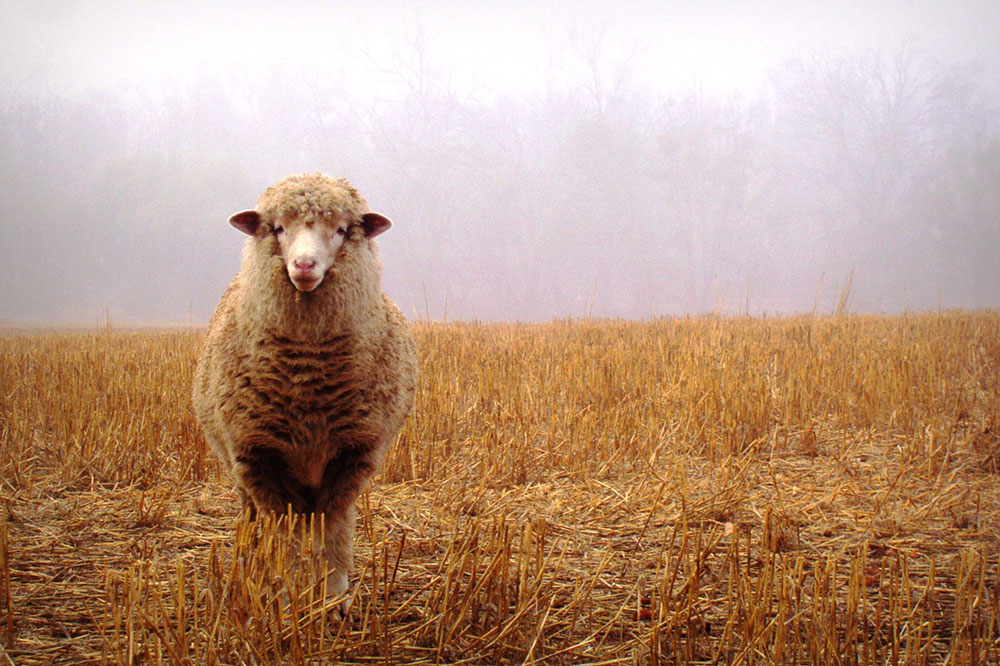
Wool prices to rise
The local production wool price, as measured by the Eastern Market Indicator, is forecast to rise by 12% on a financial year basis to average 1,780 cents/kilo in 2026-27.
Lower global production and reduced stocks in both Australia and China, are supporting higher prices as Chinese mills compete to secure wool for clothing manufacturing.
Chinese domestic consumption of woollen garments, particularly in high end fashion and athletic wear has supported global demand.
In addition, increased Australian exports to Italy of finer micron wool at higher prices indicate the strength of the premium wool market.
Other commonly used materials in textiles such as polyester and nylon rely heavily on crude oil and have experienced significant disruptions and price rises due to the Middle East conflict.
The cotton price is also forecast to rise in 2026-27, as world cotton production is forecast to fall and consumption to rise.
Local production wool prices are forecast to remain firm in 2026-27, despite an expected appreciation of the Australian dollar compared to 2025-26.
China’s domestic economy and consumer spending has proven resilient despite recent headwinds and the Chinese Renminbi has also appreciated against the US Dollar, supporting margins for mills.
In real terms, the 2026-27 local production wool price is forecast to be 1% higher than the 10-year average to 2024-25.

Farmgate milk prices to rise
The farmgate milk price is forecast to rise by 3% to 75.8 cents/litre in 2026-27 to land at approximately $9.80 per kilogram of milk solids, driven mainly by rising processor competition with falling domestic milk production.
However, opening price offerings may be conservative given higher input costs for processors and an uncertain macroeconomic outlook. In real terms, the 2026-27 farmgate milk price is forecast to be 9% above the 10-year average to 2024-25.
Producers also have to content with the main categories of livestock production being beef and sheep to fall slightly in volume, while the small production sectors of pig and poultry will see an increase in volume in season 2026-27.
Beef production to fall slightly
Beef and veal production volume is forecast to decline by 4% to 2.9 million tonnes carcase weight in 2026-27.
But despite the forecast decline, production is still expected to be the second highest on record and 28% above the 10-year average to 2024-25.
In line with lower production – beef export volume is forecast to fall by 5% in 2026-27 to 1.7 million tonnes, shipped weight.
A forecast 5% fall in adult cattle slaughter is driving the decline in beef production in 2026-27, driven by near record turn-off across 2025-26 significantly lowering cattle availability and future calving prospects.
However, at 9.1 million head, adult cattle slaughter in 2026-27 is forecast to remain 23% above the 10-year average to 2024-25 due to the below average climate outlook.
Lower rainfall over winter and spring is forecast to reduce pasture growth across eastern Australia. In addition, with major climate drivers relatively unfavourable for 2026-27, pasture growth is forecast to decline during the next northern wet season across central and northern Queensland and the Northern Territory.
Average carcase weights are forecast to increase slightly to 313.0 kilograms for adult cattle in 2026-27 as strong price incentives for heavier grass-fed animals are mostly offset by the impact of higher fodder and other farm input costs.
Above average pasture growth across much of Queensland is forecast to continue supporting carcase weights over the start of 2026-27, but a drier climate outlook is forecast to see this moderate over the year.
Feedlot utilisation in 2025-26 is already at over 93% in New South Wales and Queensland, as compared to the 10-year average to 2024-25 of 82%, indicating greater capacity would likely be needed to significantly lift grain fed beef production from the record levels in 2025-26.
The beef cattle herd is forecast to decline by 5% in 2026-27 to 24.9 million head, 8% below the 10-year average to 2024-25.
Elevated slaughter, particularly of female cattle in 2024-25 and 2025-26 is forecast to have reduced the population of the breeding herd, particularly across New South Wales and Victoria, and -in 2026-27.
More favourable climate conditions across large areas of Queensland in 2025-26 has led to above average pasture growth, cattle retention and fertility; however, turn-off is forecast to increase in 2026-27 with a drier than average climate outlook.
In addition, with cattle prices forecast to remain above average and input costs to increase, herd rebuilding across southern states is forecast to be constrained in 2026-27.
Sheep meat production to rise
Lamb production is forecast to rise by 8% to 599 thousand tonnes carcase weight in 2026-27.
Improved seasonal conditions and fertility over the latter part of 2025-26 are forecast to lift the number of lambs available for processing in 2026-27.
Average lamb carcase weights are forecast to increase slightly to 25.0 kilograms, with increased use of grain feeding programs to offset drier seasonal conditions.
The change in the composition of the sheep flock and the increased use of finishing programs is forecast to lead to average carcase weight being 6% above the 10-year average to 2024-25.
In 2026-27, lamb prices remaining well above average are forecast to encourage continued use of finishing programs in grain growing regions to maximise returns for heavier lambs.
Mutton production is forecast to fall by 10% to 202 thousand tonnes carcase weight in 2026-27 reflecting lower livestock availability.
Sustained improvements in lamb values and higher wool prices are expected to lead to sheep producers retaining a greater number of ewes on-farm. Average mutton carcase weights are forecast to be 25.9 kilograms, 3% above the 10-year average to 2024-25.
The sheep flock is forecast to remain relatively steady at 65.6 million head in 2026-27. The forecast deterioration in pasture growth and high input costs are forecast to delay a significant rebuild until season 2027-28.
This is despite higher wool prices and recent improvements in pasture growth across southern sheep farming regions.
Wool production and export volume to fall
Shorn wool production is forecast to fall by 2% to 251 thousand tonnes in 2026-27.
The number of sheep shorn is forecast to remain relatively low as in 2025-26, due to a lower population of Merinos relative to shedder breeds in the flock compared to prior years.
Average wool yields per sheep are expected to fall in all states except Western Australia due to the forecast deterioration in seasonal conditions in the eastern and southern states.
Wool yields are expected to vary by state from 3.4kg per sheep in Tasmania, 4.2kg in New South Wales, through to 4.8kg per sheep in South Australia, down 7%, 7% and 1% respectively compared to the 10-year average to 2024-25.
Other wool production is forecast to fall due to a decline in mutton slaughter reducing skin supply.
Higher pig and poultry meat production value
The gross values of pig and poultry slaughter are forecast to be $2.2 billion and $4.7 billion in 2026-27, up by 4% and 11% respectively from 2025-26.
Increased production volume and higher average prices, due to robust domestic demand, are driving the increase.
Consumer substitution toward less expensive proteins is expected to continue to support demand for pig and poultry meat domestically, given pressure on household disposable incomes and relatively higher beef and sheep meat prices.
Pig meat production is forecast to increase by 3% to 492 thousand tonnes carcase weight in 2026-27, driven by higher slaughter numbers outweighing a slight fall in average carcase weights.
Both total pig slaughter and average over-the-hook prices are forecast to increase in 2026-27, up by 4% and 1% to 6 million head and 461 cents/kilo carcase weight, respectively.
The increase in both pig slaughter and average price is due to the impact of higher input costs, particularly feed grains.
Pig prices are expected to increase to partially offset higher input costs on producer margins, supported by robust processer and retail demand for pig meat.
Average retail prices of pig meat products remain lower than that of beef and sheep meat, with pig meat a relatively more affordable and price-stable protein option for households facing inflation pressures in 2026-27.
Strong demand from cured meat and smallgoods manufacturers is expected to continue to drive increased competition for Australian pig meat supply due to high import prices.
Imported pig meat is forecast to account for 35% of total pig meat supply in Australia in 2025-26 and is mostly used in smallgoods production.
While Australia’s average pig meat import price in 2026-27 is forecast to rise due to limited export growth from key suppliers and be 5% above the 10-year average to 2024-25 in real terms.
Poultry meat production is forecast to increase by 3% to 1,698 thousand tonnes carcase weight in 2026–27 driven by domestic population growth and strong consumer demand.
Retail and food service demand is forecast to increase, particularly with quick service restaurants pivoting more towards chicken-based product offerings.
The average unit value of poultry slaughtering is forecast to increase by 8% to 279 cents per kilogram carcase weight in 2026-27, reflecting increased input costs such as feed grains.