Farmers seeking cash crop alternatives may well find what they need from the results of trials currently underway with sesame kalonji and fennel

Efforts to spice up crop growing options are gathering pace with this season’s trials of kalonji and fennel proving to be some of the best performing to date.
Researchers from CQUniversity’s Institute for Future Farming Systems have been working with the Cooperative Research Centre for Developing Northern Australia and a range of industry partners since 2019 to identify and develop new spice crops.
In 2022, they narrowed their focus to three high-value products – sesame, kalonji and fennel, and after three more years of trials to determine the best varieties, growing conditions, crop nutrition, weed management and harvest techniques, researchers are confident they’ve now got a viable industry on their hands.


CQUniversity Associate Professor Tieneke Trotter said this season’s kalonji and fennel trial crops grown at the Central Queensland Smart Farm in Emerald, west of Rockhampton QLD were particularly exciting.
“This is the best crop performance we’ve seen so far. With harvest just around the corner, we’re anticipating some strong yields,” A/Prof Trotter outlined.
“Initial trials showed promise for the adaptability of these crops to the northern environment in winter, and the crop performance in Emerald QLD this season will hopefully complete the picture around viability due to yield performance.”

Trails are important to establish these crops in Australia as we currently imports about 100 tonnes of fennel seeds and 100 tonnes of kalonji each year, mostly from India and China.
Fennel and kalonji seeds are used as spices in curries, soups, marinades and teas. The varieties of fennel grown for seed is different to those grown for fresh bulb production and the seed has not been grown commercially in Australia previously.
Kalonji, also known as black seed, nigella seed or black cumin has a strong earthy taste and is the black seed you typically see sprinkled on Turkish bread and naan bread, alongside sesame seed.

“Average crop yields for Indian-grown fennel are around 1.5 tonnes/hectare and kalonji is about one tonne, so that’s what we’re aiming to achieve here in the trials,” A/Prof Trotter added.
“We have done an extensive amount of work to determine how to best grow fennel and kalonji in Australia for optimal yield and quality.”
Associate Professor Trotter said the team had recently released grower guides for kalonji and fennel as well as sesame which would arm farmers with the key agronomic information they needed to successfully grow the spice crops.

CRCNA Chief Executive Anthony Curro said with the right partnerships and continued investment, the spice crops could become an important part of our farming future.
“These results highlight the positive outcomes of bringing together researchers, industry and producers to diversify and strengthen agricultural opportunities,” Anthony Curro advised.
“The promising performance of kalonji and fennel shows there is real potential to build new markets and income streams for growers, while reducing our reliance on imports.”
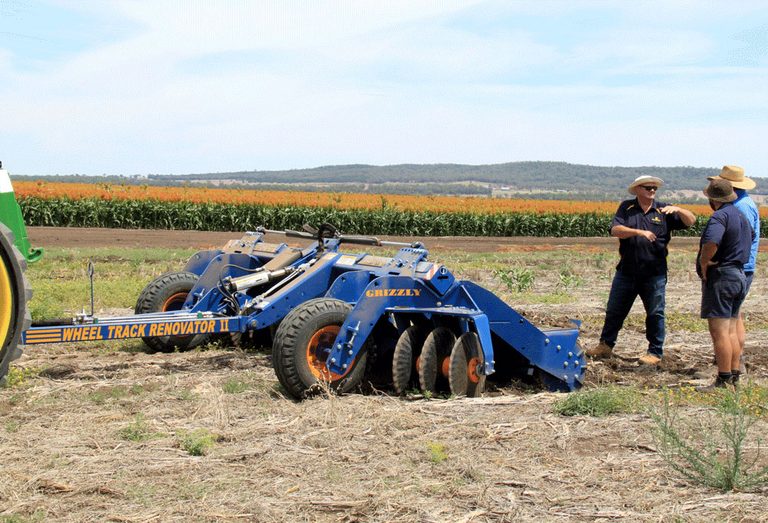
Advantages of growing spice crops were highlighted at a field day in Emerald QLD this week, where growers were invited to inspect the kalonji and fennel trial crops and watch a planting demonstration for this season’s jointly funded CRCNA and AgriFutures Australia sesame research.