With funding secured for further development SwarmFarm intends to employ an army of developers solving agriculture’s problems one app at a time

With the appetite still high for autonomous farm robots, SwarmFarm Robotics has been successful in raising AU$12 million (US$8.3 million) with a Series A placement to develop and grow their SwarmBot platform further.
SwarmFarm Robotics is somewhat of a local pioneer in the agriculture category and has progressed its claim to fame through the SwarmBot operational platform and operating system network SwarmConnect which enables developers to integrate their own applications within this autonomous platform.
The driving force behind SwarmFarm Robotics is founder and CEO Andrew Bates who is drawing upon his life in farming and Assoc. Dip App Science – Agronomy from the University of Queensland to achieve his vision.
Andrew Bate points out what farmers need and the opportunity to be part of the solution, “There is enormous demand for autonomy in agriculture, but today, most solutions unlock minimal potential,” Andrew explains.
“The current equipment providers believe that farmers just want to be plucked from the cab or replaced by robotic arms. We believe that farmers want more.
“They want a technology ecosystem built to address the issues in their locality, a farm-centric system that leaves the lowest possible footprint on their fields, helping them do more with less. They want Integrated Autonomy, so that’s what we’re building,” Andrew adds.

The team at SwarmFarm defines Integrated Autonomy as a new approach to autonomy on-farm that unlocks the full potential of driverless technology by providing specialty robotics solutions with an open platform to develop on.
“While many companies are making driverless tractors and developing niche robotics solutions in agriculture today, we believe that there is a third category of autonomy that combines the robot and the application within a development framework that will allow farmers to customise their equipment for their needs and allow developers to bring their innovations to life much more rapidly,” Andrew continued.
“It’s the best of both worlds. For the farmer, we provide customised autonomy in a box. For the developer, we provide a streamlined path to the grower with a tight feedback loop.
The company’s Series A funding round was led by Emmertech, an AgTech fund from Conexus Venture Capital based in Canada. The funding also sees new investments from Tribe Global Ventures and Access Capital.
Also joining the Series A funding round are SwarmFarm’s existing investors, including Tenacious Ventures, and GrainInnovate, the Grains Research and Development Corporation (GRDC) venture capital fund managed by Artesian.

“We are thrilled to be joining Andrew, Jocie, and the whole SwarmFarm team as they pioneer the future of autonomous agriculture,” said Sean O’Connor, Managing Director of Emmertech.
“The key trait that drove our eagerness to lead this round was the farmer-centric approach this team is built around and the truly exceptional results their robots have achieved.
“We met with several farmers who were putting upwards of 3,000 hours a year on their SwarmBot, often leaving them out in the paddock for over 24 hours at a time. We believe there’s a future where SwarmBots can be found on farms across North America and worldwide,” Sean O’Connor added.
SwarmFarm announced last year that SwarmBots had successfully been deployed to farmers who covered over 526,091 ha (1.3 million commercial acres), operated for 64,000 hours, and reduced pesticide inputs by an estimated 780 tonnes.
“We are proud to support the team at SwarmFarm as they unlock the potential of Integrated Autonomy in agriculture,” said Fernando Felquer, Head of Business Development at GRDC.
“What makes SwarmFarm so attractive to us is that the founders are Australian grain growers developing autonomous solutions from the ground up with local farming systems in mind, and the technology has global application,” Fernando Felquer concluded.


The idea behind SwarmFarm was born on the Bate family farm in rural Queensland.
It has the purpose to solve a complex problem that farmers around the world are facing today: how to grow better crops and the optimal amount of food on their land without putting down excessive amounts of chemicals or acquiring a more powerful equipment arsenal.
“We hit a point where we just said enough is enough,” Andrew Bate explained. “We saw our input costs increasing, our equipment costs rising as we bought larger equipment, our dependence on pesticides rising, and our yields declining despite it all.
“There was a day when we sat down and realised that this wasn’t an equation that needed incremental change; we needed an entirely new farming system – and SwarmFarm was the solution.
The SwarmFarm team see a future where developers can create specialised tools that could be attached to swarms of small, nimble, autonomous robot platforms that create new farming practices through facilitating collaboration between farmers and technologists – laying the foundation for SwarmConnect.
“We envision a future where the most promising minds in technology are encouraged to turn toward solving the challenges faced by modern agriculture,” Andrew Bate continued. “We also believe in a future where there is no longer such a severe distinction between farmers and technologists, but rather a new breed of farmer-technologists.
“This Series A funding helps us to move toward that future by meeting more of the global demand for our product and facilitating the growth of our SwarmConnect network of developers.


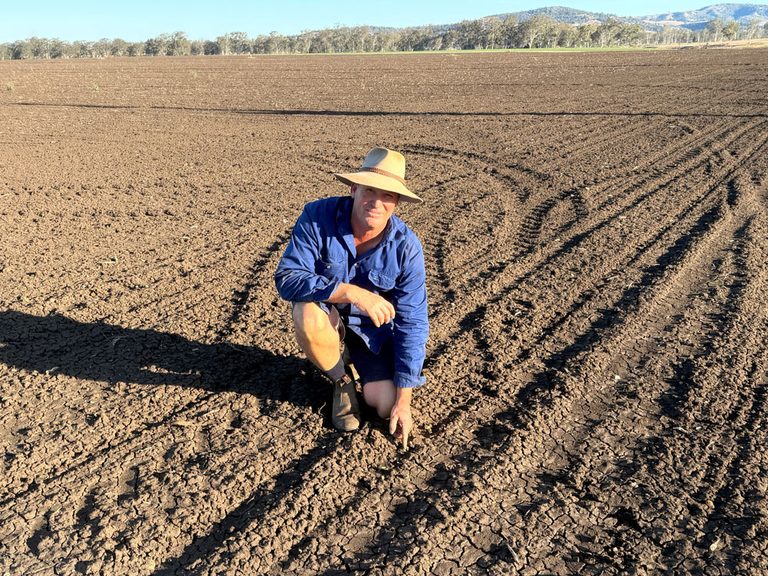
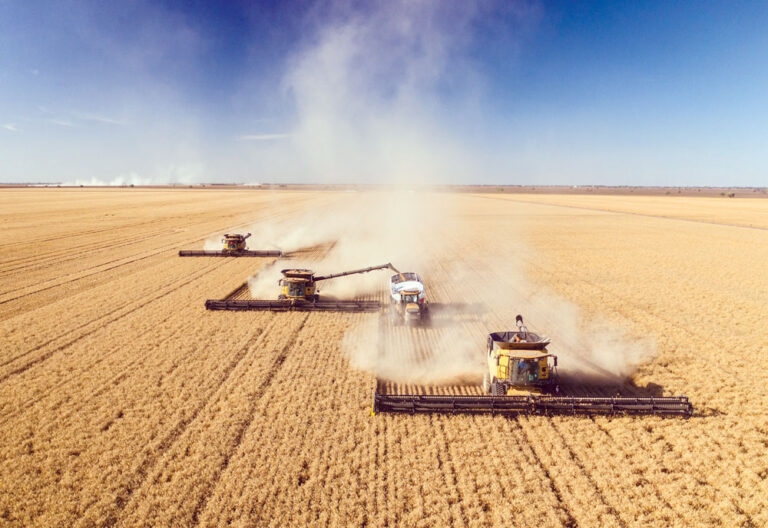
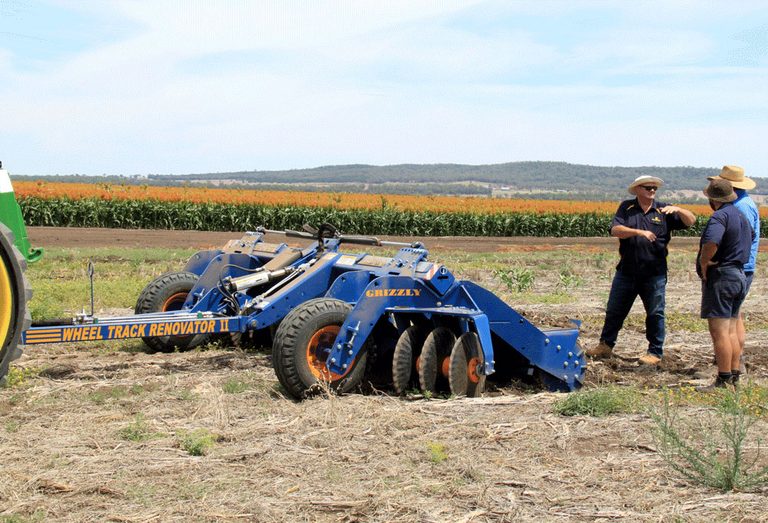
Achieved so far with SwarmFarm is the successful deployment across spraying and mowing operations shown here by farmers covering over 526,091 ha while operating for 64,000 hours and reducing pesticide inputs by an estimated 780 tonnes – images: SwarmFarm
SwarmFarm advises that it serves customers across Australia and works with some of the most innovative farm equipment developers, including WEED-IT, Bilberry, Weedseeker, Hayes Spraying, Rasmussen Brothers Engineering, Goldacres, and Croplands.
“It is critical that we put tools into our farmers’ hands that help them do more with less. This is key to a climate resilient, profitable future for agriculture,” said Sarah Nolet, Co-Founder & Managing Partner at Tenacious Ventures.
“With their background in farming, the team at SwarmFarm has been able to see around some of the corners on the road to autonomy and anticipate the needs of the growers they serve. We look forward to continuing to work with them as they unlock more productivity and sustainability in agriculture through their unique approach to Integrated Autonomy,” Sarah Nolet added.
SwarmFarm claims its unique approach to autonomy resonates with its customers, resulting in consistent and continued growth. The team will hire for roles in their Queensland and New South Wales offices to support this growth.
“The future of agriculture is happening now, but there is no way that one company can really invent everything needed to revolutionise agriculture,” Andrew Bate ponders. “We need the smartest minds from around the world working on this.
“We need an army of developers solving agriculture’s problems one app at a time. So come join us as a partner and help deliver the revolution that agriculture needs.” Andrew Bate expresses. Learn more about the SwarmFarm Robotics platform, operating system, and what has been achieved to date here.