Recent tests overseas have confirmed that fitting tracks to tractors and farm machinery increases work-flow levels

There is also the further benefit of lowering operating costs, in a range of operations including ground preparation, planting and harvesting
Robert Ward from Big Tyre, who distributes the range of Trackman agricultural rubber tracks in Australia, said that switching to a Trackman system can deliver benefits such as better flotation, less soil compaction, increased traction and a smoother ride.
Tracks have a real advantage in that they apply far less pressure on the soil than a standard tyre, with the weight distributed over a larger surface area.
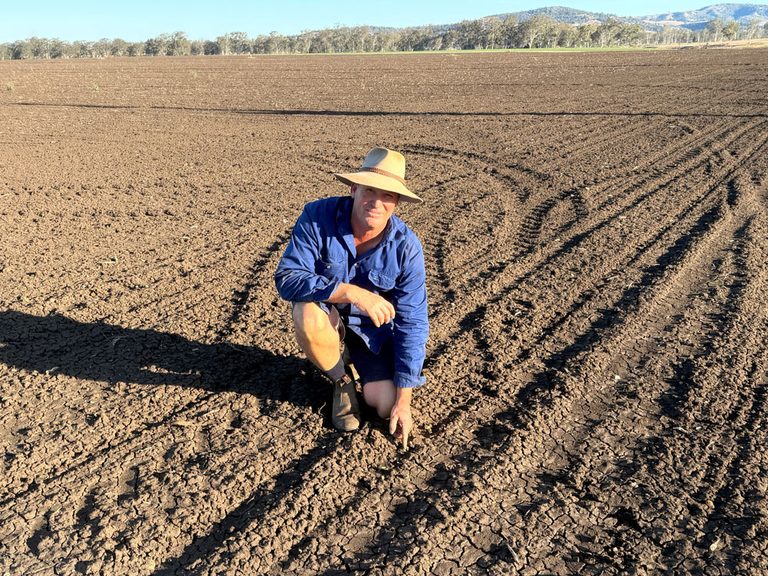
This results in less compacted soils, allowing better water penetration, better seed placement during planting, as well as better root development.
Over time, there is an improvement in yield.


Results of recent tests
Tracks are able to convert more engine power into drawbar pull, boosting output while protecting the soil from compaction. Rubber tracks increase efficiency because they typically operate with a slip of 3 to 5% compared to tyres with up to 10% or greater slip.
If tyres are fitted, slip causes compaction by creating pressure and typically moves the soil in three ways – something to be avoided.
Firstly, through Plating – this describes the compression of the soil between the lugs as the tyre tries to grip the surface. This leaves large lumps behind.
Then there is Shearing – this is when slipping tyres tear away the softer topsoil, exposing a smooth surface that seals when it dries, creating a hard, impervious layer.
The third action that results from tyre slipping is sinking.When a tyre slips, it can also dig in and create ruts, that leave behind a sheet of soil and lumps. Under this layer is an unwanted smooth pan.
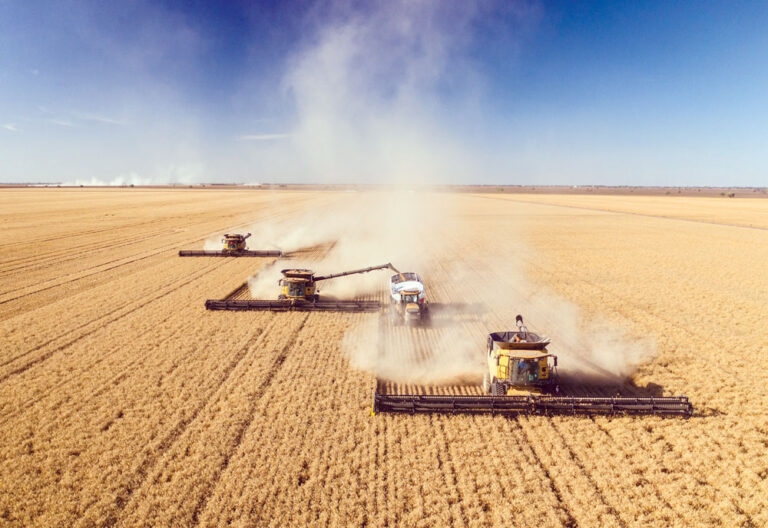
A tractor fitted with rubber tracks will avoid this slipping damage to soil and within the same timeframe is able to cover more ground than a similarly powered wheel tractor.
In addition, by fitting rubber tracks it allows the operation to run bigger implements that in turn allows for a decrease in labour requirements, and less fuel usage.

Rubber tracks for soil health
The increasing size of farm equipment has brought with it a significant increase in overall soil compaction that can negatively impact on yields and loss of quality.
There has been a growing use of tracks, either in place of or combined with tyres to find a balance between heavier equipment and reduced soil compaction
Most noticeably this change has been in the high-power tractor and harvesting equipment sectors, as well as in a few niche applications such as specialty crops.
And while tyre technology is quickly evolving, the overall footprint available to support the added weight has swung operators towards tracks as the primary way to reduce the impact of such heavy loads on soils.
Tracks offer the benefit of creating a larger footprint without having to go wider in size, and this enables the tracks to carry the heavier equipment loads while reducing soil compaction.

Operators are finding continuous rubber tracks also offer better traction, and in some cases higher paddock operating speeds, making them a more attractive solution.
The longer footprint of tracks also improves mobility in wet conditions, and this allows operators to often work across ground that tyres cannot handle.
Because tracks can move over soft spots with little sinking, this puts tracks ahead of dual or triple tyres in this situation.
And from a compaction standpoint, tracks are also ahead when compared to duals or triples that widen the compaction zone, while tracks spread weight across a longer narrower length.
For more information on rubber tracks, contact Big Tyre on Tel: 07 4699 9777 or see the full range at: www.bigtyre.com.au