Winter crop production in season 2025-26 increases by a further 10% over the previous forecast to 66.3 million tonnes for near harvest record

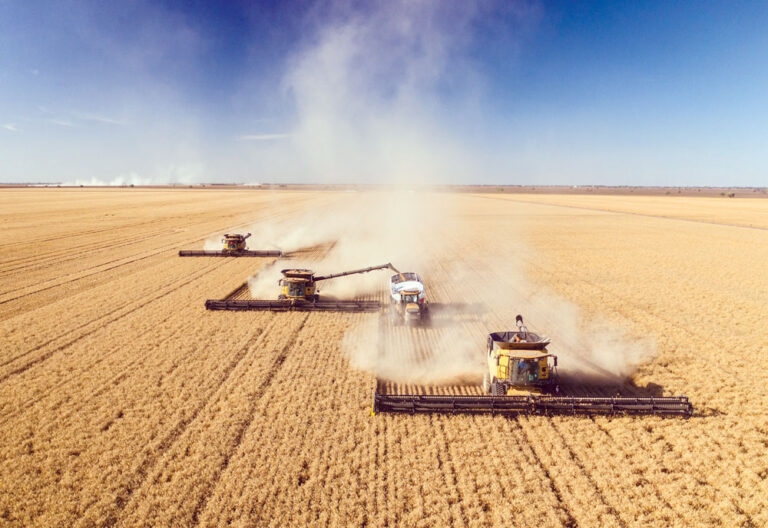
The winter harvest for season 2025-26 was noticeably later than usual as husks kept on swelling to reveal significantly above average yields on farm operations in northern New South Wales, Queensland and Western Australia.
If a drier than expected spring had relented earlier and not limited crop production potential in parts of south-eastern Australia, it would have resulted in a record harvest.
Even so, the predicted result of 66.3 million tonnes harvest in 2025-26 is 35% above the 10-year average of 49.2 million tonnes to 2024-25, and if realised, will be the second-highest result on record.
Growers in marginal country may despair when they compare the significant variation in growing conditions across some states with, for instance, a strong increase in Western Australia, where production is expected to be the second highest on record.

This result came after a mixed start to the winter growing season, that was to benefit from above average and timely rainfall, and a mild spring, contributed to record high average yields in WA.
Seasonal conditions in Queensland and northern New South Wales were also favourable, with harvest results showing strong yield outcomes.
Total winter crop production in Queensland is expected to be the second-highest on record.
While below-average spring rainfall across southern New South Wales during the critical grain fill windows has impacted yields, reducing the overall state production, now expected to be down 10% year-on-year.
Another costly intervention was the overall poor start to the winter cropping season in Victoria and South Australia. However, with the benefit of late winter and spring rainfall and mild spring temperatures, production levels did rebound.

And following a dismal result last year, winter crop production in South Australia is expected to increase by 63% year on year, while Victorian production is expected to be up 17%.
Growers dodged what could have been a disaster based on early weather patterns with timely spring rainfall at critical growth stages and mild spring temperatures in most winter cropping regions.
The exceptions to strong results were noticeable in parts of southern New South Wales and north-eastern South Australia, where below-average spring rainfall impacted yield potential.
National winter crop production for 2025-26 has been revised 10% higher to 66.3 million tonnes, the second highest on record since the 69.2 million tonnes record harvest in 2022-23.

Crop harvest expectations by variety
Wheat harvest across all states is forecast to increase by 4% to 35.6 million tonnes in season 2025-26, 29% above the 10-year average to 2024-25.
There is a noticeable variation across states, with production in Western Australia forecast to increase by 6% to be the second largest crop on record, while offsetting this is a 14% fall in production in New South Wales, with poor conditions in southern New South Wales weighing on total production.
While wheat production in both South Australia and Victoria is expected to increase significantly from the previous years’ drought affected levels.
The swings and roundabouts start to the season had growers on edge, and as a result, there was a barely average planting of 12.5 million hectares, the second lowest recorded from the past six seasons.

Barley harvest across all growing regions is forecast to increase by 18% to a record 15.7 million tonnes in 2025-26. If achieved, it would be 33% above the 10-year average to 2024-25.
This Barley production forecast reflects an estimated 3% increase in area planted to 4.76 million hectares and national average barley yields at high levels of around 29% above the 10-year average to 2024-25.
Canola harvest across the country is forecast to increase by 13% to 7.2 million tonnes in 2025-26, driven by both a 6% increase in total area planted of 3.58 million hectares and higher yields.
Also helping to increase production over last year were the much-improved conditions in South Australia and Victoria, and excellent conditions in Western Australia, where a significant proportion of the national canola crop is grown.
Total canola production for season 2025-26 is expected to be 50% above the 10-year average to 2024-25.

Lentil harvest across all states is forecast to increase by 51% to a record 1.9 million tonnes in 2025-26, driven by a 38% increase in average yields and a 10% increase in the area planted, also a record high of 1.1 million hectares.
Lentil plantings in both South Australia and Victoria continue to expand, with growers favouring it in rotations due to favourable gross margins and its tolerance to drier conditions.
Chickpea harvest is forecast to fall by 7% to 2.1 million tonnes in 2025-26, but will still be the second largest crop of its type on record.
The fall reflects a 10% decrease in average yields, that are still expected to be a solid 45% above the 10-year average to 2024-25.
Despite mostly favourable seasonal conditions in both Queensland and northern New South Wales, yields have not matched last year’s record results.
Probably a disappointing result for many growers as they planted a record 1.08 million hectares to achieve a lesser result.

Area planted to winter crops
The total areaplanted to Winter crops in season 2025-26 is estimated to have increased marginally from the record 25.1 million hectares set just last season to a record 25.2 million hectares.
Somewhat at an almost current limit due to available ground, it almost became a balancing act with a 3% increase in area planted in Western Australia estimated to have been offset by a 3% decrease in New South Wales.
And with the area planted in Queensland also estimated to have increased by 1% from the previous year, it was the seesawing area planted in South Australia and Victoria that is estimated to have been largely unchanged to scrape in a record high.

Winter crops state by state
How each state is expected to fare from a 2025-26 winter season that threw growers many challenges and sleepless nights early in the season.
Western Australia
Total winter crop production in Western Australia is forecast to rise by a handy 14% to 26.21 million tonnes in 2025-26, just smidgeon below the previous record of 26.26 million tonnes set in 2022-23.
This represents a 10% upward revision from earlier predictions and is 45% above the 10-year average to 2024-25 of 18.0 million tonnes.
Following an unfavourably dry and hot start to the winter cropping season, conditions in Western Australia improved significantly throughout the season, with timely rainfall through July to September, particularly across northern and southern cropping regions.
Yields were also supported by mild temperatures across the key growing regions, although a few areas experienced frost in central and southern regions.
Despite below-average spring rainfall across southern growing regions in Western Australia, most regions received sufficient rainfall during the critical grain fill windows to support above-average yields and production.
Wheat production in Western Australia is forecast to increase by 6% to 13.4 million tonnes in 2025-26, mainly driven by higher yields, expected to be 39% above the 10-year average to 2024-25.
The area planted to wheat in WA is estimated at 4.45 million/ha, assuming a yield of 3.01 tonnes/ha.
Higher yields are mainly the result of improved conditions, particularly in central and northern cropping regions, where conditions have been exceptional.
Barley production in Western Australia is forecast to increase by 20% to a record 7.2 million tonnes. It is estimated WA growers planted an area of 1.9 million/ha, assuming a yield of 3.79 tonnes/ha for a production total up 6.0%.
Canola production is forecast to increase 35% to 3.9 million tonnes in 2025-26, driven by a 19% increase in the area planted at 1.90 million/ha, with assumed higher yields of 2.05 million tonnes/ha.
Lupins are reaching love-child status with WA growers, with an estimated 0.40 million/ha, planted with an assumed yield of 1.95 tonnes/ha. Leading to a production total of 0.78 million tonnes, up 14%.
Despite a slow start to the 2025–26 winter crop harvest in Western Australia due to rainfall in northern cropping regions, the harvest has progressed quickly and benefited from the dry finish to the season and below-average rainfall in early November.
Overall, yields are reportedly better than early forecasts predicted.
New South Wales
Winter crop production in New South Wales is forecast to fall 10% to 18.3 million tonnes in 2025-26, the fourth highest on record and 43% above the 10-year average to 2024-25.
Seasonal conditions were highly variable across New South Wales, with favourable conditions resulting in above-average yield outcomes in northern cropping regions, being dragged down by below-average growing seasonal rainfall and disappointing yield outcomes throughout southern New South Wales.
Wheat production in New South Wales is expected to decrease by 14% to 11 million tonnes in 2025-26, with the average state yield forecast to be down 10% year-on-year but still 26% above the 10-year average to 2024-25.
The area planted for wheat in NSW is estimated at 3.60 million/ha, assuming a yield of 3.07 tonnes/ha.
Barley production is expected to be down 3% at 3.3 million tonnes from an estimated area planted unchanged year-on-year at 1 million hectares. Assuming a yield of 3.30 tonnes/ha.
While the area planted for canola is estimated at 0.95 million/ha, with an assumed yield of 1.79 tonnes/ha it is expected to show a production total of 1.7 million tonnes, down 11.0% but still well above the 10-year average to 2024-25.
Chickpea production is forecast to fall by 8% to 1.2 million tonnes in 2025-26, with a 9% drop in yields offsetting a 2% increase in the area planted.
NSW growers went in hard for chickpea and planted an estimated of 0.59 million/ha. With an assumed yield of 2.00 tonnes/ha, it could represent a production total of 1.18 million tonnes.
Despite mostly favourable seasonal conditions, yields have been below expectations in many northern cropping regions but are still significantly higher than average, with production expected to be the second highest on record.
The area planted to winter crops in New South Wales is estimated to have decreased by 3% to 6.9 million hectares in 2025-26, still the third highest on record and 21% above the 10-year average to 2024-25.
Despite mostly favourable seasonal conditions at the time of planting, growing conditions were not as favourable at the start of the previous 2024-25 season, particularly in southern cropping regions.
Victoria
Winter crop production in Victoria is forecast to increase by 17% to 9.1 million tonnes in 2025-26, some 11% above the 10-year average to 2024-25.
Increased production was gained from timely rainfall in October, expected to benefit yields and improve later-sown crops across most growing regions in Victoria.
Growing conditions for winter crops in Victoria have been largely mixed throughout the season. Initial early winter moisture was offset by dry conditions in August and September across most of the state.
Despite early spring dryness, leading to some wheat and barley crops being cut for hay across northern cropping regions, critical and timely rainfall in October across the Wimmera and Western Districts buoyed yields and supported grain fill in later-sown cereal crops.
This has supported above-average yields and production for barley and average yields and production for canola and wheat.
Victorian wheat production is forecast to increase by 16% to 4 million tonnes in 2025-26, with the average state yield forecast to be 2.76 tonnes/hectare, 3% above the 10-year average to 2024-25.
Area planted to wheat in Victoria in 2025-26 is estimated to have remained flat at 1.47 million hectares, 7% above the 10-year average to 2024-25.
Larger production upturns are expected for barley, with barley production increasing 28% to 2.6 million tonnes and yields 14% above the 10-year average.
Area planted to barley in Victoria in 2025-26 is estimated to have remained steady at 0.85 million hectares, 7% above the 10-year average to 2024–25
Similarly, lentil production is forecast to increase by 32% to a VIC state record of 0.86 million tonnes in 2025-26, with yields 17% above the 10-year average to 2024-25.
While the area planted for lentil in VIC is estimated at 0.53 million/ha, an assumed yield of 1.62 tonnes/ha is expected.
Canola was driven by an estimated area planted in VIC at 0.54 million/ha, and an assumed yield of 2.13 tonnes/ha is expected to show a production total of 1.15 million tonnes, down 4.0%.
South Australian
Winter crop production in South Australia, coming off a drought-ridden season last year, is forecast to rise by 63% to 8.7 million tonnes in season 2025-26, a result 12% above the 10-year average to 2024-25.
It was a result late in the making and very much due to the average to above-average rainfall across most cropping regions in South Australia throughout October.
Conditions for growing winter crops in SA in 2025-26 have been mixed at best. Below-average rainfall early in the season had impacted crop yields across most cropping regions.
However, timely October rainfall helped offset dry conditions during September, particularly across the York and Eyre Peninsula, as well as the northern cropping regions.
A delayed start to the season in SA meant that crop development was a couple of weeks behind average, with the late rainfall benefitting barley yields more than wheat, as the rain coincided with its key development phase.
The main exception is the Northern Mallee, where growers experienced extremely low rainfall levels throughout this year, and as a result is expected to slightly weigh on state yields.
Dry conditions in August and September also led some growers in the mid-north districts to cut crops for hay.
South Australian wheat production is forecast to rise by 71% to 4.7 million tonnes in 2025-26, with the average state yield forecast to be 10% above the 10-year average to 2024–25.
The area planted to wheat is estimated at 2.00 million/ha, assuming a yield of 2.37 tonnes/ha for the production, up 71%.
Barley has also improved; it is estimated that SA growers planted down an area of 0.83 million/ha, assuming a yield of 2.4 tonnes/ha for a production total of 2.0 million tonnes. Up 58% on last year.
While the area planted for canola in SA is estimated at 0.23 million/ha, with an assumed yield of 1.98 tonnes/ha is expected to show a production total of 0.45 million tonnes.
Growers in SA have been drawn to expected big returns for Lentils with an increase in the planted area for Lentils, estimated at a record level 0.52 million/ha.
And with an assumed yield of 1.82 tonnes/ha the Lentil harvest is expected to show a production total of 0.93 million tonnes. Up 69% on last year.
Not a bad result considering the dismal season start, and the god-saving rainfall that resurrected the crop was expected to return to below average across December and lead to a largely uninterrupted harvest.
Queensland
Winter crop production in Queensland is very much in line with the record result last year, at a forecast 3.7 million tonnes in 2025-26, and if realised, will be the second highest on record.
This is 64% above the 10-year average to 2024-25 of 2.3 million tonnes and is mainly attributed to higher yields for most winter crops and higher areas planted to chickpeas than previously anticipated.
Area planted to winter crops in Queensland in 2025-26 is estimated to have remained relatively unchanged compared to last year at 1.6 million hectares, 27% above the 10-year average to 2024-25.
Growing conditions for winter crops in Queensland during the 2025-26 were largely favourable across most growing regions. Adequate rainfall and high soil moisture levels at planting saw an optimal start to the cropping season.
Favourable rainfall early in the growing season boosted yields for all major winter crops despite below-average spring rainfall.
Wheat production is forecast to increase in 2025-26 by 1% to 2.3 million tonnes, as higher yields of 2.57 tonnes/ha more than offset the lower planted area of 0.88 million hectares.
Barley production is forecast to fall by 7% to 0.5 million tonnes, reflecting a reduction in the area planted to 0.17 million hectares. Yields of 2.91 tonnes/ha are expected.
Chickpea production is expected to fall by 4% to 0.9 million tonnes as lower yields of 1.94 tonnes/ha, that more than offset the expanded planting area of 0.47 million hectares. Despite falling yields, chickpea is expected to be well above average, with production to remain 100% above the 10-year average to 2024–25.
To top everything off nicely, the winter crop harvest in Queensland was completed under relatively dry finishing conditions, and that also provided generally uninterrupted paddock access.