A combination of cameras and artificial intelligence (AI) claims to have the answer to saving current assumed crop harvest losses of up to $80,000 a season

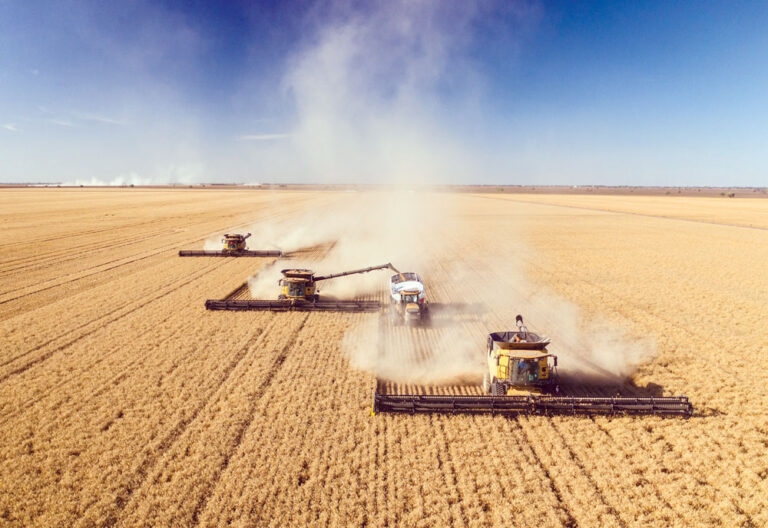
Many growers were surprised to learn just how high crop losses were for the 2021-22 winter harvest in WA, estimated at $300 million in one surveyed region. And even worse the 2022-23 follow-up harvest losses survey jumped to $320 million, see this link.
These previous, accepted as part of the program losses, in the rush to get the harvest in, can no longer be tolerated with ever increasing input costs to contend with.
And that level of loss could very well be a thing of the past if the heavily touted Farmwave Harvest Vision system just released in the US for their corn harvest season is successful and converts to wheat and barley harvest as predicted.
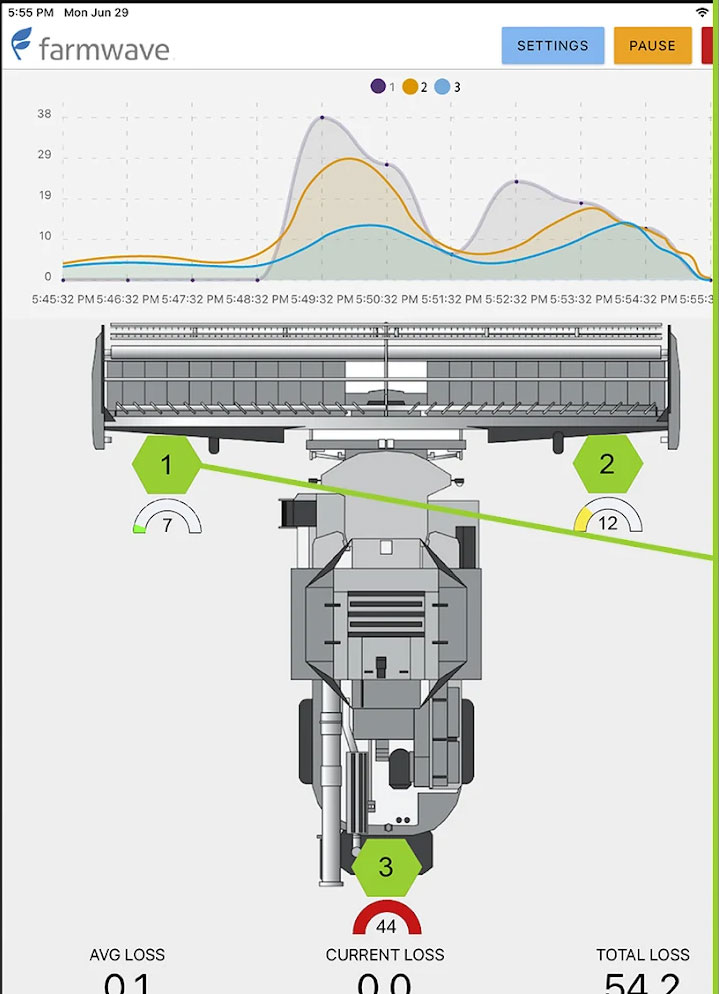
The system can identify harvest losses from the combine front and advise the operator on how to make on-the-run adjustments.
Farmwave’s Harvest Vision system consists of three cameras, a network switch and a Farmbook computer, all combined through the power of artificial intelligence (AI). Simple enough for something that promises to save $millions in harvest loss income if applied worldwide.

Trimmed down to its base existence, the system is designed to detect harvest losses from the harvester in real-time and provide that information to the operator through an in-cab display.
From that point, it is expected the operator will make any immediate adjustments required to stop losses.
No overnight fad this one, it has taken the US company Farmwave eight years to get its Harvest Vision system into a partial production launch with 500 growers expected to harvest with the system in the current US season for the first time.
During the harvest, the operator if prompted by system losses will be able to put into effect any change to the reel speed, slow down, change the fan speed, or whatever else is required to prevent losses.
Then find out in the next three seconds if the changes made helped prevent further losses, by the information count that Farmwave continues to provide.

Feedback up until now reveals harvest savings on average of 43 to 114kg a hectare. The system counts autonomously 55 times a hectare without stopping.
And while the current harvest has the algorithms to count harvest loss in corn and beans, it is expected wheat, canola and barley will be available before year’s end, and in time for next season in our local market.
The system configuration at present has a camera on each side of the header pointed down at the ground, and a third camera is mounted on the rear axle pointed up toward the chaff chute and that shows the kernels in mid-flight as they are discharged across the paddock.
Each of the cameras takes an image every three seconds, and that’s where the count of 55 times a hectare comes into play.
To explain how the Harvest Vision system is intended to work, during long-term testing on one occasion the system found excess losses happening on one side of the header.

The operator was able to make the necessary adjustments but remarked just how difficult it would have been to identify without the high-resolution camera and a machine learning-based program capable of performing seed counts on the ground.
The system is easy to install as the cameras are magnet mounted, and that allows them to be moved around if necessary to gain the best vantage point.
The touchscreen display in the cab connects to a small CPU, and a five-port switch powers the cameras.
There is only one cable to connect so it’s easy to get a wiring harness for each different header you want to run. If you are switching from a corn to a bean header, it’s simpler to have a wiring harness for each, just disconnect the cameras, move to the next header, plug it back in and keep on going.
Farmwave is also working on integrating its system into current combines autonomously and adjust everything without operator intervention. It’s just a matter of the OEM’s getting their systems aligned once Farmwave takes off.
The Harvest Vision system works without cellular connectivity, but in areas with broadband connectivity, a farm manager can receive the readings as well.
However, it’s the cellular connectivity that allows the Farmwave Harvest Vision system to continually improve.
As with all AI-based programs, the more imagery is collected and processed it becomes a self-improving system and even by the end of the first week of operation can reduce losses by a further 10 to 20% based on what the system has learnt.
And on-going the system will continuously retrain the algorithms, and you guessed it, be even smarter than the inventor.
Up until now, any dust reducing camera visibility has not been an issue, although it might become more of an issue as the system is calibrated for dustier grain crops.
The first release Harvest Vision system landed at a cost of US$20,000 for the full kit of three AI Cameras, the left header, right header, rear axle and the Farmbook to view real-time losses as the harvest progresses.