The US has spent a lot of money building up allies and goodwill worldwide and president Donald J Trump wants it all back in tariffs

Just how the Trump conceived US tariffs that kicked in today will impact local workers is summarised by UNSW Business School’s Dr Scott French along with express reasons why policy responses should not include protective tariffs of our own.
US president Donald J Trump’s 25% tariff on all steel and aluminium imports to the US has the enviable task of clawing back the billion spent on supporting allies worldwide, a key in the machinations about to be unleashed in a quest to make the US great again.
And likened to a compulsive gambler trying to get their losses back from a casino, the effect the US tariffs will have on global trade will throw up circumstances well beyond the control of policymakers.
Both here, and with former US allies worldwide the steps policymakers can take to minimise supply chain risks and broader economic impacts will only be short-term.
And it is widely tipped, Trump persuaded by US producers, will stop Australian imports of red meat by applying a hefty tariff.
In 2024, the US was Australia’s largest export market for beef, lamb, and goat meat, with Australian producers selling $6.2 billion worth to the US, or nearly 30% of the total $39 billion in meat exports.
This entire red meat market is now at severe risk, and producers nee dto start looking for alternative markets, now.
However, Dr Scott French from UNSW warns against reactionary protectionist policies that could have long-term consequences for Australia’s economy. Instead, he advocates for temporary, targeted support measures to cushion the immediate impact while recognising opportunities for trade diversification in the Indo-Pacific region.
“Maintaining competitiveness and strategic adaptability will be key to navigating these challenges as the global trade landscape shifts,” Dr Scott French explains.
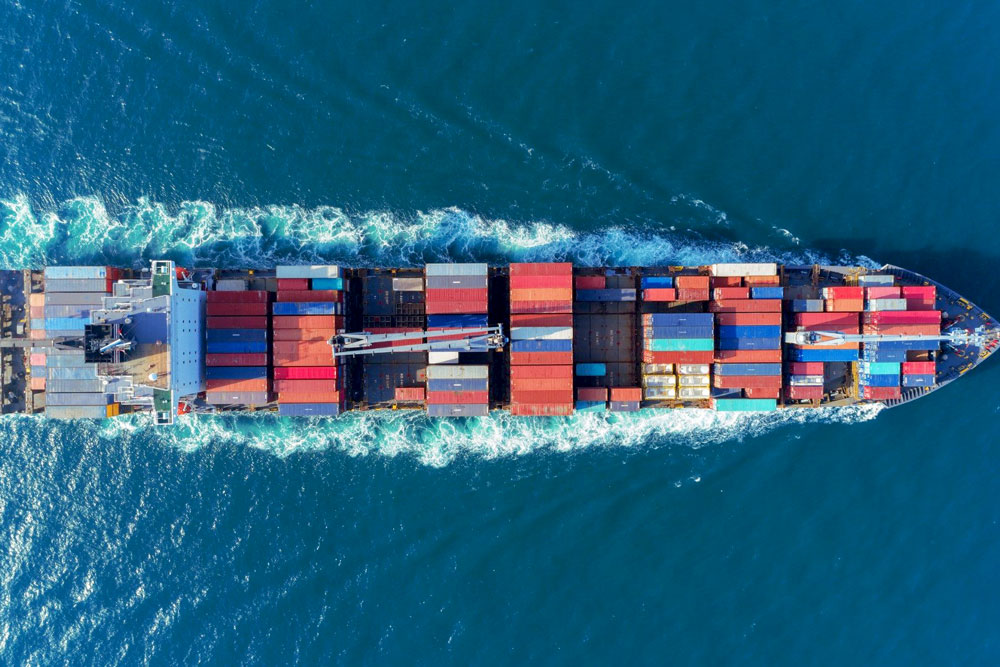
Impact of US tariffs on world economy
The 25% tariff US president Trump has implemented on all US steel and aluminium imports, effective from 12 March eliminates all previous exemptions for free trade, including those for Australia.
Additionally, the US has imposed tariffs on imports from Canada, Mexico, and China, citing a “national emergency” under the International Emergency Economic Powers Act (IEEPA). These measures aimed to address perceived threats to national security (such as the flow of fentanyl through US imports) and protect American industries from unfair competition.
Concerns have been raised about higher consumer prices, disruptions to global supply chains, and far-reaching effects on global economic and geopolitical stability.
Dr French says the Trump administration’s tariffs will significantly affect markets for the inputs that businesses need to produce goods and services. While the tariffs will directly affect Australian metal producers, they will indirectly impact Australian miners, who produce the raw materials used in metal manufacturing, among others.
“But due to the complexity of global supply chains, it’s hard to predict precisely where the impact will be greatest, but the overall effect is going to be negative,” Dr French adds.

While about 15% of Australian aluminium and steel exports go to the US, he says broader effects of the tariffs on the global market could prove to be more consequential for Australian producers overall.
“In terms of exports, aluminium and steel are only a fraction of the size of Australian mining sector,” Dr French explains. “So, if you’re looking at Australia as a whole, the direct effect on miners is smaller. But it’s a bigger overall sector, so when you multiply that out it’s probably the bigger of the two impacts for Australia overall.”
He adds the tariffs will also affect the Chinese economy negatively. “China is such a big importer of iron ore and other minerals, that anytime the Chinese economy slows down, demand for these things also goes down,” he says.
“And I expect the tariffs to reduce overall demand for steel and aluminium because they’re going to get more expensive for US manufacturers.
“And so, all the manufactured goods that the US is making that use these as inputs, their costs have gone up, so they’re going to look to substitute away from those in whatever way they can, whether it’s using alternative materials or just shifting overall demand from steel and aluminium-intensive manufactured goods toward other things.”
Australian manufacturing must remain competitive in global markets
According to Dr French, there is a risk the tariffs will lead to an influx of foreign products to Australia, which could displace local manufacturing.
In addition to the US tariffs, China, Canada and Mexico are gradually implementing retaliatory tariffs on American goods. These reciprocal tariffs are expected to negatively impact bilateral trade between these countries and the US while at the same time increase trade between these countries and their other trading partners, which economists call trade diversion.
But Dr French suggests policymakers should avoid the temptation to protect Australian manufacturers from foreign competition. “Maintaining competitiveness is important because the one thing I’ve seen coming out of the industry is they’re worried about foreign products flooding the Australian market and displacing the domestic manufacturing here,” he adds.
“I can already feel the push for protective tariffs to keep out foreign products competing with domestic production. I’m very, very wary of something like that because I find that Australia has done well by having very low trade barriers. And we don’t want to go back to the experience from earlier decades where local manufacturing was very highly protected and very uncompetitive.”
“So that’s why I think maintaining competitiveness is important, and I would strongly caution against trying to enact any sort of protective tariffs to isolate the domestic market for these products.”
How policymakers can respond to Trump US trade policies
Rather than enacting long-term protectionist policies, Dr French suggests temporary and targeted support measures similar to Australia’s JobKeeper program during COVID-19. “You want to cushion the transition, but any measures need to be temporary and targeted,” he says.
“So I would think maybe something akin to JobKeeper we saw in COVID. We had a big shock. We were worried about this massive change. It was a big temporary shock. We just wanted to get through it, preserve jobs, and keep people employed.
“We want to keep things like the Tomago plant in operation because if it gets shut down, there’s a big, fixed cost to bring it back up. Something that’s going to keep people employed. They’re going to give companies a bit of support for a short time while we see the effects of these tariffs.”
Importantly, he warns against implementing measures that create long-term reliance on government intervention. “Once protective tariffs are there, then you create a lobbying group to keep protective tariffs in place, and it’s hard to get rid of them in the future. So you want to target the response and ensure that it’s temporary.”
On a more positive note, Dr French says Australia could see increased trade with Indo-Pacific partners due to trade diversion effects. “Trade diversion works in both directions. That tariffs will increase foreign goods coming into Australia but also increase demand for Australian goods by countries that are putting retaliatory tariffs on US goods.”
“Australia already has trade agreements with most of its Indo-Pacific trading partners. And so one thing you see is that when you get a tariff in one place, you have what you call trade diversion. So I would expect trade to pick up between Australia and these other countries automatically.”
This could also present opportunities for Australian manufacturers. “If China, say, retaliates on the US tariffs by increasing tariffs on US products, then that opens doors for Australian producers as the Chinese substitute away from the US products to others in the area,” Dr Scott French concludes.