A discussion paper released today makes it clear that decisions made now will guide the future success of our farm sector
Just when everything looked like it was going so well, a discussion paper released today by CSIRO and the Australian Farm Institute urges farmers to stop and see what is needed to keep their farm operation successful moving forward.
And in that moving forward scenario, industry decision makers want to highlight what is needed to continue to be successful right out to 2050, with agriculture facing important decisions that will shape productivity and profitability.
The discussion paper is called Ag2050 and it identifies what near-term decisions needed to be made now to shape agriculture in the coming years.
CSIRO Program Lead Dr Rose Roche said the discussion paper was the next step in a multi-year program aimed at supporting Australian farms to be profitable, productive, and still sustainable by 2050.
“We started in 2024 working with industry to co-design four evidence-based future scenarios for farming systems, exploring their benefits and trade-offs, which we presented in the Ag2050 Scenarios Report,” Dr Roche summarised.
“The four scenarios were then used as a lens during an Ag2050 roundtable in March 2026 involving government, industry, research, regional and Indigenous organisations to identify near-term decisions shaping Australian agriculture.”
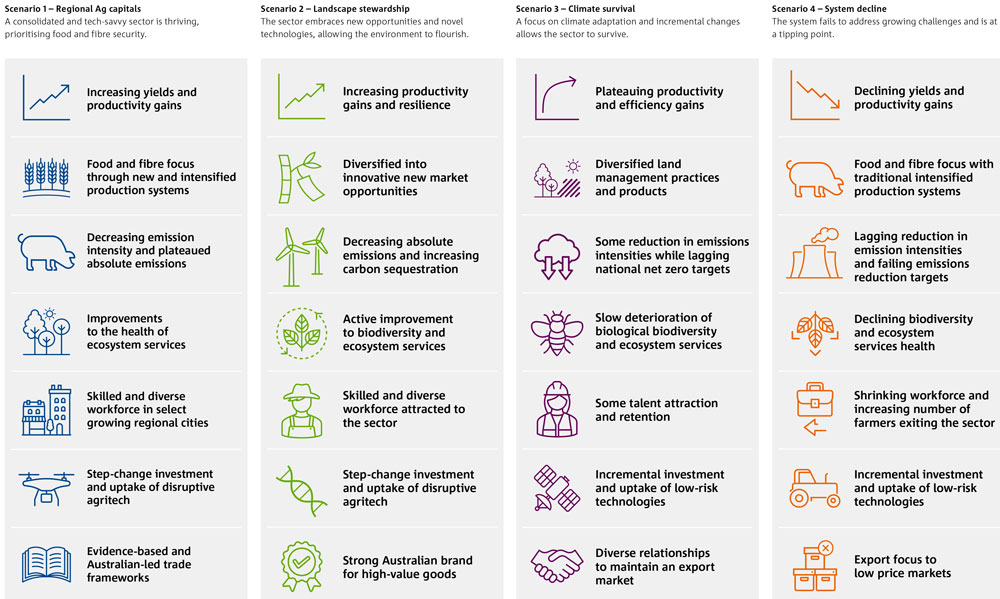
The four future scenarios to evaluate
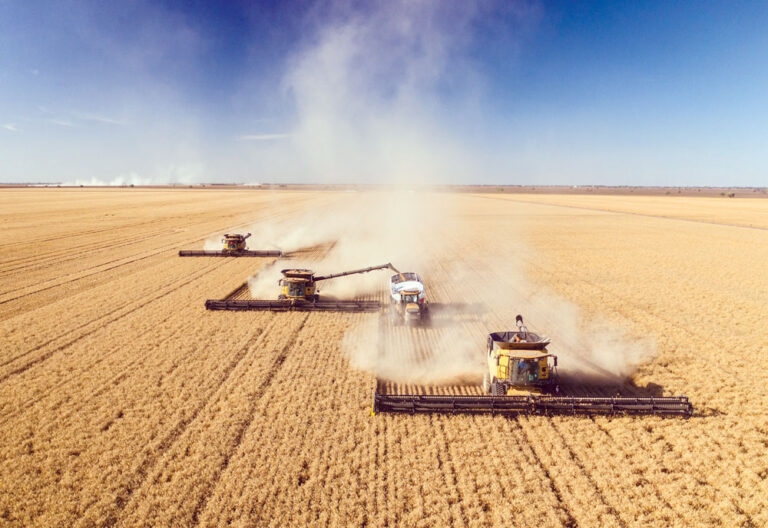
Regional Ag capitals – a consolidated and technological sector focused on productivity gains, food and fibre production, and growth in select regional centres.
Landscape stewardship – a diversified sector balancing food and fibre production with carbon sequestration, biodiversity and energy production.
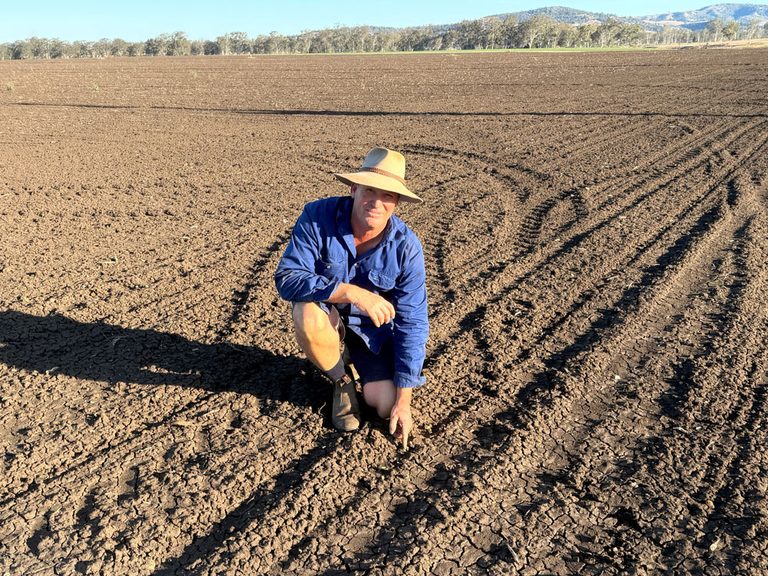
Climate survival – a sector relying on incremental adaptation and diversification to manage climate impacts rather than pursuing transformative change.
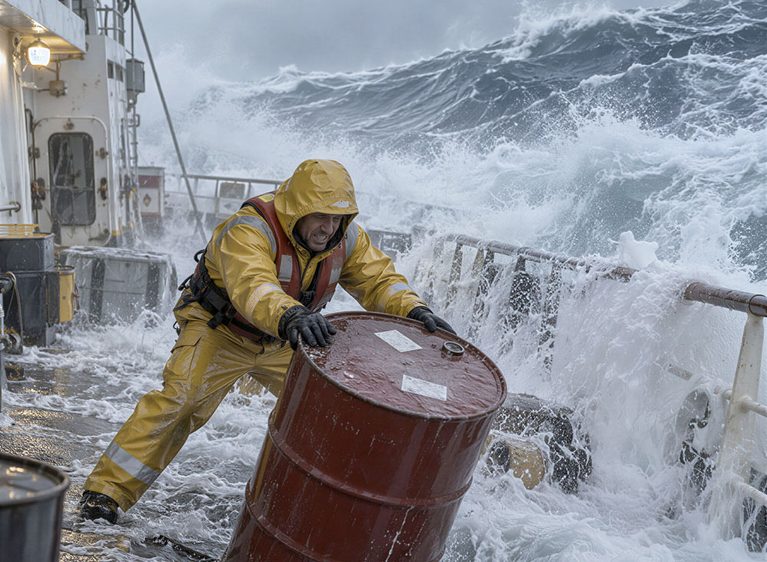
System decline – a sector facing declining productivity and resilience due to delayed and fragmented responses to existing challenges.
Dr Katherine Wynn, who led development of various scenarios and stakeholder indicated the roundtable helped identify where uncertainty was slowing action and where greater coordination and investment could support positive decision-making.
“When the Ag2050 scenarios were developed, many of these challenges were still emerging,” Dr Wynn explained.
“Today they are embedded in decision-making across government and industry, making it more important than ever to understand how today’s choices will shape our farming future.”
Australian Farm Institute Executive Director Katie McRobert confirmed the Ag2050 program of work was providing key insights to help guide the future success of the farm sector.
“The strategic choices that we make today are going to have significant impact in the years leading to 2050,” Katie McRobert continued.
“From productivity to land and water use to climate impacts and the growing use of technology to support decision making – there is a lot for the farm sector to consider.”
The discussion paper can be read here, you can see how it aims to support further conversations with government, industry and regional organisations about what’s needed for farming to remain successful in the future.
Take a look at this video that reveals more about research and findings behind Ag2050, here.