A closer look at planted varieties for winter season 2026-27 reveals how growers were prepared to move ahead with crops requiring less fertiliser
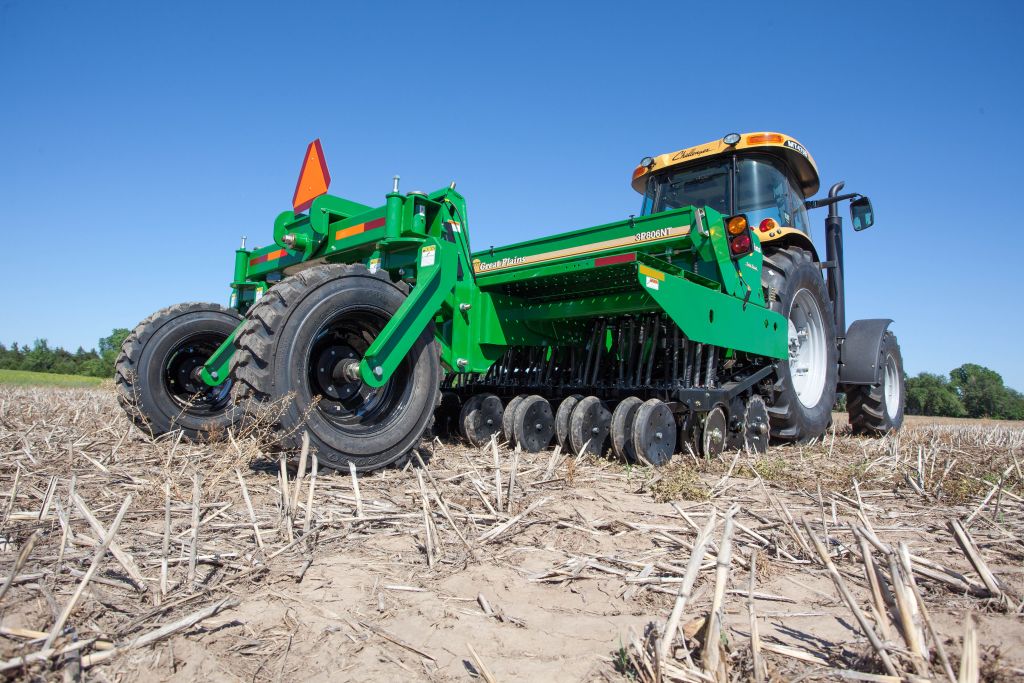
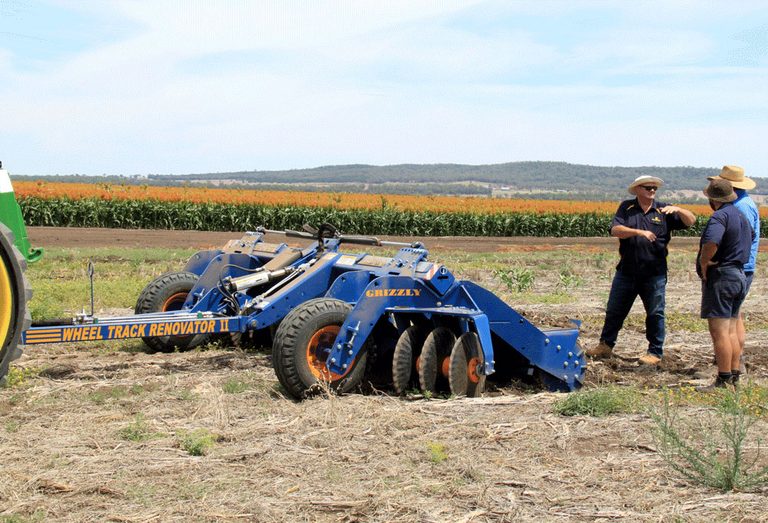
Planting down ground for the 2026-27 winter crop season has shown just how canny growers had to become to avoid high input costs, especially for fertiliser.
And while some growers got around the fertiliser issue by planting a different ratio of crops, there was no avoiding the elevated additional fuel increase burden.
But the litmus test for many growers will come around July and August when a decision will have to be made to apply expensive top-dressers such as urea or save the money and take the risk on yields.
The 2026-27 winter planting has seen growers in many regions do the most head scratching in living memory.
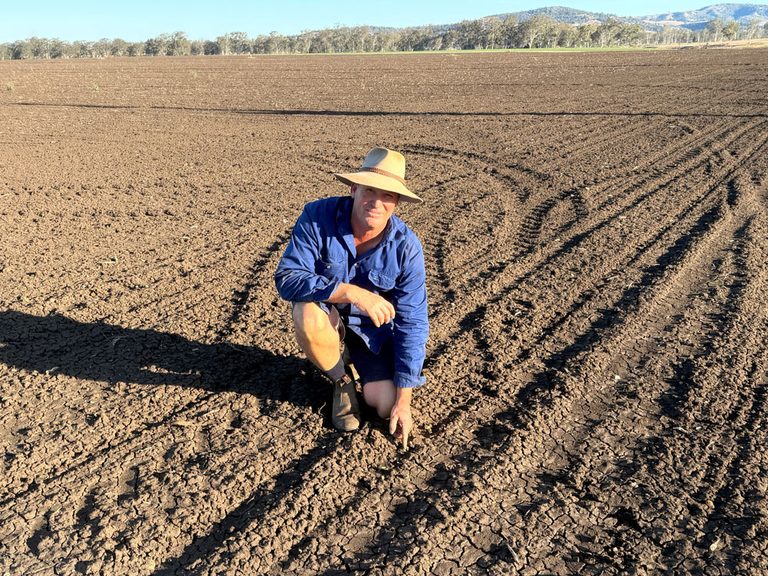
For starters, in the east the season looked particularly grim around the usual planting time.

Apart from the USA/Israel attack on Iran putting a fireball under fertiliser prices, the overtly dry conditions experienced across northern New South Wales and southern Queensland produced a definite period of reflection and ultimate wind-down sentiments for plantings.
But putting that early hesitation of low soil moisture levels behind, what looked almost like a bout of FOMO (Fear of missing out) when late May rainfall appeared, it encouraged growers with access to seed and fertiliser to jump into action.
However, even with the late rush the early dry conditions were a warning for many, and as a result there is a significant fall in the area planted to winter crops in 2026-27 through northern New South Wales and southern Queensland.
Meanwhile, despite the King’s ransom for both fertiliser and fuel the highly favourable ground conditions at the start of the season were too much for growers in Western Australia, South Australia, Victoria and parts of southern New South Wales to ignore.

As a result, winter crop 2026-27 planting in those states are estimated as close to average in area with the notable seasonal difference being in the crop mix.
With the crops in the ground there is the distinct possibility the 2026-27 winter cropping season will be a nail biter right to the very end of the growing period.
The Bureau’s call across the three-month outlook for June to August indicates up to an 80% possibility of below average rainfall across some cropping regions in Queensland, New South Wales, Victoria, South Australia and Western Australia.
It appears growers have edged all the risk against the favourable soil moisture levels at planting and are prepared to be less reliant on average winter rainfall events.
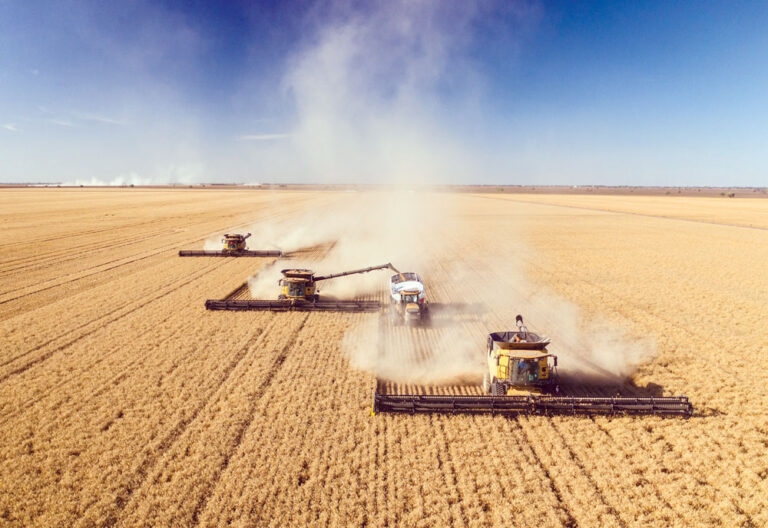
If everything goes to plan there is the expectation that 54.5 million tonnes of grain will be harvested from the 2026-27 winter crop plantings of an estimated 23.6 million/ha.
And while the harvest result is 12% below the 5-year average it is still 4% above the 10-year average to season 2025-26, reflecting lower expected average rainfall and a fall in area planted.

Crop plantings mix reduced inputs
Winter crop expectations for season 2026-27 received a major blow when regular supply of fertiliser and fuel were thrown into jeopardy following the unexpected 28 February USA/Israel attack on Iran.
It has been with great trepidation that growers have managed to get 23.6 million hectares planted, down just 7% on the record 25.1 million hectares recorded last year.
Looking at state participation, there was an increase in area planted in Victoria and South Australia that is likely to more than offset falls in Queensland and New South Wales, while it’s estimated the planted area in Western Australia is generally unchanged.
Growers across the country were quick to react to exorbitant price increases for fertiliser and as a result abandoned their regular staple, high in-put wheat plantings, to register a fall of 12% to 10.9 million/ha, the smallest area planted to wheat since season 2019-20.
This swing reflecting the diminishing margins to wheat compared to other crops and the very dry conditions in northern cropping regions.

Putting their ground under optimum return promises, the area planted to barley is forecast to increase by 4% to 5.0 million hectares in 2026-27 reflecting strong barley prices and its comparatively lower fertiliser requirement compared to wheat and canola.
Area planted to canola is forecast to fall by 6% to 3.5 million hectares in 2026-27, with small increases in Western Australia, Victoria and South Australia more than offset by a significant decrease in the area planted in New South Wales.
Despite high fertiliser prices and requirement, growers with adequate soil moisture have opted to retain or increase canola area in rotations as gross margin returns are expected to be better than cereal crops.
The ground planted to winter pulses is forecast to decrease by 7% to 3.2 million hectares in 2026-27, as a result of lower chickpea plantings.
The area planted to chickpeas is forecast to fall by 35% to 0.732 million hectares, reflecting very poor planting conditions in major chickpea growing regions of northern New South Wales and southern Queensland.

While the ground planted to lentils and lupins is forecast to increase in 2026-27, up by 2% and 23% respectively. This result reflects grower decisions to cater for increased livestock feed demand and save costs with lower fertiliser requirements compared to other winter crops.
Despite the year-on-year planting fall, winter crop production is expected to remain 4% higher than the 10-year average in 2026-27, if forecasts are realised it will be the 7th largest winter harvest on record.
However, with ongoing uncertainty around fertiliser supply and the increased chance of a dry winter, there is downside risk to the current forecast.
It will be crucial that adequate and timely supply of top-dressing fertiliser is available and adequate rainfall is able to match current yield projections.
Quick reference winter crop summary
- Wheat production is forecast to fall by 26% to 26.7 million tonnes in 2026-27, 23% below the 5-year average and 8% below the 10-year average to 2025-26.
- Barley production is forecast to fall by 15% to 14.1 million tonnes in 2026-27, 2% above the 5-year average and 12% above the 10-year average to 2025-26.
- Canola production is forecast to fall by 20% to 6.2 million tonnes in 2026-27, 13% below the 5-year average and 17% above the 10- year average to 2025-26.
- Lentil production is forecast to increase by 3% to a record 2.2 million tonnes in 2026-27, more than double the 10-year average to 2025-26.
- Chickpea production is forecast to fall by 51% to 1.1 million tonnes in 2026-27, largely reflecting a decline in the area planted, although still close to the 10-year average to 2025-26.