The University of Queensland is on track to solve a major problem for growers by introducing targeted breeding to reduce lodging and improve yields for sorghum crops

A research team led by The University of Queensland is on track to solve a major problem of lodging for local growers by using targeted breeding that will ultimately improve yields for sorghum crops.
The work is part of a five-year $12 million research investment collaboration with industry and government to reduce sorghum lodging.
Grain sorghum reached a peak harvest of 3.79 million tonnes in the summer season 2007-08 from a record 0.941 million/ha planted. But has had a chequered path since with only 0.622 million/ha planted in season 2024-25 and only 2.4 million tonnes expected at harvest.
Professor Andrew Borrell from the Queensland Alliance for Agriculture and Food Innovation said sorghum lodging occurs when the plant doesn’t have enough water and costs growers an average $12 million a year in yield.
“Lodging is where the stem breaks just before harvest, usually as a result of drought that occurs during grain filling,” Professor Borrell explained.
“The sorghum panicle requires a certain amount of carbon and nitrogen to fill the grains, which is normally provided through photosynthesis.
“But if you have a drought after flowering and the leaves begin to die, the plant takes carbon from the stem to fill the grain, hollowing out the stem and making it more prone to breaking.
“What’s even worse is that lodging often happens late in the grain filling period – you have farmers looking at a great crop in the field but then the stems fold just before harvest,” Professor Borrell concluded
Meanwhile, project lead Professor David Jordan said despite advances in genetics, lodging was not an easy problem to solve.
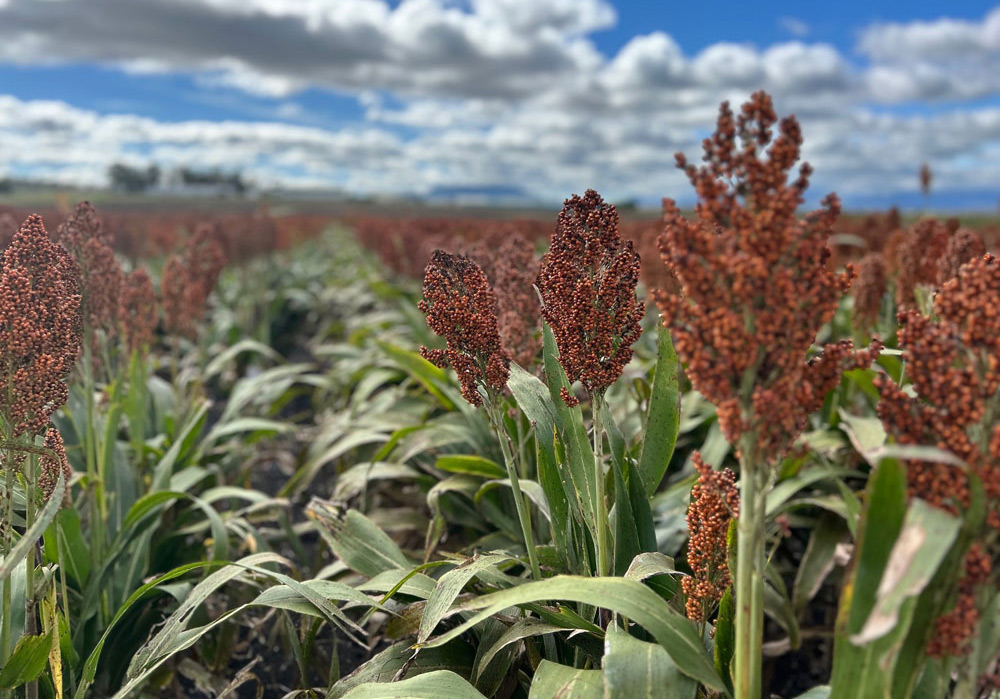
“What plant breeders need is a reliable method to screen plants for lodging resistance,” Professor Jordan added.
“However, high-yielding plants with their heavier grain loads, tend to be more susceptible to lodging, creating a dilemma.
“If we select for lodging resistance, we often end up with lower yields, but if we focus on high yields, we see more lodging.
“While the direct impact of lodging is significant, its biggest impact comes from farmers growing lower-yielding varieties to avoid the risk of lodging.
“Our goal in this project is to develop a method to help plant breeders to separate and identify plant traits that resist lodging without reducing yield.” Professor Jordan concluded.
To address this, Post Doctoral Research Fellow Dr Geetika said the team was testing variations in stem composition and structure in sorghum.
“Knowing which genotypes have higher stem strength will allow us to select for these genotypes and eventually breed for a stronger stem,” Dr Geetika continued.
“This will result in a genotype with a high yielding trait and stronger or increased stem strength.”
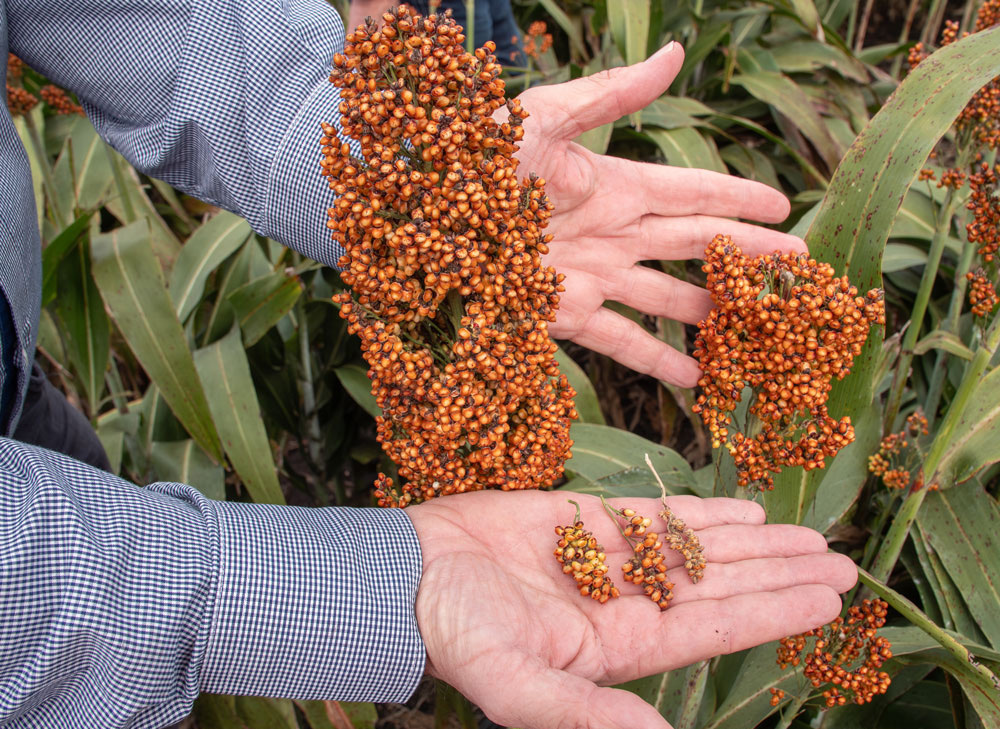
“We create artificial drought stress to promote lodging by fully defoliating the plants among other treatments.
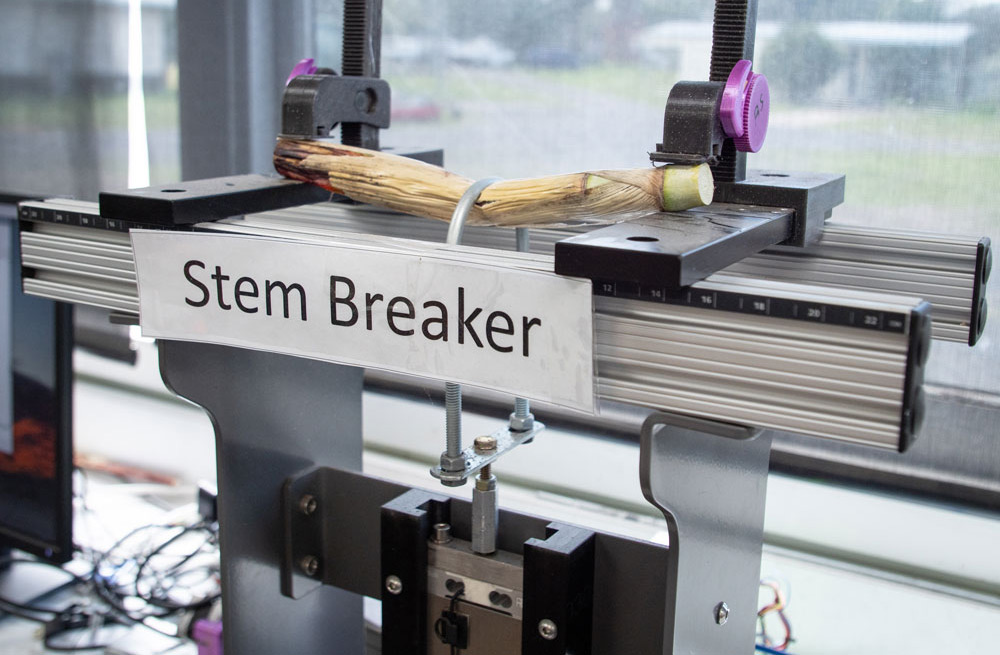
“Differences in stem strength at anthesis and maturity is assessed using a stem breaker that we have custom designed to assure consistent performance and data collection.”
“We know there is a wide variation in stem strength amongst genotypes, with contributing factors including structural features such as rind thickness and overall stem shape and diameter, as well as compositional characteristics like differences in cellulose, hemicellulose or lignin content.”
“Progress so far was encouraging, we’re making promising strides towards solving a significant problem for Australia’s sorghum industry,” Dr Geetika added.
The project is funded by GRDC with research from UQ and the Department of Agriculture and Fisheries Queensland, and industry expertise from Advanta Seeds. Project outcomes will be delivered to the Australian grains industry through commercial seed companies.
See more on this video link.