Growers now have access to five additional varieties of legume that have been especially developed to increase coverage across more regions
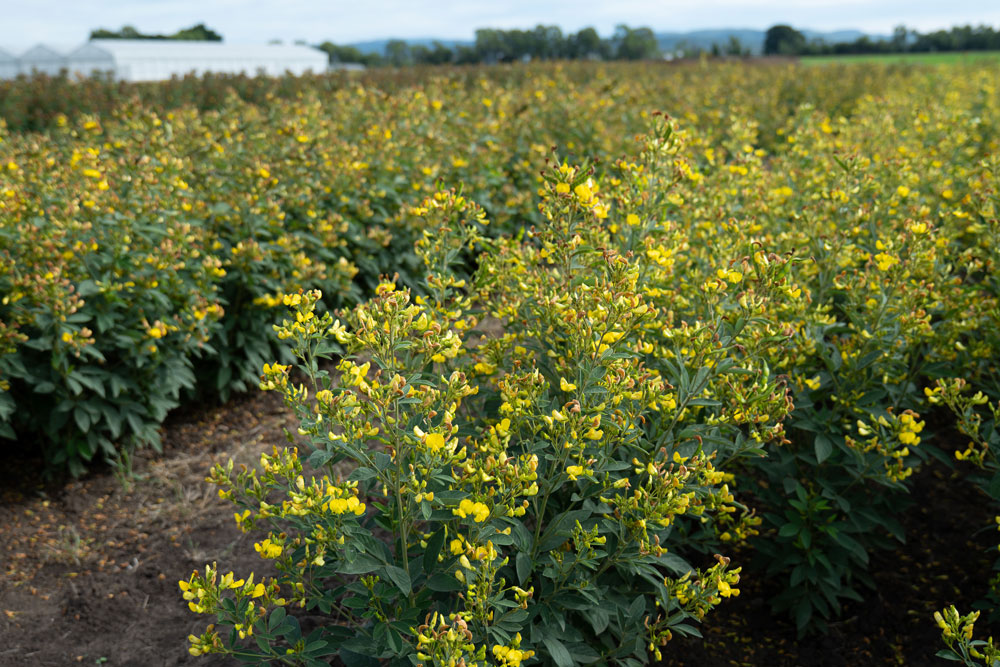
The University of Queensland (UQ) has developed five new varieties of pigeonpea as a step towards the legume being grown more widely by local growers.
A program at UQ’s Queensland Alliance for Agriculture and Food Innovation has achieved a major milestone with the drought-resistant pigeonpea varieties custom-made for tropical conditions.
Project lead Dr Mahen Sabampillai explains how the Woods Group-funded project could be the trigger for a much bigger industry for local growers.
“These pigeonpea varieties released by Woods Group will be the first commercial varieties registered for human consumption in Australia,” Dr Mahen adds.
“While maintaining yield potential, these varieties have a significantly shorter crop cycle, maturing in 100 to 120 days compared to the traditional 150 to 200 days.

“We have also reduced the height of these varieties to 80 to 120 centimetres tall to enable machine harvesting of the crop.
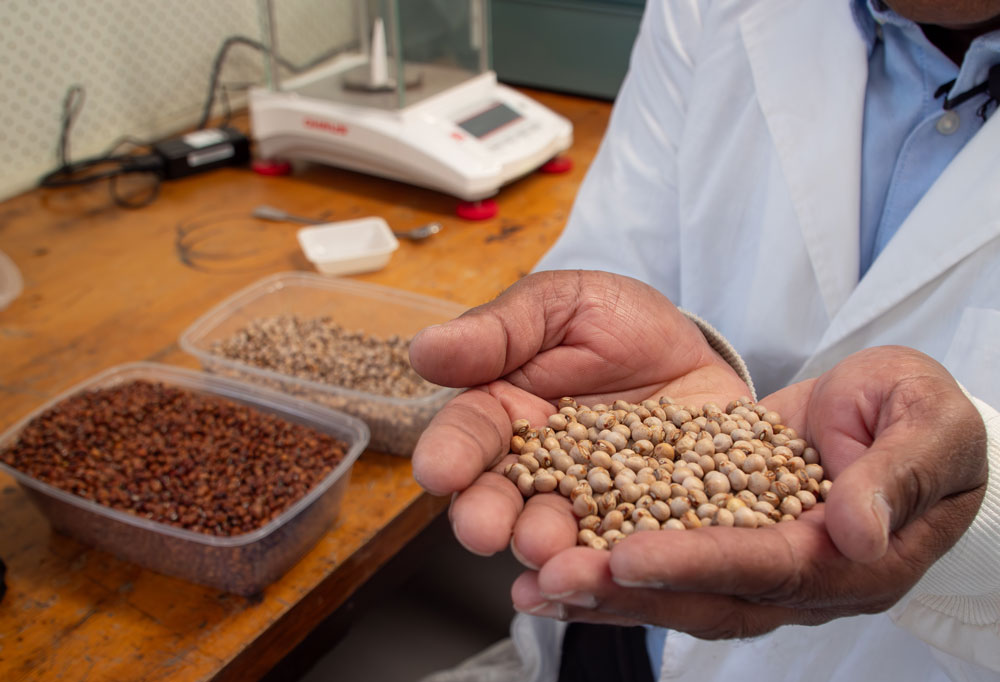
“Our seeds are the optimum size of 10 to 12 grams per hundred seeds, and the seeds are easy to split,” Dr Mahen added.
Woods Group co-owner Angus Woods said the company had big plans for an Australian pigeonpea industry.
“About 10 years ago, we recognised an opportunity to develop a pulse crop based on demand from growers looking for an alternative rotational option for their summer cropping program,” Angus Woods explains.
“Pigeonpea has traditionally been grown as an insect refuge crop in cotton, but what we are looking at now is very different.


“The industry is in its infancy, but we’re buoyed by the fact that outside Australia there are some very large production areas – India alone produces around 5 million hectares each year and Africa more than 1 million hectares a year.
“Our research with UQ has sought to meet targets of what Australian farmers need in terms of flowering time, maturity, plant height and seed size.
“As well as the Australian industry, there is a really good opportunity for our growers to supply high quality pigeonpea for toor dahl in India where there is a shortage, and to the Indian diaspora across the globe,” Angus Woods concluded.
Dr Mahen outlines how the varieties developed so far were the beginning for the breeding program, “Our latest varieties are very diverse in terms of their characteristics, yield, phenology, morphology and usage.

“But breeding is a continuous process, so we’ll make further improvements after input from growers.
“We have big trials underway in places like Condamine, Billa Billa, Warra and Jondaryan in Queensland.
“Moving forward, now that we’ve tackled the big issues of maturity period, height, yield and seed size, we want to think about further optimisation of the growth cycle, protein content and other improvements,” Dr Mahen concluded.
The breeding program was launched and initially led by Honorary Associate Professor RCN Rachaputi, and taken over by Dr Mahen in 2022.
The Queensland Alliance for Agriculture and Food Innovation is a research institute at The University of Queensland, established with and supported by the Department of Primary Industries.