Aboriginal stewardship in the northeast tip of Tasmania accepts Musselroe Wind Farm as a renewable project with social value
There was a point in history when everybody was told the last Tasmanian Aboriginal, Truganini, passed, and it was the end of a nation.
That was on 8 May 1876, and it wasn’t until well into the 1970’s that heritage Tasmanian Aboriginals resurfaced to claim, in some places, their birthright land.
And while history books would remain with the notion that Truganini was the last full-blood Tasmanian Aboriginal, the heritage movement for land rights has returned several culturally significant sites to traditional owners.
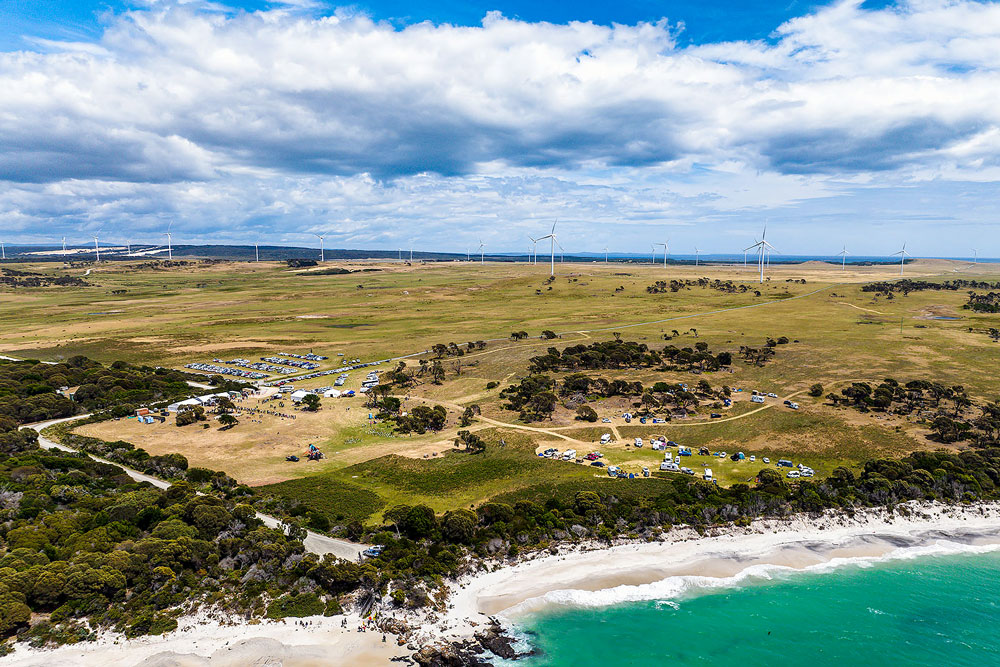
And on one such site on the far northeast tip of Tasmania at Musselroe Bay, where 56 large wind turbines etch out an existence on the Musselroe Wind Farm, 80 hectares of land has been carved out of the project where Aboriginal people celebrate ancestral warriors with dancing, art exhibitions, yarning circles and cultural food.
This is a rare instance where a wind farm is seen as a benefit to locals in an overall national picture that mostly sees locals agreeing a wind farm is a good idea for renewable power, but not in their district.
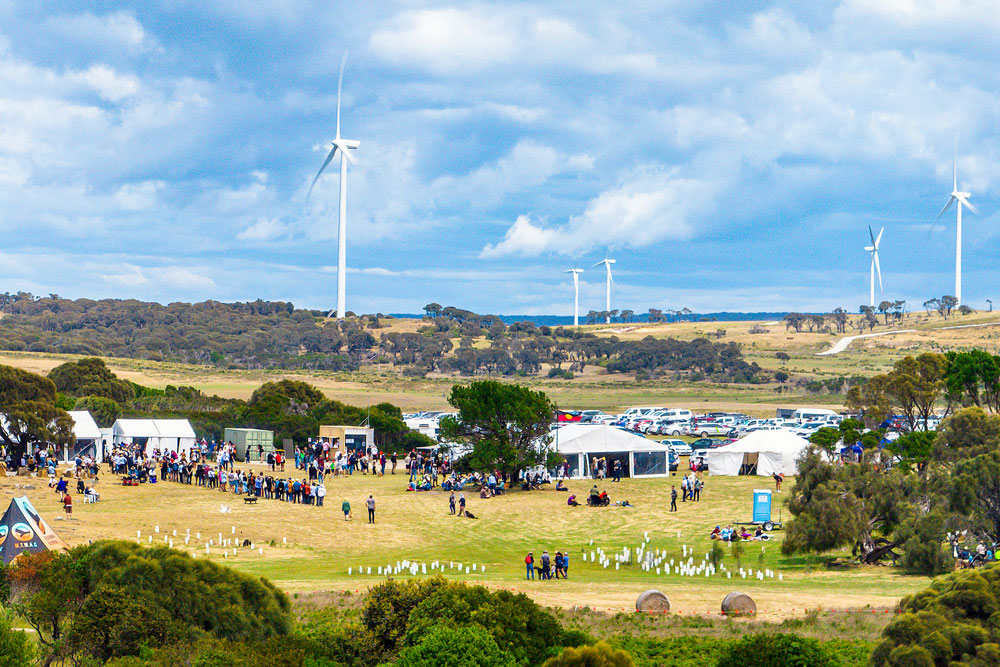
Wind farm cultural gathering
The owners of the Musselroe Wind Farm, Woolnorth Renewables, have formalised access to an 80-hectare piece of land, with a long-term vision of the freehold title being returned to the Pairrebeener people – in an example of social value produced by a renewable energy project.
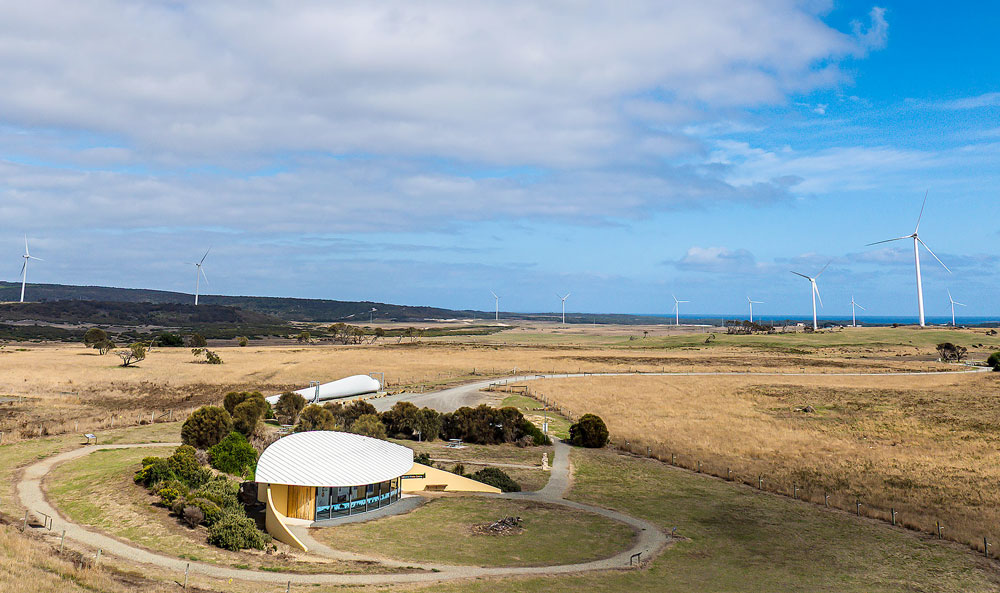
Access to the land has enabled Melaythenner Teeackana Warrana Aboriginal Corporation (MTWAC) to gather for cultural ceremonies, build a base for the Tebrakunna Rangers to care for Country and develop sustainable employment for Aboriginal people within the region.
They also have aspirations for commercial activities including tourism, accommodation and marine enterprises.
“It gave us a physical space to be on Country. Just to be on our ancestral homeland is just so significant,” enthused Aunty Patsy Cameron AO, MTWAC elder, historian and educator.
“We belong. We can go there to walk, to laugh, to cry, to share, to feel our ancestors and to care for our ancestral lands,” Aunty Patsy added.
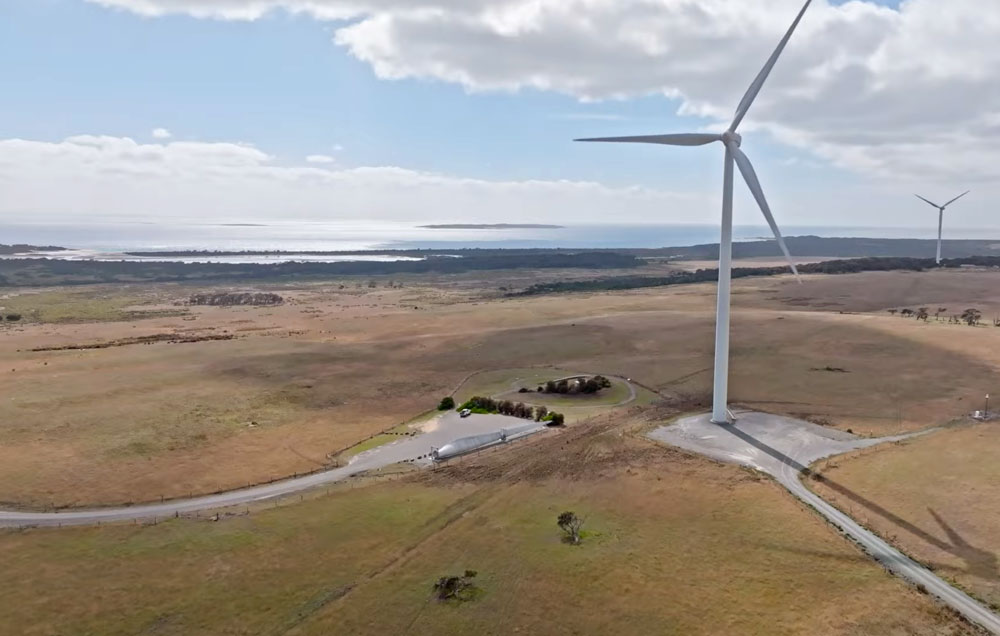
Now owned by Woolnorth Renewables, the 168 MW wind farm was built and commissioned in 2013 by Hydro Tasmania and provides 5% of Tasmania’s energy in an average year. Aunty Patsy Cameron has stewarded the relationship from the outset and says the collaboration “has been respectful and genuine from the beginning.”
The collaboration includes a Ranger Program which now employs 12 people and has trained 14 people in ecosystem and conservation land management.
Musselroe Wind Farm’s Head of Risk, Compliance & Systems Robert Barbour said the benefits go both ways.
“It’s valuable to be a part of a team that values community,” Robert outlined. “We get help around the heritage side of things, to fulfil our regulated requirements; we get access to that technical knowledge. It’s also part of building the social licence needed to get a project like this off the ground, in a very genuine way. That has really enabled us to do our wind farm planning and construction smoothly and quickly.”
Wind turbines part of partnership
Woolnorth Renewables’ partnership with MTWAC is adding weight to renewable energy projects that can deliver social value for local communities. The wind farm sector is putting up an argument to move beyond simply seeking community acceptance to operate, and focus instead on delivering measurable improvements to community wellbeing.
“Australia’s energy transition is occurring at a scale and pace that will shape regional communities for generations,” adds Kim Mallee, Director at Community Power Agency. “Social value represents a fundamental shift from seeking basic community acceptance to delivering genuine, measurable improvements in people’s lives. And alerts to a paper that aims to spark the sector-wide conversation needed to make that shift real.”
The paper titled, From Social Licence to Social Value in the Energy Transition, can be accessed here. It urges policymakers, developers, and practitioners to establish a shared, rigorous approach to tracking the real-world impacts of clean energy infrastructure.
Across the country, there is growing attention on how the benefits of the energy transition are shared. However, the paper highlights a critical ‘measurement gap’ in the current sector and offers a way to better track genuine value.
Drawing on international frameworks, policy analysis, and interviews with leading practitioners, the discussion paper establishes five core principles to guide the sector forward. It offers a roadmap for policymakers looking to align energy projects with national frameworks, while putting pressure on industry to lift its standards.
However, on the ground level, there is bitter resentment shown to establishing wind farms in numerous locations, and there is consensus that people living in regions where renewable power is proposed should be making the final decision without being overridden by local councils or government as to whether projects go ahead.
Tasmanian Aboriginal heritage Aunty Patsy Cameron refers to how traditional values pick up the wind farm conversation, “Mannalargenna, whose land we’re talking about, to change the wind, he would pick out a burning ember out of the fire and on a long stick, and he would use that long burning stick to move the wind. And I would imagine that if Mannalargenna came back and saw those turbines using the wind to generate power that he would be in awe.” Aunty Patsy concluded.
See the video here about how the Melaythenner Teeackana Warrana (Heart of Country) Aboriginal Corporation formed a partnership with the owners of the Musselroe Wind Farm to gain ownership of traditional lands. Further access to a discussion paper can be found here.