The wetter than average La Nina seasons have allowed growers to identify paddocks that need some additional drainage work

Two consecutive wet seasons in many growing regions have put a renewed focus on waterlogged crops. In a recent survey, it was estimated that approximately three million hectares of land may be subject to waterlogging or inundation across WA’s southwest agricultural region alone.
Grains Research and Development Corporation (GRDC) investments, led by South Coast Natural Resource Management (South Coast NRM) and Stirlings to Coast Farmers, have begun to explore the potential return on investment of subsurface water management options for waterlogged areas.
A new video and podcast released by GRDC this week capture a recent subsurface drainage demonstration day in Dalyup, near Esperance WA, where as part of the project, local grower Rohan Marold is installing subsurface drainage in his paddocks.
Rohan Marold said that during the 2022 harvest, it was a problem getting harvesters across paddocks that had been deep ripped, with machinery bogged several times.
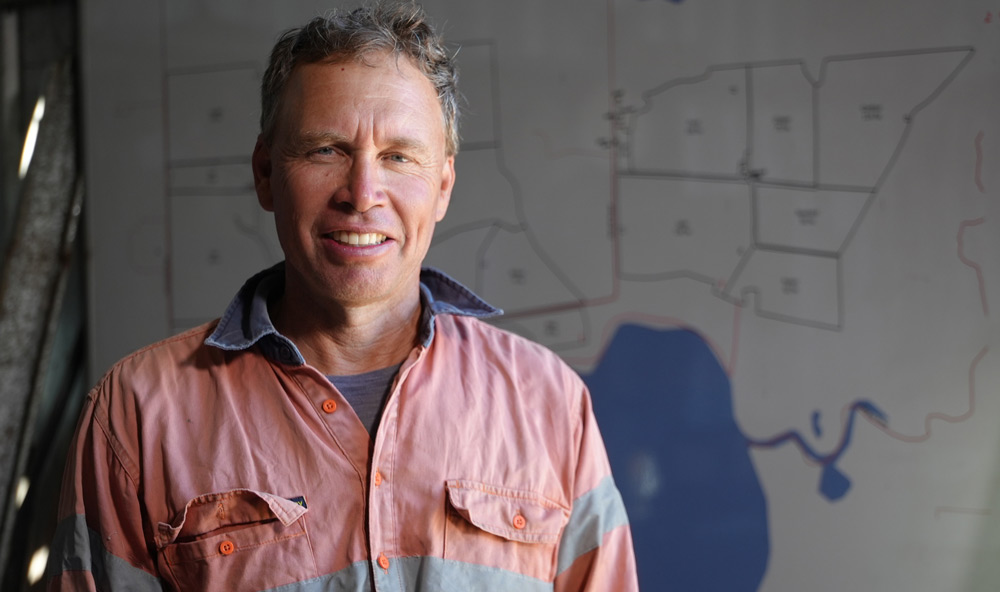
“We used a consultant to do some digital elevation mapping to see where the water was flowing and where we needed to get to with the drains,” Rohan Marold added.
“We started out on some heavy clay paddocks where we thought subsurface drainage pipes would be beneficial, but we found that wasn’t as successful at getting the water out of the profile because of the sodicity and the subsoil.
“We then tried some on sand over clay and that worked well, the pipe started flowing almost straight away, within 24 hours.
“It’s pretty satisfying to see the water coming out of the pipes after you’ve installed them, and it’s nice to clear water. It’s different to seeing water running off the top of your paddock with all that nutrient loss and erosion.”
The installation of subsurface drains involved the use of a tile plough attached to a tractor. The tile plough uses GPS technology to create a ripping point. The plough then creates a trench, lays the plastic slotted pipe and then buries it under the subsurface.
Rohan Marold said that the aim was to lay the pipes at least 600 to 800 millimetres deep to avoid any impact from machines or deep ripping.
South Coast NRM Regional Agricultural Landcare Facilitator Sophie Willsher is leading the project in Dalyup.
Sophie Willsher said South Coast NRM was currently in the third of four years of a subsurface drainage return-on-investment trial.
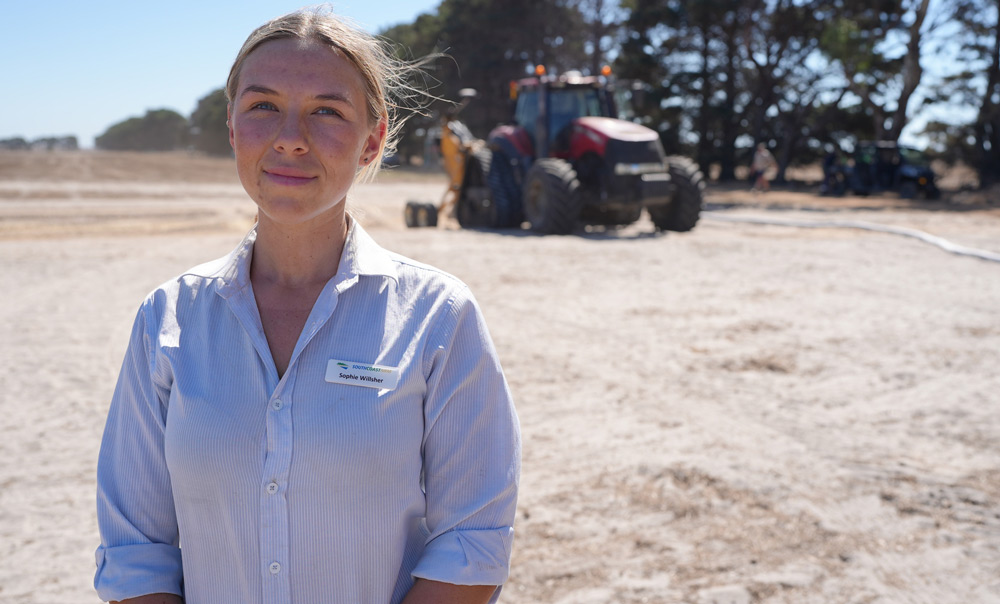
“Project findings from 2022 support conclusions drawn in 2021, solidifying our understanding that subsurface drainage is effective at moving perched water away from the root zone, leading to maximised yield potentials,” Sophie Willsher added.
“Yield data from the previous two years show an almost two-fold increase in yield for drained areas compared to the undrained waterlogged site at our Neridup trial.
“One of the most important factors to consider is the elevation of your paddock. It’s always best to work with gravity. You also should consider your soil profile and the depths to the clay layer, which is the impenetrable layer where most perched water will sit.
“Considering soil type and of course other factors on farm, including salinity levels, are important in making sure that your drainage is designed best for your property.
Sophie Willsher said the project had monitored the biomass, weed and disease presence and soil moisture conditions of paddocks in the trial to produce a final return-on-investment figure in 2024.
“We’re looking forward to seeing the final return-on-investment figure and how we can apply this into to support broader scale adoption for growers,” Sophie Willsher concluded.
GRDC grower relations manager – west, Luke Dawson, said that GRDC investment into projects addressing waterlogging ranged from subsurface drainage projects to genetic research.
“This project will help growers and advisers compare the yield penalty in undrained areas with the capital investment and gains of installing drainage,” Luke Dawson added.
“Our aim is to give growers data that lets them assess the cost of installing subsurface drainage against the potential to recover some of those losses by improving yields.”
The project concludes in 2024 with return-on-investment data to be made available to growers through a project report.