Even with the likelihood of trillions being wiped of the value of US stocks due to tariff uncertainly the Trump administration has added another 10% impost on beef importers
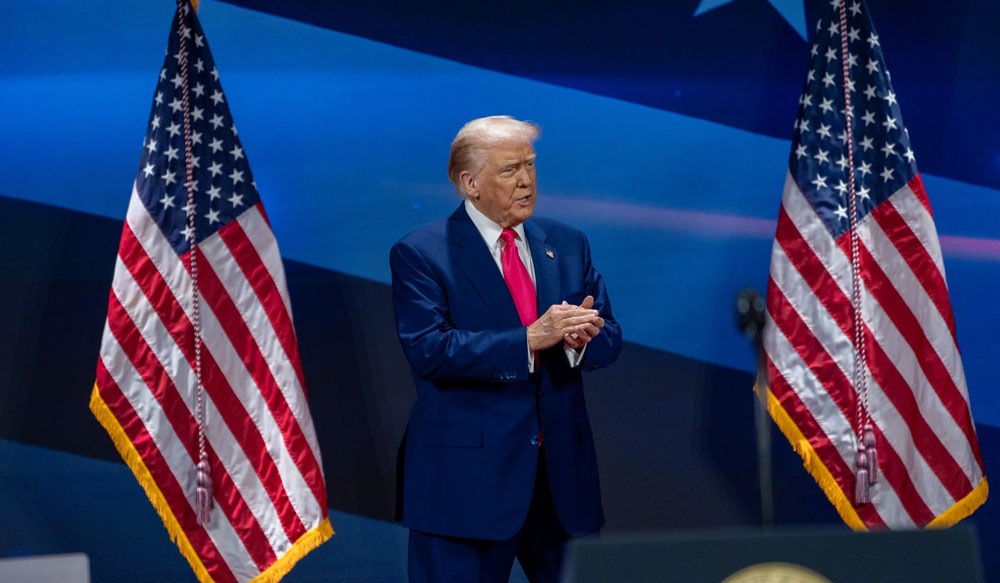
President Trump has touted his reciprocal tariffs plan for weeks as “Liberation Day” for the US and a chance to gouge back money he believes the US is owed for years of trancing the globe protecting the world.
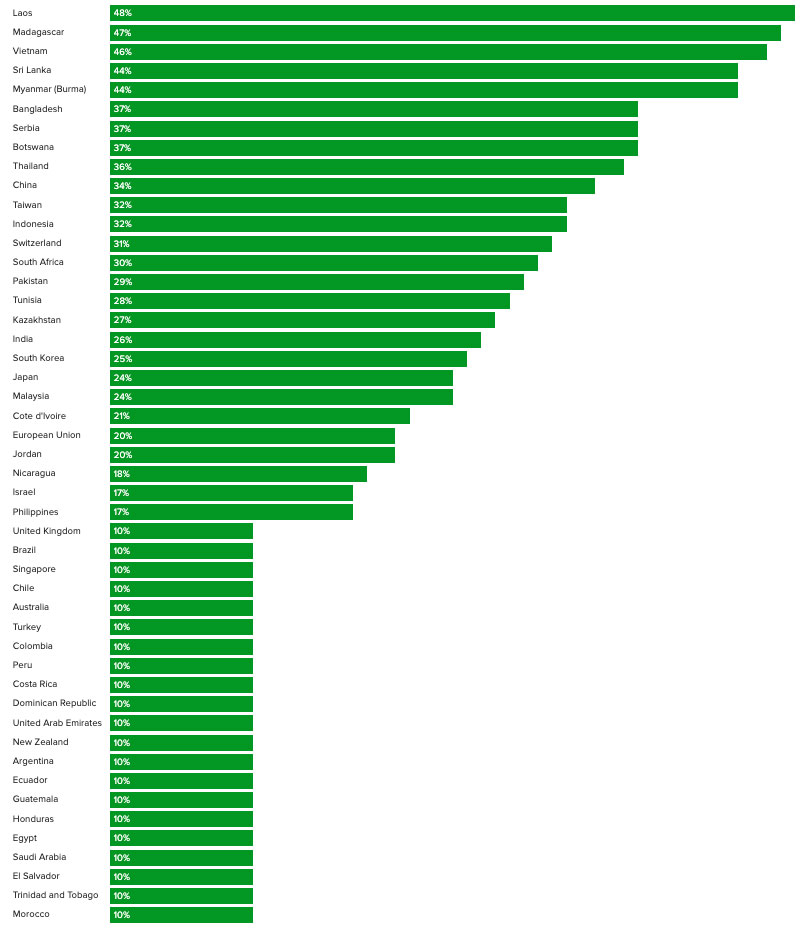
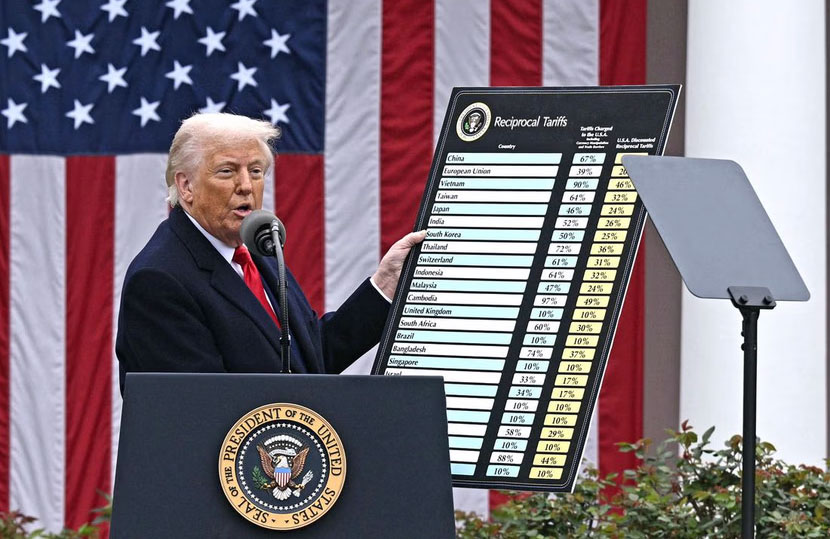
That day has arrived with the White House confirming a 10% tariff to be applied at midnight Saturday 5 April US time, on all countries importing farm produce into the US, with other products taking up to a 25% hit, such as cars.
Several surveys have shown US farmers pretty much split down the middle as to any benefit coming back to them through farm commodity import tariffs, while US Agronomists have taken a stronger stance as 92% believe tariffs will be detrimental to US agriculture in the long term.
Behind this blinding grab at protecting US farmers from imports that are much cheaper than US farmers can match, is a reflection back to the glory days of US farm produce that was profitable to be sent across all world markets.
But that situation is not there anymore due to inflation and the higher cost of energy that has seen US farmers input cost rising by up to 30%.
Differing factors have piled up for US farmers with sorghum and cotton taking the brunt, along with other farm segments and has reached the stage where something has to be done about support.
But it can seriously be questioned if tariffs are the right approach, as some countries have already hit back at US farm produce with a 50% tariff being applied by the EU on American dairy imports, and a 700% tariff from Japan on rice, while a 100% tariff has been applied on US agricultural products being sold into India.
When US president Donald Trump was in power during his first term from 2017 to 2021 it is estimated tariffs levied in 2018 cost US farmers US$30 billion in lost exports.
And the tariffs this time around are much broader than those imposed during the first Trump administration with industry pundits predicting income losses could force some farm operations to close.
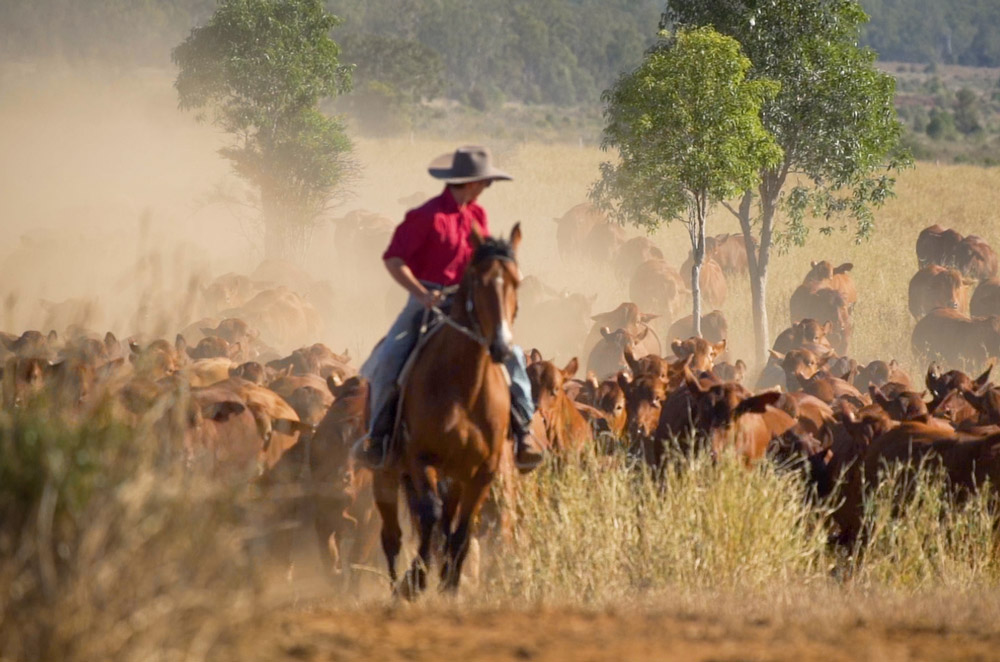
Aussie beef producers in firing line
It would be fair to say US president Donald Trump would know little about the market that makes up to US$3 billion of beef imports into the US by Australian farmers, but then again why should he care if he can skim 10% off the top to help make the US Great Again.
The US is currently the biggest market for Australian beef, with the Red Meat Advisory Council calculating that the 10% tariff on Australian beef, that goes into 6 billion US McDonald hamburgers each year, would cost US consumers an additional US$600 million a year.
In 2024, the United States accounted for 30.7% of Australia’s beef exports, up from 17% in 2022. And while these latest US tariffs may limit imports, Australia’s beef exports globally may increase as the market diversifies as it did following China’s restrictions in 2020.
US president Donald Trump singled out Australia’s beef trade for special mention in his global tariff announcements from the White House Rose Garden, highlighting, “Australia bans, and they’re wonderful people and wonderful everything, but they ban American beef.
“Yet we imported US$3 billion of Australian beef from them just last year alone.
“They won’t take any of our beef. They don’t want it because they don’t want it to affect their farmers and you know, I don’t blame them but we’re doing the same thing right now starting at midnight tonight, I would say,” US president Donald Trump concluded.

Australia responds
Australia currently bans US fresh beef imports because of biosecurity concerns, including mad cow disease, that if introduced into the country could cause up to AU$80 billions of lost income.
Meanwhile the US are not giving up on the hope of full market access for fresh US beef and beef products, as confirmed in their recently released Foreign Trade Barriers report.
Prime Minister Anthony Albanese has condemned the current US trade regime saying, “The trade decision was not unexpected but had no basis in logic and was not the act of a friend.”
PM Albanese announced a response package that will provide AU$50 million to affected sectors to pursue replacement markets, and will set up a resilience program, involving $1 billion in loans to capitalise on new investment opportunities.
While re-emphasised Australia would make no changes to the country’s biosecurity rules.
Other countries affected by the Trump administration reciprocal rates include China with a 34% tariff, along with a 25% global tariff on cars imported into the US.
While imports from the European Union have a 20% tariff imposed, and there is 25% on imports from South Korea, as well as 24% on imports from Japan and 32% on goods from Taiwan.
Worst case scenario
Market pundits in general are unsure who will come out the worst off from president Trump’s tariffs but the needle is sliding toward the biggest impact felt by their nearest neighbours, Canada and Mexico, while China has a 34% impost to handle.
On our local front, analysts seem content with calling a minimal risk of just 0.2% of Australian GDP. While the US economy will most likely be hit with a more negative impact from general fall-out and importers backing off.
As a result of the Trump tariffs it is widely expected growth in the US economy will struggle to reach 2% in 2025, and that’s coming off the back of an already weak 2024 that only reached 2.8%.
However, tariff fallouts is far from over with many countries attempting to negotiate lower rates, and if not successful retaliate with their own tariffs.
If this scenario is played out, and president Trump’s directives are not followed, there is the likely hood of even greater US tariffs.
On the brighter side for Aussie beef producers, there is the short-term expectation that the Aussie dollar is at risk of falling below US60 cents for the next few months.
That will give exporters a clear advantage of a 40 to 45% discount on what US farmers can produce their beef for.
There is hardly a reason McDonalds will not simply pass on the 10% tariff over the counter, and keep on buying the Aussie beef that keeps their customers coming back for more.
Trump trade tariff hit by country